
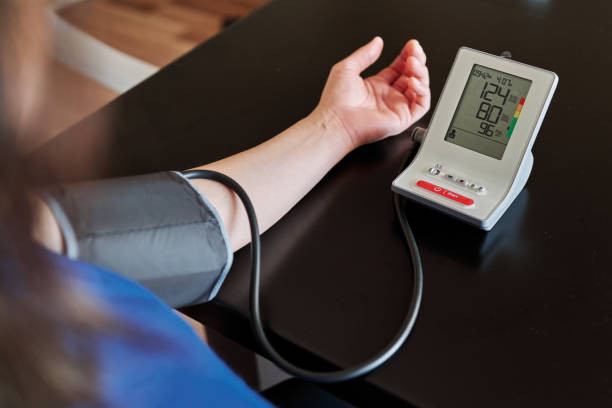
Sindrom Polikistik Indung Telur (Polycystic Ovary Syndrome) atau yang biasa dikenal dengan PCOS adalah masalah hormonal yang dialami sekitar 5-10% wanita pada usia produktif. Kondisi ini disebabkan oleh jumlah hormon laki-laki yang lebih banyak dalam tubuh perempuan sehingga menyebabkan beberapa gangguan seperti jerawat dan menstruasi tidak teratur. Selain kedua kondisi tersebut, PCOS ternyata juga dapat menyebabkan gangguan kesehatan lainnya yaitu hipertensi. Mengapa demikian?
Mengenal PCOS pada Perempuan
PCOS merupakan gangguan hormon dimana perempuan memiliki kelebihan hormon laki-laki (androgen). Gejala PCOS sering tidak terdiagnosis sejak dini. Beberapa gejala PCOS di antranya periode menstruasi yang tidak teratur atau berkepanjangan, memiliki rambut tebal pada tubuh dan wajah juga jerawat. Selain itu, pemeriksaan USG juga menunjukkan banyak kista (polikistik) atau folikel yang berisi sel telur yang belum matang.
PCOS dan Risiko Hipertensi
Gangguan hormon pada PCOS bukan hanya dapat memengaruhi siklus menstruasi, namun juga beberapa masalah kesehatan lainnya seperti masalah berat badan, penyakit jantung, diabetes dan tekanan darah tinggi.
Dalam sebuah penelitian yang dilakukan Dallas Heart Study, perempuan dengan PCOS terbukti berisiko memiliki tekanan darah tinggi dibandingkan dengan perempuan tanpa PCOS. Sedangkan dikutip dari laman John Hopkins Medicine, sebuah studi menyatakan bahwa perempuan dengan PCOS berisiko dua kali lipat mengalami masalah kardiovaskular seperti serangan jantung atau stroke.
Salah satu penyebabnya, perempuan dengan PCOS umumnya memiliki kelebihan berat badan sehingga terjadi resistensi insulin. Kondisi ini juga dapat menyebabkan seseorang mengalami peningkatan kolesterol dan pengerasan pembuluh darah (aterosklerosis) yang berakibat jantung harus memompa lebih keras untuk mengedarkan darah. Akibatnya tekanan darah cenderung meningkat.
Mencegah Risiko Hipertensi pada Perempuan dengan PCOS
Hipertensi seringkali tidak menimbulkan gejala dan baru diketahui ketika dilakukan pemeriksaan. Beberapa orang yang memiliki faktor risiko hipertensi di antaranya orang yang merokok, kelebihan berat badan, kurang aktivitas fisik, mengalami resistensi insulin, depresi dan memiliki riwayat keluarga hipertensi.
Jika Anda termasuk dalam faktor risiko tersebut, maka sebaiknya mulai melakukan upaya pencegahan hipertensi dengan cara berhenti merokok, mulai mencoba gaya hidup sehat dan mulai berolahraga dengan rutin. Selain itu Anda juga bisa melakukan pemeriksaan darah secara rutin untuk memantau tekanan darah. Pada beberapa kasus, dokter mungkin akan meresepkan obat-obatan agar tekanan darah Anda tetap stabil.
Mau tahu informasi seputar kehamilan, menyusui, kesehatan wanita dan anak-anak? Cek di sini, ya!
- dr Anita Larasati Priyono

Azziz R. Polycystic Ovary Syndrome. Obstet Gynecol. 2018 Aug;132(2):321-336. doi: 10.1097/AOG.0000000000002698. PMID: 29995717.
Mayo Clinic. Polycystic ovary syndrome (PCOS). https://www.mayoclinic.org/diseases-conditions/pcos/symptoms-causes/syc-20353439
Sadaty A. Polycystic Ovary Syndrome (PCOS). Very Well Health. https://www.verywellhealth.com/pcos-overview-4581906
Chang AY, Oshiro J, Ayers C, Auchus RJ. Influence of race/ethnicity on cardiovascular risk factors in polycystic ovary syndrome, the Dallas Heart Study. Clin Endocrinol (Oxf). 2016 Jul;85(1):92-9. doi: 10.1111/cen.12986. Epub 2015 Dec 24. PMID: 26608823; PMCID: PMC4882287.
John Hopkins Medicine. Polycystic Ovary Syndrome (PCOS). https://www.hopkinsmedicine.org/health/conditions-and-diseases/polycystic-ovary-syndrome-pcos