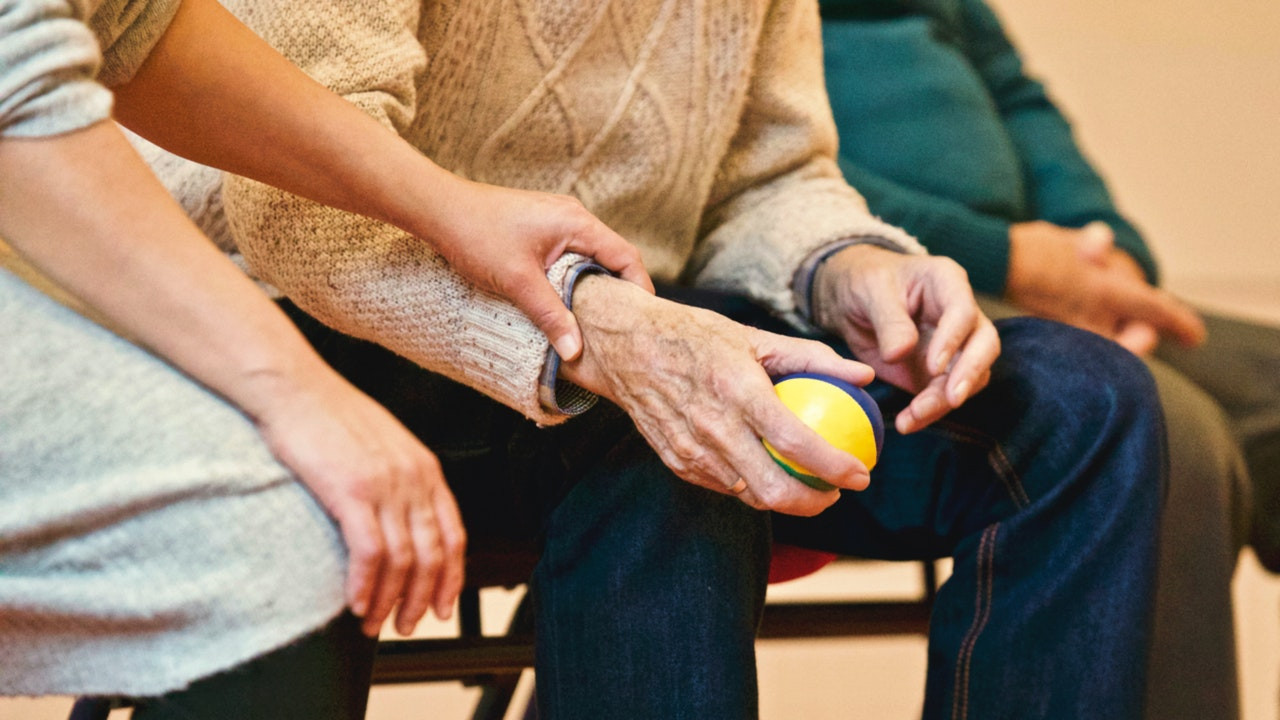
Berpuasa di bulan Ramadan merupakan salah satu kewajiban umat Islam bagi yang mampu. Saat berpuasa, umat Islam diharuskan menahan lapar dan haus dari sebelum terbit matahari hingga matahari terbenam. Lantas bagaimana dengan lansia, amankah bagi lansia berpuasa?
Amankah bagi Lansia untuk Berpuasa?
Dalam ajaran Islam dikenal puasa Ramadan, dimana umat muslim harus menahan lapar dari terbit matahari hingga matahari terbenam selama satu bulan penuh. Ajaran Islam juga memberi keringanan bagi yang tidak berpuasa, termasuk para lansia. Para lansia yang memiliki masalah kesehatan tertentu atau tidak mampu menjalani puasa secara penuh diperbolehkan untuk tidak berpuasa.
Meskipun terdapat keringanan, namun sejumlah lansia umumnya tetap mengupayakan untuk menjalani puasa sebagai bentuk kepatuhan terhadap ajaran agama dan faktor tradisi.
Lansia yang memiliki masalah kesehatan seperti kurang nutrisi, masalah pencernaan, penyakit jantung, diabetes, dan penyakit kronis lainnya, umumnya diperbolehkan tidak berpuasa jika dirasa tidak mampu. Namun jika merasa mampu, lansia bisa tetap menjalankan puasa. Untuk menentukan apakah lansia boleh berpuasa atau tidak, sebaiknya bicarakan terlebih dahulu ke dokter.
Baca Juga: Makan Takjil Manis Setelah Puasa, Apa Dampaknya?
Tips Aman Puasa Ramadan bagi Lansia
Bagi lansia yang kuat berpuasa dan diperbolehkan dokter berpuasa, berikut ini beberapa tips yang bisa dilakukan agar dapat menjalani puasa dengan lancar:
Sahur dengan makanan bergizi
Makan di waktu sahur merupakan sumber energi yang penting bagi lansia yang berpuasa selama Ramadan. Saat sahur, pilih makanan yang mengandung serat seperti buah-buahan dan sayuran untuk mencegah sembelit. Perbanyak asupan protein rendah lemak yang baik untuk memberi rasa kenyang lebih lama.
Mencukupi kebutuhan cairan tubuh
Selama puasa, Anda tidak diperbolehkan makan dan minum dalam waktu yang panjang. Untuk mencukupi kebutuhan cairan, upayakan minum 6-8 gelas per hari atau sesuai kebutuhan.
Untuk membagi jadwal minum selama puasa, Anda bisa mencoba tips berikut:
- 2 gelas saat sahur
- 1 gelas saat berbuka
- 1 gelas setelah makan malam
- 2 gelas setelah selesai salat isya dan tarawih
- 1-2 gelas sebelum tidur
Selain minum air, Anda juga bisa mencukupi kebutuhan cairan tubuh dari makan makanan yang mengandung air seperti buah semangka, melon, atau makan makanan berkuah.
Baca Juga: Tips Puasa Sehat untuk Anak-Anak
Makan makanan sehat saat berbuka
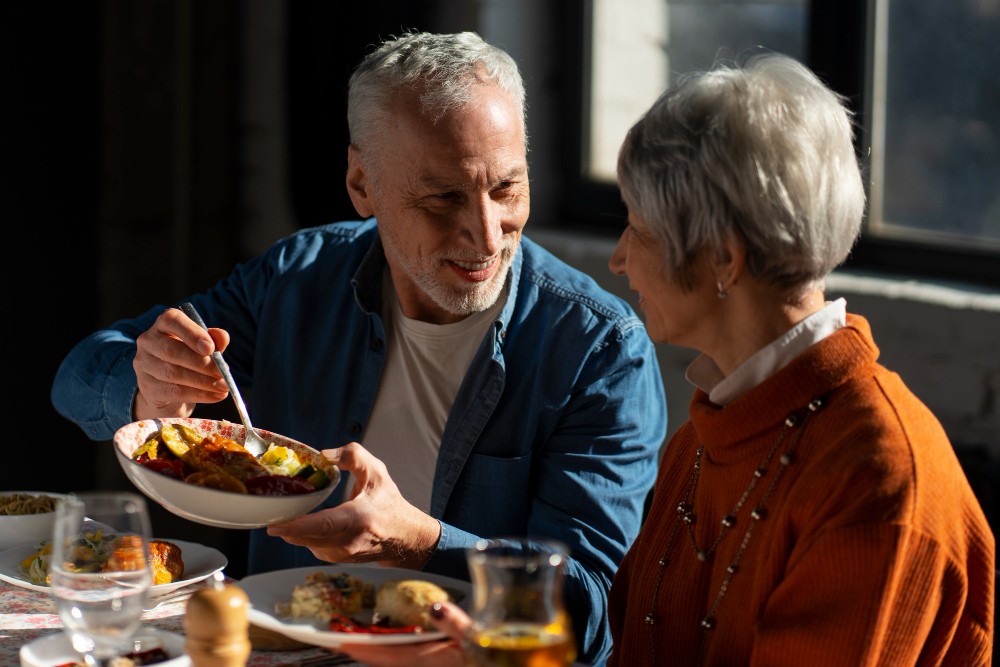
Waktu berbuka juga sama pentingnya dengan sahur. Buka puasa diperlukan untuk mengganti energi yang hilang setelah berpuasa. Bagi lansia, dianjurkan untuk makan makanan sehat seperti protein, makanan berserat, karbohidrat yang cukup, dan makanan rendah gula.
Sebaiknya hindari makanan tidak sehat seperti makanan berlemak, gorengan, atau makanan olahan yang tinggi natrium dan bahan tambahan lainnya.
Olahraga teratur
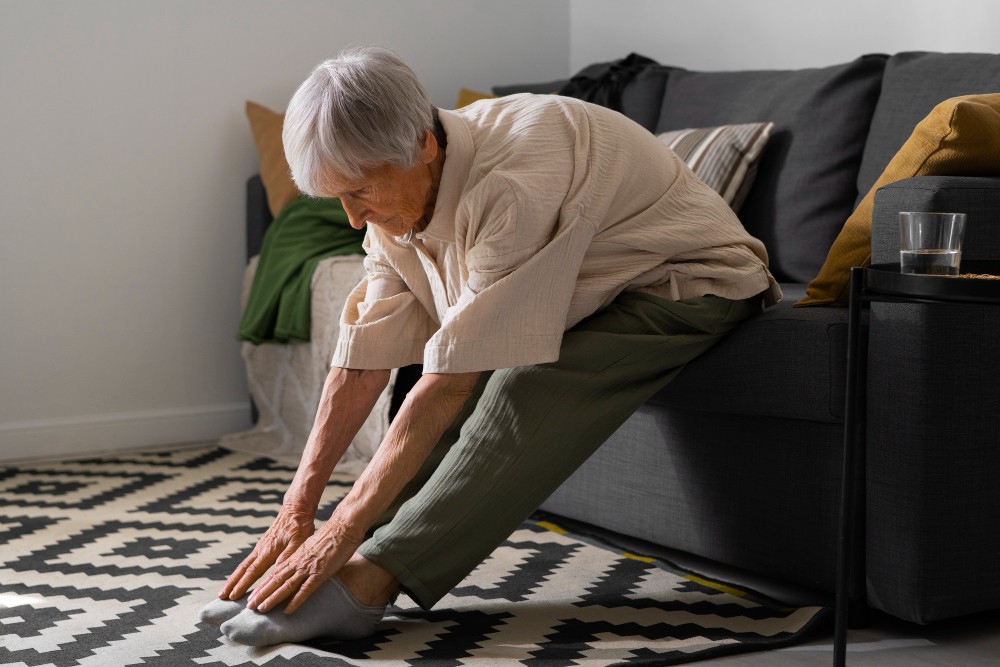
Selama puasa, lansia juga dianjurkan untuk tetap menjalani olahraga teratur. Pilihan olahraga yang dianjurkan bagi lansia, seperti jalan kaki atau latihan peregangan di rumah. Olahraga selama puasa membantu meningkatkan kebugaran, sehingga lansia merasa berenergi sepanjang hari.
Cukup tidur
Puasa Ramadan berpotensi mengubah jam tidur para lansia. Agar tetap bugar, cukupi kebutuhan tidur minimal 6-8 jam per hari. Sempatkan tidur siang agar tidak terlalu mengantuk di malam hari.
Puasa Ramadan memiliki berbagai manfaat bagi kesehatan, termasuk bagi lansia. Apabila selama menjalani puasa muncul masalah kesehatan, seperti gangguan pencernaan atau masalah lainnya, sebaiknya segera batalkan puasa dan periksakan diri ke dokter. Anda juga dapat memanfaatkan fitur konsultasi pada aplikasi Ai Care yang bisa diunduh melalui App Store dan Play Store.
Mau tahu tips dan trik kesehatan, pertolongan pertama, dan home remedies lainnya? Cek di sini, ya!
- dr Nadia Opmalina

Ajmera, R. (2024). 10 Tips on How to Safely Fast. Available from: https://www.healthline.com/nutrition/how-to-fast
Ajmera, R. (2023). 8 Health Benefits of Fasting, Backed by Science. Available from: https://www.healthline.com/nutrition/fasting-benefits#
Harvard Health Publishing. (2020). Is intermittent fasting safe for older adults?. Available from: https://www.health.harvard.edu/staying-healthy/is-intermittent-fasting-safe-for-older-adults
Booth, S. (2024). Intermittent Fasting for Women Over 50: What You Need to Know. Available from: https://www.webmd.com/healthy-aging/what-to-know-about-intermittent-fasting-for-women-after-50
MIRZAEI, TAYEBEH, RAVARI, ALI, HOSEINI, FATEMEH, Assadollahi, Zahra, & Hassanshahi, Elham. (2022). Effect of Ramadan Fasting on the Quality of Life of Elderly Muslims. JOURNAL OF NUTRITION, FASTING AND HEALTH, 10(1), 11-17. SID. https://sid.ir/paper/1006785/en