
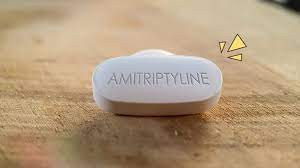

Brand/Nama Lain
Amitriptyline Hydrochloride, Trilin.
Cara Kerja
Amitriptilin termasuk dalam kelas obat yang disebut antidepresan trisiklik, kelompok obat yang dimanfaatkan untuk mengatasi gejala depresi, ansietas, gangguan makan, dll. Obat ini bekerja dengan meningkatkan jumlah zat alami tertentu di otak yang dibutuhkan untuk menjaga keseimbangan mental.
Indikasi
Amitriptilin digunakan untuk mengatasi kondisi medis seperti:
- Depresi
- Ansietas
- Nokturnal enuresis (ketidakmampuan mengontrol pengeluaran urin/mengompol selama tidur yang terjadi pada anak-anak)
- Nyeri neuropati (gangguan pada saraf)
- Pencegahan sakit kepala sebelah (migrain), dll.
Kontraindikasi
- Riwayat alergi dengan amitriptilin sebelumnya
- Riwayat serangan jantung baru-baru ini, terutama aritmia (gangguan irama jantung)
- Obat ini tidak boleh digunakan bila dalam 14 hari terakhir mengonsumsi obat antidepresan golongan monoamine oxidase inhibitors (MAOI) dan cisapride (meningkatkan gerak saluran cerna)
- Kerusakan hati yang parah
- Anak usia <6 tahun atau lansia >65 tahun
Efek Samping
Dapat terjadi efek samping seperti mengantuk, pusing, mulut kering, penglihatan kabur, sembelit, penambahan berat badan, atau kesulitan buang air kecil dapat terjadi. Jika salah satu dari efek ini menetap atau memburuk, segera beri tahu dokter Anda.
Selain itu, bila muncul efek samping yang sangat serius seperti:
- Tinja atau kotoran berwarna hitam
- Muntah yang terlihat seperti bubuk kopi
- Pusing hebat
- Pingsan
- Kejang
- Mata terasa nyeri, bengkak, atau menjadi kemerahan
- Gangguan penglihatan (seperti melihat pelangi sekitar lampu pada malam hari)
- Dada terasa sangat nyeri atau detak jantung menjadi sangat cepat
- Ruam kulit merah yang dapat disertai pembengkakan di wajah atau lidah
Sediaan
Amitriptilin tersedia dalam bentuk tablet 25 mg.
Dosis
Enuresis (tidak mampu mengontrol BAK) di malam hari
- Anak-anak 6-10 tahun: 10-20 mg setiap hari
- Anak-anak 11-16 tahun: 25-50 mg sebelum tidur
- Lama pengobatan tidak melebihi 3 bulan
Depresi
- Dewasa:
- Dosis awal 25 mg dua kali sehari, kemudian secara bertahap ditingkatkan 25 mg setiap hari hingga 150 mg setiap hari dalam dosis terbagi
- Dosis alternatif bisa dimulai 50-100 mg sebelum tidur, dapat ditingkatkan 25-50 mg jika diperlukan hingga dosis total 150 mg setiap hari
- Lama pengobatan 2-4 minggu, hingga 6 bulan setelah pemulihan untuk mencegah kekambuhan
- Lansia:
- 10-25 mg setiap hari sebaiknya di malam hari
- Dapat ditingkatkan secara bertahap hingga 100-150 mg setiap hari, sesuai dengan toleransi dan respons pasien
- Dosis di atas 100 mg harus digunakan dengan hati-hati
Nyeri akibat gangguan saraf, pencegahan migrain
- Dewasa:
- Dosis awal 10-25 mg sebaiknya diberikan pada malam hari, dosis yang dianjurkan 25-75 mg per hari
- Dosis di atas 75 mg dapat diberikan dalam dosis terbagi
- Dosis di atas 100 mg harus digunakan dengan hati-hati
- Lansia:
- Dosis awal 10-25 mg sebaiknya diberikan pada malam hari
- Dosis di atas 75 mg harus digunakan dengan hati-hati
Keamanan
Amitriptilin dapat membuat Anda pusing, mengantuk, atau mengaburkan penglihatan Anda. Jangan mengemudi, menggunakan mesin, atau melakukan apa pun yang membutuhkan kewaspadaan atau penglihatan yang jelas sampai Anda dapat melakukannya dengan aman. Hindari juga konsumsi minuman beralkohol.
Obat ini mungkin membuat Anda lebih sensitif terhadap sinar matahari. Hindari paparan sinar matahari langsung, gunakan tabir surya dan kenakan pakaian pelindung saat berada di luar ruangan. Jika Anda menderita diabetes, periksa kadar gula darah Anda secara teratur. Jangan menghentikan penggunaan obat ini sendiri kecuali diarahkan oleh dokter Anda.
Jika Anda sedang merencanakan kehamilan atau berpikir Anda mungkin sedang hamil, segera diskusikan dengan dokter Anda tentang manfaat dan risiko penggunaan obat ini selama kehamilan. Amitriptilin dikeluarkan melalui ASI dan efeknya pada bayi yang menyusui belum diketahui. Konsultasikan dengan dokter Anda sebelum menyusui.
Interaksi Obat
Antidepresan golongan MAOI
Penggunaan amitriptilin bersamaan dengan obat antidepresan golongan MAOI seperti isocarboxazid, linezolid, metaxalone, procarbazine, sanifamide, selegiline, dapat menyebabkan interaksi obat yang fatal. Oleh karena itu, obat golongan MAOI tidak boleh dikonsumsi dalam 2 minggu sebelum dan setelah konsumsi amitriptilin. Konsultasikan dokter Anda terkait penggunaan obat ini.
Mau tahu informasi seputar obat-obatan lainnya? Cek di sini, ya!
- dr Hanifa Rahma

BPOM RI. Amitriptyline. cekbpom.pom.go.id. Retrieved 5 March 2022, from https://cekbpom.pom.go.id//home/produk/69bhknndt7v4km8sdutf8ashf5/all/row/10/page/0/order/4/DESC/search/5/amitriptyline
Pusat Informasi Obat Nasional BPOM. Amitriptilin Hidroklorida. Pionas.pom.go.id. Retrieved 5 March 2022, from https://pionas.pom.go.id/monografi/amitriptilin-hidroklorida
MIMS Indonesia. Amitriptyline. Mims.com. Retrieved 5 March 2022, from https://www.mims.com/indonesia/drug/info/amitriptyline?mtype=generic
Web MD. Amitriptyline HCL – Uses, Side Effects, and More. Webmd.com. Retrieved 5 March, from https://www.webmd.com/drugs/2/drug-8611/amitriptyline-oral/details
Medlineplus. Amitriptyline. Medlineplus.gov. Retrieved 5 March 2022, from https://medlineplus.gov/druginfo/meds/a682388.html
/630212947b934.jpg)