Definisi
Night terror adalah sebuah kondisi yang terjadi secara berkala atau episodik, yang ditandai dengan berteriak, ketakutan yang sangat kuat, serta memukul-mukul dalam kondisi tertidur. Night terror berbeda dengan nightmare (mimpi buruk) karena pada night terror, orang yang mengalami hal tersebut tidak mengingat kejadian tersebut di pagi hari esoknya, sementara pada nightmare, mereka dapat menceritakan mimpinya secara mendetail.
Dalam buku Diagnostic and Statistical Manual of Mental Disorder edisi kelima yang dikeluarkan oleh Asosiasi Psikiater Amerika Serikat, kondisi ini tergolong dalam satu kelompok bersama sleepwalking (berjalan saat tidur), yang disebut sebagai parasomnia. Parasomnia sendiri merupakan kejadian-kejadian yang tidak diinginkan saat tidur.
Penyebab
Saat tidur, manusia akan melewati beberapa tahap, yaitu fase sadar, fase rapid eye movement (REM), dan fase non-rapid eye movement (NREM). Kedua fase ini dibedakan dari pergerakan mata yang terjadi. Fase NREM merupakan fase tidur lelap, yang kemudian dibagi lagi menjadi beberapa kedalaman lelap. Perpindahan antara fase NREM dan REM terjadi sekitar 2-3 jam sekali.
Normalnya, perpindahan fase ini akan terjadi secara mulus. Namun, pada night terror, terjadi masalah pada perpindahan fase tidur ini. Seseorang berada di antara keadaan tidur dan bangun, yang disebut sebagai arousal. Night terror terjadi pada saat perpindahan fase tidur terdalam NREM ke fase REM yang lebih ringan.
Beberapa faktor yang dapat memengaruhi terjadinya night terror adalah demam dan penyakit, aktivitas fisik berlebih, asupan kafein atau alkohol berlebih, kurang tidur, kelelahan, dan stres emosional. Night terror juga dapat dipengaruhi oleh beberapa kondisi yang mengganggu tidur, seperti gangguan napas pada saat tidur (yang tersering adalah apnea tidur obstruktif, obstructive sleep apnea, OSA), sindrom kaki gelisah (restless leg syndrome, RLS), obat-obatan, gangguan suasana perasaan seperti depresi, gangguan cemas, serta penggunaan alkohol.
Faktor Risiko
Night terror pada umumnya terjadi pada usia 3-7 tahun, dan biasanya hilang pada usia 10 tahun. Berdasarkan statistik, kedua jenis kelamin sama-sama sering mengalami kondisi ini. Kondisi ini terjadi pada 80% anak dengan riwayat orangtua serupa. Night terror dapat terjadi pada orang dewasa, namun hal ini menjadi petunjuk adanya penyakit saraf yang harus ditinjau lebih dalam lagi.
Gejala
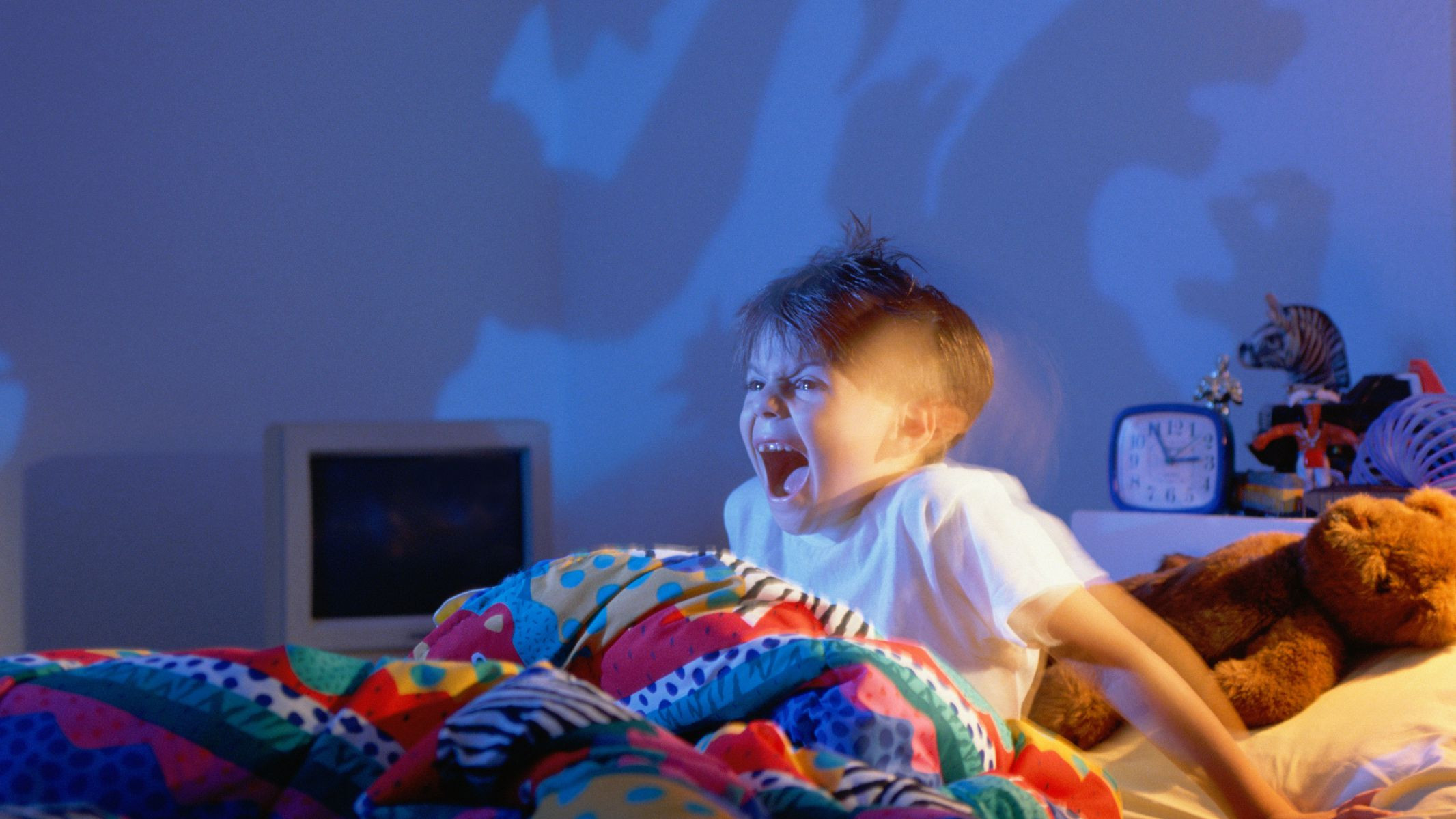
Night terror dapat terjadi sendiri atau bersamaan dengan berjalan saat tidur. Pada sebuah episode night terror, seseorang dapat mengalami gejala sebagai berikut:
- Mulai dengan teriakan yang menakutkan
- Duduk di atas tempat tidur dan tampak ketakutan
- Mata membelalak
- Berkeringat banyak, bernapas dengan berat, mengalami peningkatan detak jantung, wajah memerah, dan pupil (bagian hitam pada mata) melebar
- Menendang dan memukul tanpa henti
- Sulit dibangunkan, dan apabila terbangun, bingung
- Tidak dapat ditenangkan
- Tidak atau hanya sedikit mengingat kejadian tersebut pada pagi hari esoknya
- Kemungkinan dapat bangun dari tempat tidur, berlari berkeliling rumah, serta berperilaku agresif jika dihambat atau diikat
Biasanya, satu episode dapat terjadi selama beberapa detik, menit, atau sedikit lebih lama. Setelahnya, biasanya orang tersebut akan kembali tenang.
Diagnosis
Diagnosis night terror tidak harus cepat ditegakkan. Kondisi ini dapat terdiagnosis secara klinis, yang artinya dapat ditegakkan dengan mengetahui riwayat lengkap dan pemeriksaan fisik menyeluruh. Dokter akan menanyakan kepada Anda riwayat episode night terror pada keluarga. Pemeriksaan laboratorium dan pencitraan pada umumnya dilakukan untuk menyingkirkan kemungkinan masalah lainnya yang memiliki gejala serupa, misalnya seperti kejang, berjalan saat tidur, mimpi buruk, narkolepsi (terlalu banyak mengantuk saat siang hari), apnea tidur (tidak bernapas saat tidur), menahan napas saat tidur, pingsan, mioklonus ringan (kedutan otot secara tiba-tiba pada fase awal tidur), serta tik (gerakan berulang yang dilakukan tanpa sadar).
Pemeriksaan yang dapat dilakukan berupa elektroensefalogram (EEG) dan polisomnografi. EEG merupakan pemeriksaan gelombang listrik otak, yang digunakan untuk mencari adanya kelainan gelombang otak yang menyebabkan kejang. Sementara itu, polisomnografi merupakan pemeriksaan tidur, yang bertujuan untuk mengamati seorang anak saat tidur dan mencari adanya kelainan seperti gangguan napas.
Tata Laksana
Tidak ada terapi khusus untuk menatalaksana night terror. Namun, orangtua atau pengasuh anak memerlukan dukungan dan edukasi agar dapat menjaga keamanan dan keselamatan anak saat hal ini berlangsung. Saat episode ini terjadi, sebaiknya Anda tidak membangunkan anak. Anak yang dibangunkan pada saat night terror terjadi dapat mengalami kebingungan dan makin sulit untuk tertidur kembali. Jika anak Anda mengalami hal ini, pastikan agar anak Anda aman dan tidak cedera akibat memukul-mukul atau tersandung suatu benda.
Pada beberapa kasus, episode ini dapat menyebabkan gangguan aktivitas sehari-hari anak, misalnya seperti aktivitas belajar dan bergaul di rumah dan di sekolah. Dokter dapat memberikan obat-obatan untuk mempermudah tidur atau obat-obatan antidepresan.
Jika anak sedang mengalami stres atau konflik emosi yang sangat berat, dokter dapat merencanakan terapi kombinasi. Terapi ini dapat berupa psikoterapi serta pelatihan mekanisme bertahan (coping mechanism) agar anak dapat menghadapi masalahnya dengan lebih baik. Pada anak dengan masalah seperti ini, kombinasi terapi tersebut dapat membantu menurunkan frekuensi episode night terror. Terapi obat kemungkinan besar tidak diperlukan pada kondisi seperti ini.
Komplikasi
Night terror biasanya dapat sembuh sendiri setelah mencapai usia 10 tahun. Namun, komplikasi dapat terjadi akibat episode night terror tersebut. Komplikasi tersebut dapat berupa:
- Mengantuk pada siang hari, yang dapat menyebabkan masalah pada sekolah (atau pekerjaan pada orang dewasa), serta kesulitan menyelesaikan tugas sehari-hari.
- Seseorang yang mengalami night terror dapat merasa tidurnya seperti tidak lelap atau maksimal.
- Jika orang tersebut mengetahui bahwa ia mengalami night terror, ia dapat merasa malu dan bahkan mengalami masalah hubungan dengan orang-orang di sekitarnya. Orang ini juga dapat menyebabkan cedera pada diri sendiri dan orang lain yang berada di dekatnya.
Pencegahan
Sebagai orangtua atau pengasuh anak, ada beberapa hal yang dapat Anda lakukan:
- Pastikan ruangan anak Anda aman sehingga mereka tidak cedera saat mengalami episode night terror
- Singkirkan benda-benda yang dapat mengganggu tidur anak, seperti perangkat elektronik dan benda lainnya yang mengeluarkan suara berisik
- Cobalah untuk menurunkan level stres anak
- Pastikan anak tidur cukup. Usahakan agar anak tidak terlalu lelah dan tidak begadang
- Buatlah jadwal tidur teratur, dan jalankan bersama anak
- Pastikan untuk bangun tidur pada waktu yang sama setiap hari
Hal lainnya yang dapat Anda lakukan untuk mencegah night terror adalah memecah tidur anak, yang dapat dilakukan dengan langkah sebagai berikut:
- Pertama, catat berapa menit jarak antara jam tidur anak dengan waktu mulai night terror
- Selanjutnya, bangunkan anak 15 menit sebelum waktu terduga night terror, dan pastikan mereka terbangun dari kasur selama 5 menit. Jika anak ingin ke toilet, ini merupakan waktu yang tepat
- Lanjutkan hal ini selama seminggu
Kapan harus ke dokter?
Night terror yang terjadi kadang-kadang biasanya tidak menjadi masalah. Jika Anda rutin membawa anak Anda ke dokter, Anda dapat menyebutkan apabila anak Anda mengalami night terror. Namun, Anda perlu benar-benar waspada dan berkonsultasi apabila night terror menjadi lebih sering terjadi, sangat mengganggu tidur anak/orang tersebut serta orang lain di sekitarnya, menyebabkan bahaya terhadap keselamatan atau cedera, berakibat pada mengantuk di siang hari atau kesulitan beraktivitas sehari-hari, serta tetap terjadi pada saat remaja atau bahkan mulai terjadi saat dewasa.
- dr Nadia Opmalina

Alli, R. (2020). Night Terrors. Retrieved 28 January 2022, from https://www.webmd.com/sleep-disorders/night-terrors
Ben-Joseph, E. (2017). Night Terrors (for Parents) - Nemours KidsHealth. Retrieved 28 January 2022, from https://kidshealth.org/en/parents/terrors.html
Horn, N., & Street, M. (2021). Night Terrors. Retrieved 28 January 2022, from https://www.ncbi.nlm.nih.gov/books/NBK493222/
Sleep terrors (night terrors) - Symptoms and causes. (2021). Retrieved 28 January 2022, from https://www.mayoclinic.org/diseases-conditions/sleep-terrors/symptoms-causes/syc-20353524
/6302127de0c5c.jpeg)