Definition
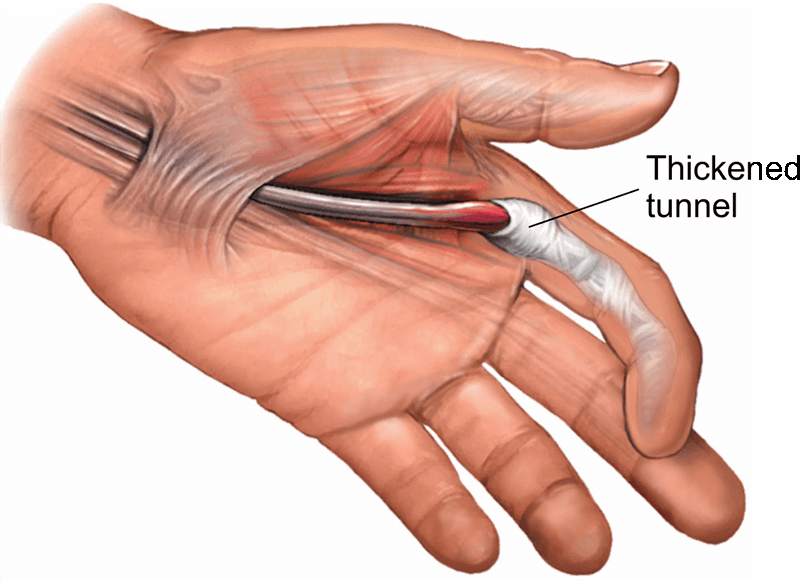
Trigger finger is a condition that affects one or more tendons in the hand, causing difficulty in bending the affected finger or thumb. Tendons are connective tissues that link muscles to bones. In this condition, the finger gets stuck in a bent position and then straightens with a snapping sensation.
This condition can involve the thumb, pinky, and other fingers. One or more fingers may be affected, and it can occur in both hands.
Causes
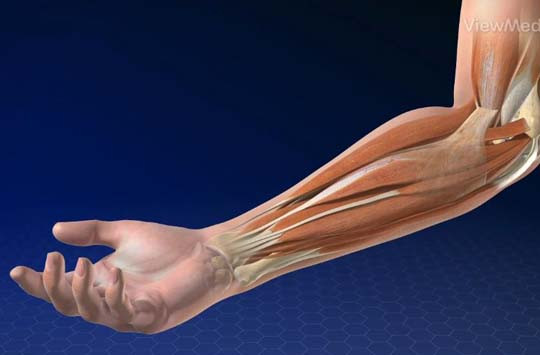
Tendon fibers connect muscle tissues to bones, moving the bone when the muscle contracts. In the upper limbs, tendons originate from forearm muscles that extend along the front and back of the finger bones.
Each tendon is surrounded by a protective sheath that extends from the forearm to the fingers. This sheath produces a small amount of fluid to keep the tendon lubricated, allowing it to move smoothly within the sheath as the fingers bend and straighten.
Trigger finger occurs when there is an issue with the tendon or its sheath in the hand, such as irritation, inflammation, or swelling. For instance, if the tendon sheath in the finger swells, the tendon has a harder time moving within the sheath due to the reduced space. The tendon may become inflamed or swollen, forming a small bump at the site of inflammation, further restricting its movement.
If the bump becomes too large, the tendon can get trapped within the sheath. As a result, the finger may become stuck in a bent position, and when you try to straighten it, the finger may snap back with a sensation of "popping."
The exact cause of this condition is not fully understood. It is believed that trigger finger may occur due to overuse of the fingers or excessive pressure on the tendons in the hand.
Risk Factor
Several factors can increase your risk of developing trigger finger:
- Gender
Trigger finger is more commonly found in women than in men.
- Age
Women aged 40-50 are more susceptible to trigger finger. Although it is rare in children, it can sometimes affect young children. This condition may hinder a child's ability to straighten their thumb, but it is usually painless and tends to improve by the time the child reaches age three.
- History of Hand Injury
Trigger finger can occur after an injury to the base of the finger or palm.
- Occupation
Activities, hobbies, and jobs that require repetitive hand movements or prolonged gripping can increase your risk of developing trigger finger.
- Medical Conditions
Certain medical conditions, such as:
-
- Diabetes: A chronic disease that causes high blood sugar levels
- Rheumatoid arthritis: An autoimmune and chronic inflammatory disease affecting joints, causing pain and stiffness
- Gout: A type of joint inflammation caused by the accumulation of uric acid crystals around the joints
- Amyloidosis: A condition where abnormal amyloid proteins build up in organs such as the liver
- Hypothyroidism: A thyroid gland disorder where insufficient hormones are produced
- Carpal tunnel syndrome and others
Symptoms
Symptoms of trigger finger can range from mild to severe, involving one or more fingers and possibly both hands. Patients often report that symptoms are worse in the morning.
You may feel stiffness or pain at the base of the affected finger. Pain can also occur when the finger is moved or pressed. In severe cases, pain may occur even when the finger is not moved. Additionally, when attempting to move or straighten the finger, a "pop" or "click" sensation may occur.
If the tendon or its sheath is significantly swollen, a bump may be felt at the base of the affected finger. The finger may become stuck in a bent position and suddenly straighten. Eventually, the finger may be unable to bend or straighten fully.
Diagnosis
Trigger finger can be diagnosed based on your medical history and a physical examination. During the examination, the doctor will ask you to open and close your hand, check for painful areas in the hand, assess hand and finger movement, and look for signs of trigger finger.
Management
In some people with mild cases, trigger finger may improve on its own without specific treatment. Resting the affected finger and avoiding activities that cause pain may help alleviate symptoms. Applying a cold compress to the finger 3-4 times a day for 10-15 minutes can reduce swelling and pain.
Treatment depends on the severity of the symptoms and how long the condition has persisted. If left untreated, there is a risk that the finger may remain permanently bent, leading to difficulties with daily activities.
Below are some possible treatments:
- Medications
The doctor may prescribe pain relievers to reduce discomfort. Steroid injections can also be given to reduce swelling in the tendon or its sheath, allowing the tendon to move freely again. Steroids are injected into the base of the affected finger.
Steroid injections are effective in 50-70% of trigger finger patients but may be less effective if the patient has conditions like diabetes or rheumatoid arthritis. Additionally, there is a possibility that the trigger finger could recur after treatment.
- Splinting
In mild cases, splinting the affected finger can relieve symptoms by limiting its movement. If your finger feels very stiff in the morning, wearing a splint overnight may help. Your doctor will recommend how long you should wear the splint. While splinting can be helpful for some, it is generally less effective than steroid therapy, especially in the long term.
- Hand Surgery
Surgery can allow the affected tendon to move freely again. Surgery is usually considered only when other treatments have failed. After surgery, you may be advised to limit activities involving finger movement for a few days.
Complications
Trigger finger can make it difficult to perform daily activities such as typing, buttoning clothes, inserting a key, holding a steering wheel, or gripping objects.
Additionally, complications can arise from trigger finger surgery, including:
- Infection
- Stiffness or pain in the finger
- Painful scars
- Nerve damage
- Abnormal tendon positioning
Prevention
The best way to prevent trigger finger is to take breaks, avoid overusing the wrist and fingers, and use proper tools for your work.
When to See a Doctor?
You should consult a doctor if you suspect you might have trigger finger. The doctor will examine your hand and provide information on the appropriate treatment for you.
Looking for more information about other diseases? Click here!
- dr. Alvidiani Agustina Damanik
Trigger finger (2022) NHS choices. NHS. Available at: https://www.nhs.uk/conditions/trigger-finger/treatment/ (Accessed: January 1, 2023).
Trigger finger (2022) Mayo Clinic. Mayo Foundation for Medical Education and Research. Available at: https://www.mayoclinic.org/diseases-conditions/trigger-finger/symptoms-causes/syc-20365100 (Accessed: January 1, 2023).
Trigger finger (no date) Middle Georgia Orthopaedics. Available at: https://www.mgo.md/patient-resources/education/trigger-finger (Accessed: January 1, 2023).