
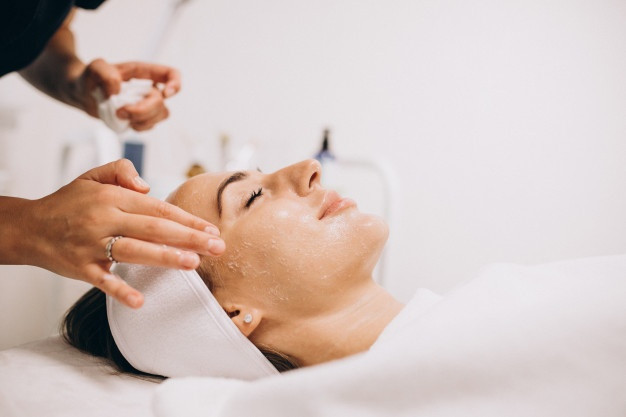
A chemical peel is a treatment used to enhance the look and texture of the skin. In this procedure, a chemical solution is applied to the surface so the skin forms blisters and then peels. When the older layer sheds, a new layer grows in its place, which is typically smoother and appears healthier than before.
Benefits
According to WebMD, chemical peels are most often performed on the face, neck, and hands. The offered benefits of chemical peels include:
- Softening fine lines and wrinkles around the eyes and mouth.
- Helping lessen facial wrinkles caused by sun exposure or aging.
- Smoothing skin with minor scarring so it looks more even.
- Treating certain types of acne.
- Fading age spots, blemishes, and dark patches related to pregnancy or birth control pills.
- Enhancing overall skin appearance.
After a chemical peel, skin becomes more sensitive to sunlight, so apply sunscreen that protects against both UVA and UVB rays. The session itself is usually brief. Your skin is first cleansed to remove excess oil. Next, a chemical solution is carefully applied.
The Cleveland Clinic notes that commonly used solutions include glycolic acid, trichloroacetic acid, salicylic acid, and lactic acid or carbolic acid (phenol). Each agent has distinct effects and reaches different depths in the skin. Once they penetrate, they prompt the outer layer to shed, revealing fresher skin underneath.
Types of Chemical Peels
There are several categories of chemical peels, each offering different levels of results.
- Light Chemical Peels
These gentle resurfacing treatments are done periodically and are often repeated. In a light peel, the solution removes only the outermost layer of skin.
This approach is suitable for addressing fine lines, acne, uneven tone, dryness, and sun damage, and it helps improve the skin’s look and health.
Recovery from a light peel typically ranges from several hours to a few days and is generally brief.
- Medium Chemical Peels
A medium chemical peel will smooth and refresh your skin complexion by removing the outer and middle layers of skin. It is commonly used for uneven tone, age spots, acne scarring, and fine to moderate wrinkles.
Recovery from a medium peel usually takes more than a week. Your doctor will advise avoiding direct sun exposure and any skincare products not specifically recommended.
- Deep Chemical Peels
A deep peel delivers more intensive results because the chemicals penetrate to the mid and lower layers of the skin. It can help with lines around the eyes and mouth, moderate wrinkles, sun damage, deep acne scars, blemishes, or precancerous lesions called actinic keratoses.
Recovery after a deep peel generally requires at least eight weeks.
Before and after a chemical peel, you will be instructed to avoid direct sunlight. You may also be advised to avoid creams containing hydroquinone or retinoids and to discuss the use of antiviral or antibiotic medicines as directed by your doctor.
To reduce the risk of side effects after treatment, always follow medical guidance and consult your doctor promptly if you notice any problems.
Looking for more information about health tips and tricks, first aid, and other home remedies? Click here!
- dr Hanifa Rahma
Debra Jaliman, MD (2021). Chemical Peels and Your Skin. Available from: https://www.webmd.com/beauty/cosmetic-procedures-chemical-peel-treatments#1
Cleveland Clinic (2021). Chemical Peels. Available from: https://my.clevelandclinic.org/health/treatments/11010-chemical-peels