
Definition
Hypertension, also known as high blood pressure, is a disease that significantly contributes to high mortality rates. While hypertension is often associated with adults, it can also affect children. Hypertension in children is becoming increasingly recognized, with an estimated 2-4% of the global child population experiencing this condition.
Hypertension in children is categorized into two types: primary (or essential) hypertension and secondary hypertension. Essential hypertension is the most common form in children. It is defined as an increase in blood pressure in children that exceeds the 95th percentile for their gender, age, and height, without a known cause.
Essential hypertension typically affects children over the age of 6. Some studies suggest that it is very rare in children under 10 years of age, with 85-90% of cases occurring in adolescents.
It is important to note that children who experience essential hypertension are at a higher risk of developing hypertension in adulthood, with the risk being four times greater. Early detection of hypertension in children is crucial to ensure healthy growth and development.
Causes
Primary hypertension, also known as essential hypertension, is an increase in blood pressure where the exact cause remains unknown.
Risk Factor
Several factors may increase the likelihood of a child developing essential hypertension, including:
-
Family history: A family history of hypertension can increase the risk of a child developing essential hypertension, as the condition can be inherited. Additionally, a family history of type 2 diabetes may also raise the risk.
-
Lifestyle: Modern lifestyles have become increasingly unhealthy for children. Many children consume diets high in salt, calories, and cholesterol, and they are less active due to excessive screen time on gadgets. Unsupervised gadget use often results in reduced physical activity and poor dietary habits, leading to obesity or excessive weight gain. Obesity, combined with other harmful habits like smoking (both active and passive), emotional stress, and insufficient sleep, can raise the risk of developing essential hypertension later in life.
-
Prematurity: Children born prematurely may have an increased risk of developing essential hypertension.
-
Gender: Boys are more likely to develop essential hypertension than girls.
-
Low birth weight: Children born weighing less than 2500 grams have a higher likelihood of developing hypertension.
-
Congenital heart disease: Children with congenital heart conditions are at a greater risk for hypertension.
-
Kidney disorders: Children who have experienced kidney issues from birth are more likely to develop high blood pressure.
Symptoms
In general, essential hypertension in children does not cause noticeable symptoms. However, if it does lead to symptoms, the following signs may appear:
-
Headache
-
Seizures
-
Vomiting
-
Chest pain
-
Rapid heart rate
-
Shortness of breath
The symptoms can vary by age:
-
In newborns: Babies may show signs of shortness of breath, restlessness, skin color changes (pale or bluish), vomiting, and seizures. These symptoms may also be accompanied by sweating.
-
In older children: Children may feel fatigued, experience headaches, nosebleeds, blurred vision, and nausea. Long-term, children with essential hypertension may experience symptoms like muscle weakness, poor weight gain (or weight loss), and stunted growth.
Diagnosis
To diagnose essential hypertension in children, the doctor will first ask about the child’s overall medical history. This includes questions about the child’s diet, physical activity, screen time, family history of illness, and other relevant information related to the child’s health.
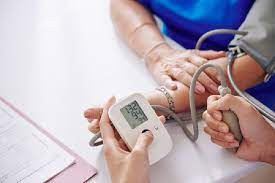
After the initial interview, the doctor will perform a physical examination, which will include measuring the child’s blood pressure in a calm and comfortable environment to ensure accuracy.
The child’s blood pressure will be checked 2 to 3 times during each visit to the doctor to confirm the consistency of the readings. If blood pressure readings are elevated across three visits, a diagnosis of hypertension will be made.
Once the diagnosis is established, the doctor will perform additional tests to identify the underlying cause of the hypertension. These supporting tests may include:
-
Laboratory tests: The doctor will collect blood and urine samples (urinalysis) for analysis in the laboratory. These tests aim to assess kidney function, electrolyte levels, and cholesterol in the child.
-
Imaging tests: These tests are used to examine the child’s heart and kidneys, as abnormalities in these organs can contribute to hypertension. Two common procedures are echocardiogram and ultrasound. Echocardiogram helps detect abnormalities in the heart and its blood flow. Meanwhile, ultrasound of the kidneys helps identify any issues that may be contributing to the hypertension. Both tests are safe for children.
-
Ambulatory monitoring: This test is conducted to determine if the increase in blood pressure is due to anxiety or stress related to being in a medical environment. A device is attached to the child that measures blood pressure throughout the day, including during sleep and other activities, providing a more accurate picture of the child’s blood pressure levels.
Management
Treatment for essential hypertension in children depends on the severity of the condition. After diagnosing and identifying the underlying cause, the doctor will assess the severity of the hypertension.
In cases of essential hypertension with mild to moderate symptoms, management primarily focuses on lifestyle changes. If blood pressure does not significantly improve after lifestyle modifications, antihypertensive medication will be prescribed.
Meanwhile, in cases of essential hypertension with severe symptoms, antihypertensive medications are administered immediately to reduce the risk of complications.
There are several types of antihypertensive medications, each working through different mechanisms to lower blood pressure. Some medications relax the muscles of blood vessels, while others remove excess salt from the body, which also draws out water through the kidneys. Reducing the amount of water in the body lowers the overall blood volume and helps to lower blood pressure.
Complications
Children who develop essential hypertension are four times more likely to experience high blood pressure as adults. In adulthood, hypertension can lead to several severe complications, including heart attacks, strokes, heart failure, kidney failure, and even death.
Prevention
The exact cause of essential hypertension in children remains unknown, but preventive measures can be taken. One of the most important strategies is improving the child’s lifestyle. For children who are obese, weight loss and better control over their food intake are crucial.
Reducing the consumption of foods high in salt, cholesterol, and calories, while increasing the intake of foods rich in fiber, can help lower the risk of essential hypertension. In addition to regulating diet, reducing screen time and encouraging outdoor physical activity are essential for preventing high blood pressure.
For children with known risk factors—such as those born prematurely, with low birth weight (less than 2500 grams), with congenital heart disease, or those who have undergone intensive care—regular blood pressure checks should begin at birth. These checks will help detect and treat hypertension early, allowing for better overall health and development.
When to See a Doctor?
Children should begin having their blood pressure measured regularly from the age of 3. It is recommended that children have a routine blood pressure check at least once a year. If you notice any signs of high blood pressure or if your child has any of the risk factors, it is important to consult a doctor promptly.
Looking for more information about other diseases? Click here!
- dr Hanifa Rahma
(IDAI, 2016) Hipertensi pada Anak. Diakses pada tanggal 16 Mei 2022 melalui https://www.idai.or.id/artikel/seputar-kesehatan-anak/hipertensi-pada-anak
(Mayo clinic, 2021) High blood pressure in children. Diakses tanggal 16 mei 2022 melalui https://www.mayoclinic.org/diseases-conditions/high-blood-pressure-in-children/symptoms-causes/syc-20373440#:~:text=Primary%20(essential)%20hypertension&text=This%20type%20of%20high%20blood%20pressure%20occurs%20more%20often%20in,history%20of%20high%20blood%20pressure
(Mayo clinic, 2021) Diagnose and Treatment of High blood pressure in children. Diakses tanggal 16 mei 2022 melalui https://www.mayoclinic.org/diseases-conditions/high-blood-pressure-in-children/diagnosis-treatment/drc-20373446
(Medscape, 2017) Pediatric Hypertension. Diakses tanggal 16 mei 2022 melalui https://emedicine.medscape.com/article/889877-overview
Sabri, M., Gheissari, A., Mansourian, M., Mohammadifard, N., & Sarrafzadegan, N. (2019). Essential hypertension in children, a growing worldwide problem. Journal of research in medical sciences : the official journal of Isfahan University of Medical Sciences, 24, 109. https://doi.org/10.4103/jrms.JRMS_641_19
/6260ea0df2071.jpg)