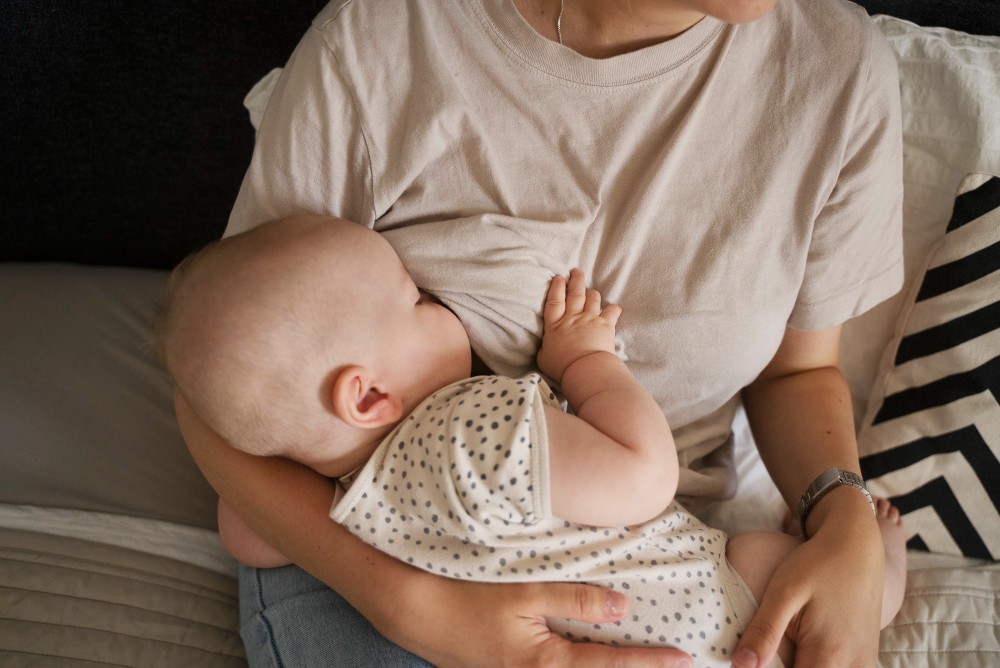
Beberapa ibu mungkin tidak bisa menyusui langsung karena berbagai alasan, seperti mulai kembali bekerja, atau alasan kesehatan. Untuk itu, beberapa bayi diberi susu baik ASI perah maupun susu formula melalui botol. Penggunaan botol susu ini cukup membantu sehingga bayi tetap bisa mendapatkan nutrisi dalam pertumbuhan dan perkembangan tubuhnya.
Pun demikian, kemudahan memberikan susu melalui botol ini bisa membawa risiko tersendiri bagi bayi.
Risiko Menyusu dari Botol
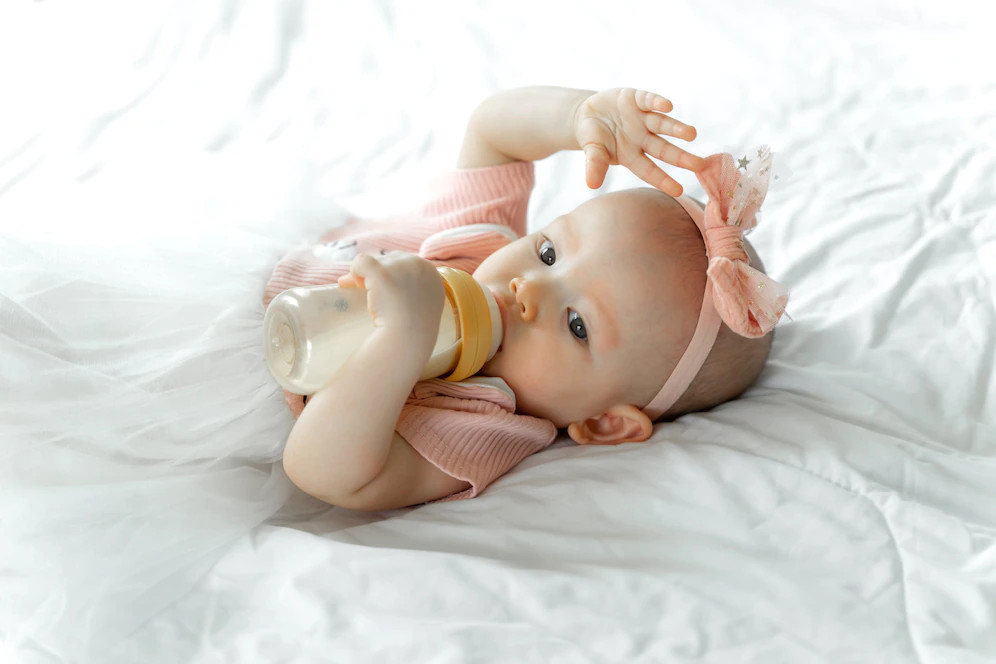
Risiko menyusu dari botol meningkat ketika bayi menyusu di atas tempat tidur. Kenyamanan menyusu ini membuat bayi bisa tidur sambil "ngedot". Terkadang memang melihat bayi dalam kondisi ini terlihat lucu, apalagi ini cara yang cukup efektif untuk membuatnya lekas terlelap. Namun waspadai risiko menyusu dari botol berikut ini:
Risiko tersedak
Saluran udara bayi sangatlah kecil sehingga rentan membuat mereka tersedak terutama saat minum dalam posisi berbaring. Posisi ini memungkinkan susu keluar lebih cepat daripada yang bisa mereka telan. Untuk itu, Anda disarankan untuk menggendong dan menopang bayi saat menyusui. Posisi ini menjadi tindakan korektif untuk membantu membersihkan jalan napas jika bayi mulai tersedak atau batuk-batuk.
Risiko kerusakan gigi
Posisi minum susu di tempat tidur sambil menghisap botol memungkinkan bayi tidur dengan masih ada susu di dalam mulut. Apapun yang diminum oleh bayi dapat berkumpul dan mengendap di sekitar tempat gigi tumbuh. Walaupun saat ini giginya belum tumbuh namun membiarkan gula mengendap di rongga mulut meningkatkan risiko kerusakan gigi. Gula ini dapat terurai menjadi asam yang dapat menyerang lapisan email gigi dan menyebabkan kerusakan.
Risiko infeksi telinga
Bayi yang minum susu dari botol di tempat tidur juga lebih berisiko terkena infeksi telinga. Apalagi posisi minum sambil berbaring ini menyebabkan cairan dengan mudah dapat mengalir ke saluran tengah telinga.
Bayi susah tidur tanpa ngedot
Minum susu dari botol seringkali membantu bayi lekas tertidur, namun hal ini dapat menyebabkan ketergantungan di mana bayi hanya bisa tidur ketika ngedot. Di masa depan, hal ini akan menimbulkan masalah tersendiri, karena Anda akan sulit melepaskan bayi dari kebiasaan ini.
Di Usia Berapa Sebaiknya Anak Berhenti Ngedot?
Dengan adanya risiko di atas, maka sebaiknya bayi mulai diperkenalkan dengan training cup yang membantu bayi minum susu dari gelas. Gelas ini memiliki desain khusus untuk membantu bayi belajar minum dari gelas.
Umumnya, Anda training cup diperkenalkan sejak bayi berusia 6 bulan, bersamaan dengan waktu memberikan makanan padat pertamanya. Namun training cup bisa juga diperkenalkan lebih awal, pada usia 3-4 bulan. Training cup tidak hanya bisa diisi oleh susu, Anda juga bisa memperkenalkannya pada air putih untuk membantu membilas sisa makanan setelah makan. Membilas sisa makanan dari rongga mulut dapat membantu mencegah kerusakan gigi.
Setelah bayi belajar minum susu dari training cup, maka koordinasi mulut dan tangannya menjadi lebih baik. Di saat ini, ia mulai lebih terlatih untuk minum susu dari training cup dan tidak hanya mengandalkan minum susu dari botol.
Para ahli merekomendasikan agar Anda beralih sepenuhnya dari botol ke training cup di usia 1 tahun, yang juga dapat membantu bayi agar disapih dengan mudah dari botol dan tidak mengandalkan botol untuk bisa terlelap. Kemudian sebelum usia 2 tahun, Anda bisa beralih ke cangkir terbuka karena anak sudah tidak tergantung lagi pada ASIP atau susu formula dan sebagian besar mendapatkan nutrisi yang dibutuhkan dari makanan padat yang dikonsumsinya.
Mau tahu informasi seputar kehamilan, menyusui, kesehatan wanita dan anak-anak? Cek di sini, ya!
Writer : Agatha Writer
Editor :
- dr Anita Larasati Priyono
Last Updated : Minggu, 19 Oktober 2025 | 14:20

CDC (2021). Feeding From a Bottle. Available from: https://www.cdc.gov/nutrition/infantandtoddlernutrition/bottle-feeding/index.html
Cleveland Clinic (2022). The Risks of Bottle Feeding in Bed. Available from: https://health.clevelandclinic.org/babies-and-bottles-in-bed/
Kandis Lake (2022). When and how to introduce a sippy cup. Available from: https://www.babycenter.com/baby/solids-finger-foods/sippy-cup-dos-and-donts_1439508