
Definisi
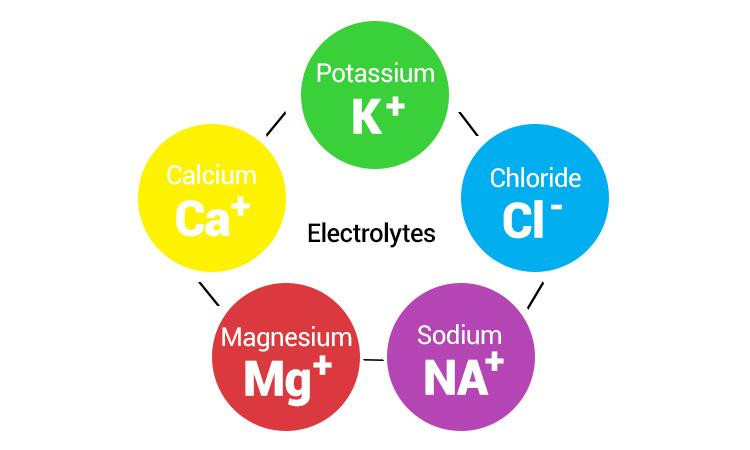
Elektrolit merupakan mineral yang memiliki kontrol penting dalam mengendalikan fungsi tubuh. Elektrolit terdapat dalam darah, cairan tubuh dan urine serta haruslah seimbang agar fungsi tubuh berfungsi dengan semestinya. Elektrolit memiliki berbagai fungsi penting seperti menjaga cairan tubuh dan plasma darah, menjaga pH darah dalam rentang normal, membantu kontraksi otot termasuk detak jantung, menyampaikan pesan dari otot, sel sarah, jantung dan sel lainnya, membantu pembekuan darah dan membentuk jaringan baru. Hal ini dapat memengaruhi fungsi tubuh.
Beberapa fungsi elektrolit tubuh, seperti:
- Sodium: mengontrol tingkat cairan dan memperbaiki saraf dan fungsi otot
- Potasium: mendukung fungsi jantung, saraf dan otot. Selain itu, potasium menggerakan nutrisi masuk ke dalam sel dan produk sisa keluar tubuh dan mendukung metabolisme tubuh
- Kalsium: membantu kontraksi dan relaksasi pembuluh darah untuk menstabilkan tekanan darah. Selain itu, kalsium membantu mengeluarkan hormon dan enzim yang membantu sistem saraf
- Klorida: menjaga tingkat darah, tekanan darah dan cairan tubuh dalam kadar normal
- Magnesium: membantu fungsi saraf dan otot. Membantu pertumbuhan tulang dan gigi
- Fosfat: membantu sistem otot dan fungsi saraf dan otot
- Bikarbonat: membantu keseimbangan asam basa di dalam tubuh (keseimbangan pH). Selain itu, bikarbonat membantu karbon dioksida (produk sisa) dikeluarkan dari pembuluh darah anda.
Imbalans (kekurangan) elektrolit terjadi ketika Anda memiliki terlalu banyak atau terlalu sedikit mineral di dalam tubuh. Kondisi ini juga dapat menjadi permasalahan seperti gangguan ginjal. Ginjal menjaga keseimbangan elektrolit dengan perubahan kadar sodium yang dibutuhkan tubuh. Adapun beberapa tipe dari imbalans elektrolit, yaitu hiper- merupakan kondisi terjadi peningkatan kadar dan hipo- merupakan kondisi terjadi penurunan kadar):
- Sodium: hiponatremia dan hipernatremia
- Potassium: hipokalemia dan hiperkalemia
- Kalsium: hipokalemia dan hiperalemia
- Klorida: hipokloremia dan hiperkloremia
- Magnesium: hipomagnesemia dan hipermagnesemia
- Fosfat: hipofosfatemia dan hiperfosfatemia
- Bikarbonat: asidosis (kadar asam yang tinggi)
Penyebab
Setengah berat tubuh manusia tersusun dari air. Darah dan cairan di dalam serta sekitar sel (disebut dengan cairan kompartemen) mengandung banyak air. Ginjal dan hati serta jaringan dan organ lainnya terus memindahkan elektrolit keluar masuk sel untuk menyesuaikan tingkat cairan di dalam sel. Pada beberapa kondisi kesehatan dapat memengaruhi kemampuan tubuh untuk menggerakan dan menyeimbangkan elektrolit.
Beberapa kondisi yang dapat menyebabkan imbalans elektrolit seperti muntah, diare atau berkeringat jangka panjang yang disebabkan oleh penyakit, kehilangan cairan terkait luka bakar, obat tertentu seperti diuretik, gangguan pada organ seperti penyakit ginjal kronis, gangguan jantung, gangguan paru-paru dan lainnya.
Penyebab pasti dari imbalans elektrolit bergantung pada tipe elektrolit, diantaranya:
- Kalsium :
- Hiperkalemia : kondisi terlalu banyak kalsium dalam darah. Hal ini dapat disebabkan oleh gangguan ginjal, hiperparatiroid, gangguan paru-paru (tuberkulosis atau sorcoidosis), kanker tertentu seperti kanker paru dan payudara, penggunaan antasida, kalsium atau vitamin D yang berlebih, pengobatan seperti litium, teofilin dan obat lainnya
- Hipokalemia : kondisi dimana kekurangan kalsium dalam darah. Hal ini dapat disebabkan oleh gagal ginjal, hipoparatiroid, kekurangan vitamin D, pankreatitis, kanker prostat, malabsorbsi dan obat tertentu (seperti kemoterapi, osteoporosis, beberapa diuretik dan anti-mual)
- Klorida :
- Hiperkloremia terjadi ketika terlalu banyak klorida di dalam tubuh sehingga dapat menyebabkan dehidrasi parah, gagal ginjal dan asidosis metabolik
- Hipokloremia terjadi ketika terlalu sedikit klorida di dalam tubuh sehingga dapat menyebabkan alkalosis metabolik, diuretik, respiratori asidosis kronis, kehilangan cairan tubuh yang ekstrem seperti muntah atau diare
- Magnesium
- Hipermagnesium terjadi ketika magnesium dalam tubuh berlebih dan biasanya disebabkan pada pasien dengan gangguan ginjal (kronis maupun akut)
- Hipomagnesium terjadi ketika magnesium dalam tubuh terlalu sedikit dan umumnya disebabkan oleh penyalahgunaan alkohol, malnutrisi, malabsorbsi, diare dan pengobatan tertentu seperti diuretik dan antibiotik
- Fosfat
- Hiperfosfatemia terjadi ketika kadar fosfat di dalam tubuh terlalu tinggi. Pada umumnya terjadi karena penyakit ginjal kronis, kesulitan bernapas, kerusakan pada otot yang parah, tumor lisis sindrom (komplikasi pada pengobatan kanker), penggunaan laksatif mengandung fosfat yang berlebih.
- Hipofosfatemia terjadi bila kadar fosfat dalam tubuh terlalu rendah. Pada umumnya terjadi pada penyalahgunaan alkohol, luka bakar parah, sindrom refeeding, kekurangan vitamin D, kelenjar paratiroid yang terlalu aktif dan obat-obatan tertentu seperti antasida
Baca Juga: Fosfat - Indikasi, Kontraindikasi, Hasil dan Saran
- Potasium
- Hiperkalemia terjadi disebabkan oleh kadar potasium yang tinggi. Hal ini dapat disebabkan oleh dehidrasi parah, gagal ginjal, asidosis parah (termasuk ketoasidosis diabetikum), pengobatan tertentu termasuk obat pengatur tekanan darah dan diuretik serta ketidakmampuan adrenal yang dapat menyebabkan kadar kortisol terlalu rendah
- Hipokalemia terjadi ketika kadar potasium terlalu rendah. Hal ini dapat disebabkan karena gangguan makan, muntah atau diare parah, beberapa obat seperti laksatif, diuretik dan kortikosteroid
- Sodium
- Hipernatremia terjadi ketika terlalu banyak sodium di dalam darah. Hal ini dapat disebabkan oleh kurangnya air yang dikonsumsi dan cairan tubuh yang keluar berlebih sebagai hasil dari muntah, diare atau keringat berlebih
- Hiponatremia terjadi ketika terlalu sedikit sodium di dalam darah. Hal ini dapat disebabkan oleh muntah atau diare, nutrisi yang buruk, penggunaan alkohol, overhidrasi, gangguan tiroid atau adrenal, gagal ginjal, hati dan jantung, beberapa obat seperti obat diuretik dan kejang.
Faktor Risiko
Pada beberapa kondisi, tubuh Anda dapat terjadi ketidakseimbangan elektrolit. Anda memiliki risiko lebih tinggi mengalaminya bila:
- Memiliki luka bakar
- Kanker
- Gangguan jantung seperti gagal jantung atau tekanan darah tinggi
- Dehidrasi yang disebabkan oleh tidak cukup minum cairan atau dari pengeluaran berlebih dari muntah, diare, atau keringat berlebih
- Hidrasi berlebih atau terlalu banyak minum air
- Gangguan makan
- Gangguan ginjal
- Gangguan hati seperti sirosis
- Beberapa obat-obatan tertentu seperti antibiotik, obat kemoterapi, kortikosteroid, diuretik dan laksatif
Gejala
Gejala dari imbalans elektrolit bergantung pada tingkat keparahan dan tipe elektrolit yang tidak seimbang. Sedikit perbedaan ketidakseimbangan elektrolit mungkin tidak nampak adanya perubahan.
Beberapa gejala yang dirasakan, seperti:
- Kebingungan
- Mudah marah
- Diare atau konstipasi
- Kelelahan
- Sakit kepala
- Detak jantung yang lebih cepat (aritmia)
- Kram otot atau spasme otot atau kelemahan
- Mual dan muntah
- Mati rasa atau kesemutan pada jari dan kaki
Jika Anda ingin mengetahui selengkapnya mengenai aritmia, Anda dapat membacanya di sini: Aritmia - Definisi, Penyebab, Gejala, dan Pengobatannya
Diagnosis
Dokter akan menegakkan diagnosis imbalans elektrolit melalui anamnesis atau wawancara medis, pemeriksaan fisik dan pemeriksaan penunjang.
Wawancara Medis
Wawancara medis adalah sesi tanya jawab antara dokter dan pasien. Dokter akan bertanya mengenai:
- Gejala yang dirasakan saat ini
- Riwayat penyakit dahulu
- Riwayat obat-obatan yang dikonsumsi
- Riwayat penyakit keluarga
Pemeriksaan Fisik
Kemudian, dokter akan menilai tekanan darah, laju pernapasan, denyut nadi, dan suhu tubuh.
Pemeriksaan Penunjang
Dokter akan melakukan pemeriksaan melalui pemeriksaan darah dengan pengujian panel eletrolit. Dokter akan menyarankan anda melakukan pemeriksaan panel metabolik untuk menilai kadar elektrolit dan subtansi lain di dalam darah.
Tata Laksana
Pengobatan dari imbalans elektrolit bergantung pada tipe, keparahan dan penyebab dari imbalans elektrolit. Beberapa kondisi imbalans elektrolit dapat sembuh sendiri tanpa adanya pengobatan. Pada kondisi dehidrasi, dokter akan merekomendasikan Anda me-rehidrasi dengan minuman elektrolit atau larutan garam rehidrasi oral. Dokter akan memberikan jumlah gula, garam dan air untuk membuat larutan tersebut atau Anda dapat membeli di apotek.
Beberapa perawatan medis untuk pengobatan imbalans elektrolit, seperti:
- Cairan intravena (IV) seperti sodium klorida untuk rehidrasi tubuh
- Obat intravena (IV) untuk mengembalikan keseimbangan elektrolit
- Obat atau suplemen untuk mengganti elektrolit yang hilang
- Hemodialisis untuk memperbaiki ketidakseimbangan elektrolit yang disebabkan oleh gagal ginjal atau kerusakan ginjal parah
Komplikasi
Imbalans elektrolit yang signifikan (terlalu tinggi atau terlalu rendah) dapat menyebabkan kondisi serius dan dapat mengancam nyawa. Komplikasi tersebut meliputi koma, kejang, dan serangan jantung.
Baca Juga: Serangan Jantung - Definisi, Penyebab, Gejala, dan Pengobatannya
Pencegahan
Hidrasi yang cukup untuk menjaga elektrolit di dalam tubuh pada batas normal. Hal ini penting untuk mencukupi kadar cairan yang dibutuhkan tubuh terutama pada kondisi diare, muntah atau keringat yang berlebih.
Kapan Harus ke Dokter?
Hubungi dokter bila Anda mengalami:
- Perubahan detak jantung
- Kelelahan berlebih
- Diare atau muntah yang berlangsung lama
- Tanda dehidrasi
- Kebingungan yang tidak dapat dijelaskan, kram otot, mati rasa atau kesemutan
Mau tahu informasi seputar penyakit lainnya? Cek di sini, ya!
- dr. Monica Salim

Electroilyte Imbalance. (2022). Retrieved 20 February 2023, from https://my.clevelandclinic.org/health/symptoms/24019-electrolyte-imbalance
All About Electrolyte Imbalance. (2022). Retrieved 20 February 2023, from https://www.healthline.com/health/electrolyte-disorders
What is an Electrolyte Imbalance. (2021). Retrieved 20 February 2023, from https://www.webmd.com/a-to-z-guides/what-is-electrolyte-imbalance
Electrolyte Imbalance Symptoms, What Causes it, and How to Treat It. (2021). Retrieved 20 February 2023, from https://www.medicalnewstoday.com/articles/electrolyte-imbalance
Electrolytes. (2022). Retrieved 20 February 2023, from https://www.ncbi.nlm.nih.gov/books/NBK541123/
What are Electrolyte Imbalance?. (2023). Retrieved 20 February 2023, from https://www.verywellhealth.com/electrolyte-imbalances-4800164