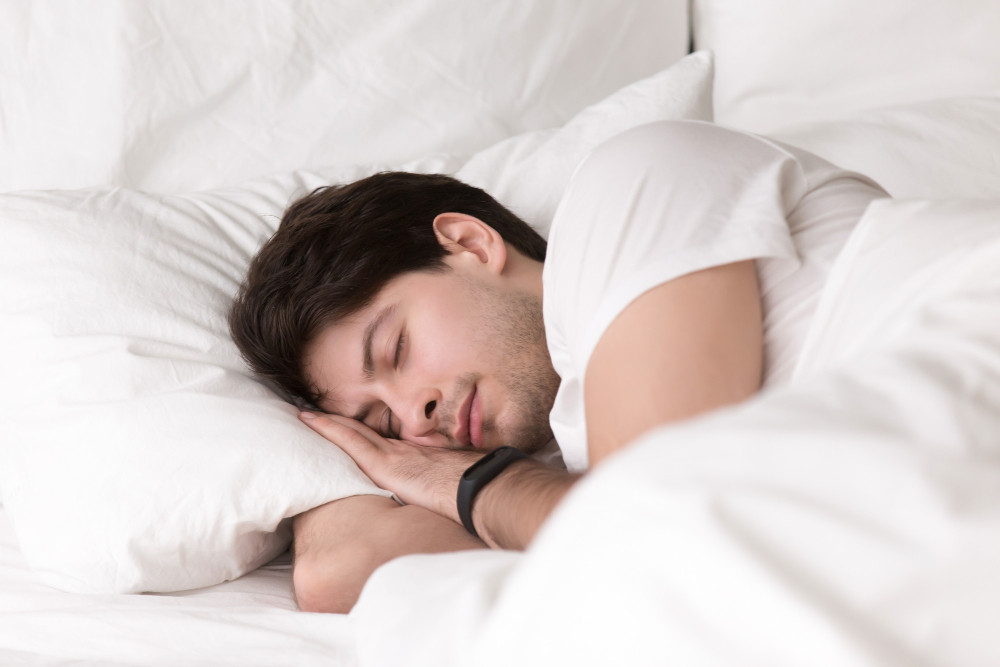

A common but often overlooked habit is sleeping on your side. Many people think this sleep position can lead to facial changes, such as uneven features or early wrinkles.
Is there any truth to the claim that side sleeping affects your face shape? Let’s explore the facts below.
Sleeping on Your Side: How It Can Impact Your Face
During sleep, your body tends to stay in one position for hours. While this helps you rest, it also means that the parts of your body that touch the bed, such as your face, can experience continuous pressure.
Side sleeping is popular for being comfortable and is even recommended for reducing issues like snoring or sleep apnea. However, if your face is constantly pressing against a pillow, this can create effects on your skin and facial muscles.
Some research suggests that consistent side sleeping may gradually cause certain areas of your facial skin to crease, leading to fine lines and eventually deeper wrinkles. In addition, ongoing pressure on the skin can interfere with blood flow, potentially causing puffiness or a dull, less toned appearance.
What about the structure of your face, can it actually become lopsided? The answer is no.
Side sleeping does not change the bone structure of your face. Your facial shape is mostly determined by genetic factors and certain health conditions, not by your sleep position.
That said, this sleep habit may influence how your skin and muscles look. Regular pressure on one side of the face can weaken skin elasticity, create uneven muscle use, and form fine lines or folds. People who frequently sleep on their side, especially on soft or unsupportive pillows, may notice more prominent lines on the side of the face that touches the pillow.
Tips to Keep Your Face Looking Fresh While Sleeping
Although side sleeping is not necessarily harmful, there are a few practical steps you can take to reduce its effects on your facial appearance:
-
Choose a pillow with proper support and firmness to help maintain your neck and head position.
-
Use pillowcases made from silk or satin, as these materials create less friction on the skin.
-
Try alternating your sleep position, such as sleeping on your back from time to time, to reduce prolonged pressure on one side of your face.
-
Apply a hydrating night cream that contains antioxidants before bed to help keep your skin firm and healthy.
-
Avoid staying in the same position throughout the night to reduce the risk of skin compression on one side.
If you notice that your face looks uneven or you’re experiencing changes that concern you, it’s a good idea to talk to a medical professional. You can also access online consultation services through the Ai Care app, available on the App Store or Play Store.
Looking for more information about other diseases? Click here!
- dr Hanifa Rahma
Peter Morales-Brown (2023). What to know about having an asymmetrical face. Available from: https://www.medicalnewstoday.com/articles/asymmetrical-face
Victoria Hamilton (2022). What to Know About Facial Asymmetry. Available from: https://www.webmd.com/a-to-z-guides/what-to-know-about-facial-asymmetry
Hana Hong (2024). The Best—and Worst—Sleeping Positions for Preventing Wrinkles, According to Pros. Available from: https://www.realsimple.com/beauty-fashion/skincare/anti-aging/best-sleep-positions
Eric Suni (2025). Best Sleeping Positions. Available from: https://www.sleepfoundation.org/sleeping-positions
The University of Queensland (2024).Sleep wrinkles are real. Here’s how they leave their mark. Available from: https://medicine.uq.edu.au/article/2024/05/sleep-wrinkles-are-real-here%E2%80%99s-how-they-leave-their%C2%A0mark