Bagi penderita sakit maag, berpuasa Ramadhan bisa menjadi tantangan tersendiri. Meskipun puasa sebenarnya dapat memberikan manfaat positif bagi kesehatan pencernaan, namun gejala seperti nyeri di ulu hati, perut kembung, dan mual sering kali membuat pengidap sakit maag ragu untuk berpuasa karena khawatir kondisinya memburuk.
Sebenarnya, orang dengan sakit maag masih bisa berpuasa dengan nyaman. Yang diperlukan adalah persiapan yang tepat dan pola makan yang sehat, sehingga puasa dapat dijalani dengan lancar tanpa memperburuk gejala sakit maag.
Tips Berpuasa Jika Menderita Sakit Maag
Berpuasa saat menderita maag bisa memberikan tantangan yang besar. Agar puasa Anda tetap berjalan lancar, berikut beberapa langkah yang bisa diikuti:
Berkonsultasi dengan dokter
Sebelum memulai puasa, sebaiknya berkonsultasi dengan dokter terlebih dahulu. Dokter dapat memberikan saran yang tepat terkait kondisi kesehatan Anda dan memberikan rekomendasi obat-obatan yang perlu dikonsumsi selama puasa, sehingga Anda dapat berpuasa dengan aman dan nyaman.
Memilih makanan yang tepat
Pilih makanan yang kaya serat, protein, dan karbohidrat kompleks, terutama saat sahur. Makanan seperti oatmeal, roti gandum, dan buah-buahan dapat membantu Anda merasa kenyang lebih lama serta membantu menstabilkan kadar asam lambung.
Menghindari pemicu maag
Selama berpuasa, penting bagi penderita sakit maag untuk memperhatikan jenis makanan yang dikonsumsi. Makanan pedas, asam, berlemak, serta minuman bersoda dan berkafein sebaiknya dihindari karena dapat merangsang produksi asam lambung berlebih. Makanan tersebut juga dapat memperburuk gejala sakit maag seperti nyeri ulu hati, kembung, dan mual.
Sebaliknya, pilihlah makanan yang mudah dicerna, rendah lemak, dan kaya serat untuk mendukung kebutuhan energi sepanjang hari dan menjaga agar gejala sakit maag tidak kambuh.
Baca Juga: Tips Agar Maag Tidak Kambuh Saat Puasa
Makan dalam porsi kecil
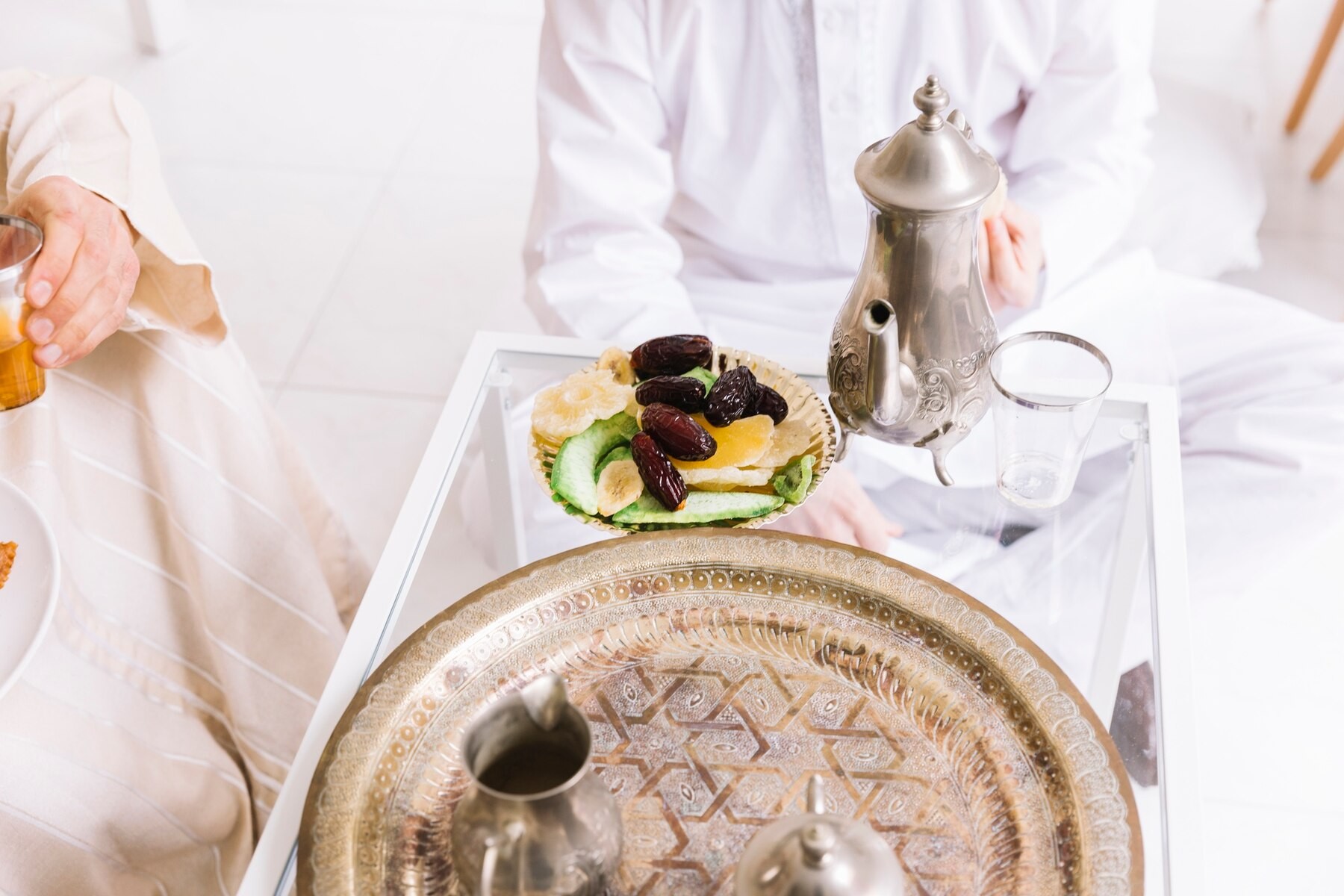
Saat berbuka, awali dengan makanan ringan seperti air putih dan kurma. Makanan ringan ini dapat membantu tubuh menyesuaikan diri setelah seharian berpuasa.
Setelah itu, sebaiknya makan dalam porsi kecil agar lambung tidak bekerja terlalu berat. Hindari makan dalam jumlah besar sekaligus, karena dapat memicu perut kembung dan meningkatkan produksi asam lambung, yang bisa memperburuk gejala sakit maag.
Minum cukup air
Memenuhi kebutuhan cairan tubuh selama berpuasa sangatlah penting. Anda bisa minum air putih secara bertahap dengan membaginya saat berbuka, sebelum tarawih, sebelum tidur, dan saat sahur.
Utamakan mencukupi kebutuhan cairan tubuh dengan air putih. Hindari minuman berkafein dan bersoda, karena dapat memicu dehidrasi serta meningkatkan produksi asam lambung.
Baca Juga: Rekomendasi Obat Herbal untuk Sakit Maag
Konsumsi obat sesuai anjuran
Bagi penderita maag yang menjalani puasa, disarankan untuk tetap mengonsumsi obat sesuai anjuran dokter. Pastikan mengonsumsinya secara teratur pada waktu yang disarankan untuk membantu mengontrol produksi asam lambung dan meredakan gejala yang mungkin muncul selama berpuasa.
Hindari tidur setelah makan
Tidur segera setelah makan dapat memperburuk gejala sakit maag, karena posisi tidur memungkinkan asam lambung naik ke kerongkongan, dan menyebabkan rasa terbakar di dada.
Sebaiknya, beri jeda minimal 2-3 jam setelah makan sebelum berbaring. Anda bisa memanfaatkan waktu ini dengan beraktivitas ringan, seperti berjalan-jalan di sekitar rumah, untuk membantu proses pencernaan makanan dan mencegah ketidaknyamanan.
Apabila selama berpuasa gejala sakit maag mengganggu aktivitas puasa Anda, maka jangan ragu berkonsultasi dengan dokter. Anda juga bisa memanfaatkan layanan konsultasi bersama dokter melalui aplikasi Ai Care dengan mengunduhnya di App Store atau Play Store.
Mau tahu informasi seputar penyakit lainya? Cek di sini, yah!
- dr Nadia Opmalina

Cleveland Clinic Abu Dhabi (2021). Fasting and Digestive Disorders. Available from: https://www.clevelandclinicabudhabi.ae/en/health-byte/ramadan/fasting-and-digestive-disorders
Abdullah H. Bohamad, et all (2023). Impact of Ramadan Fasting on the Severity of Symptoms Among a Cohort of Patients With Gastroesophageal Reflux Disease (GERD). Available from: https://pmc.ncbi.nlm.nih.gov/articles/PMC10140236/
Cleveland Clinic (2022). Indigestion (Dyspepsia). Available from: https://my.clevelandclinic.org/health/symptoms/7316-indigestion-dyspepsia
Kathryn Watson (2023). Stomach Ulcer Diet. Available from: https://www.healthline.com/health/stomach-ulcer-diet
Diana Sunardi, et all (2022). Assessment of water consumption during Ramadan intermittent fasting: Result from Indonesian cross-sectional study. Available from: https://pmc.ncbi.nlm.nih.gov/articles/PMC9358207/