
Definition
Extrapyramidal syndrome is a movement disorder caused by medication, particularly antipsychotic drugs. These medications are used to treat psychosis, a condition where a person has difficulty distinguishing reality. Psychosis consists of seeing or hearing things that other people cannot see or hear (hallucinations) and having false beliefs (delusions).
Causes
The syndrome is named "extrapyramidal" because the symptoms originate from the extrapyramidal system. This system is a network of nerves in the brain that controls movement and coordination. A key structure in this system is the basal ganglia, which relies on the neurotransmitter dopamine to function properly. Dopamine works by binding to receptors typically located outside cells.
Antipsychotic drugs, which are the most common cause of extrapyramidal syndrome, alleviate psychosis symptoms by binding to dopamine receptors, preventing dopamine from doing so. This can lead to a dopamine deficiency in the basal ganglia, causing extrapyramidal symptoms.
Antipsychotic drugs are categorized into two groups: first-generation and second-generation. First-generation antipsychotics are more likely to cause extrapyramidal symptoms, whereas second-generation antipsychotics are less likely to do so because they do not bind as strongly to dopamine receptors. Second-generation antipsychotics can also bind to other receptors, namely serotonin.
Risk Factor
High doses of antipsychotics increase the risk of extrapyramidal syndrome regardless of the drug class. A history of the syndrome also raises the risk of recurrence. Different symptoms affect different demographics: elderly women are more prone to parkinsonism and tardive dyskinesia, while young adult men are more susceptible to dystonia. The symptoms are detailed further in the "Symptoms" section.
Symptoms
Extrapyramidal symptoms can occur at any age and vary in severity, from mild to life-threatening. They typically appear shortly after starting treatment, ranging from hours to weeks, but can also develop months later due to the long-term use of antipsychotics. Symptoms include:
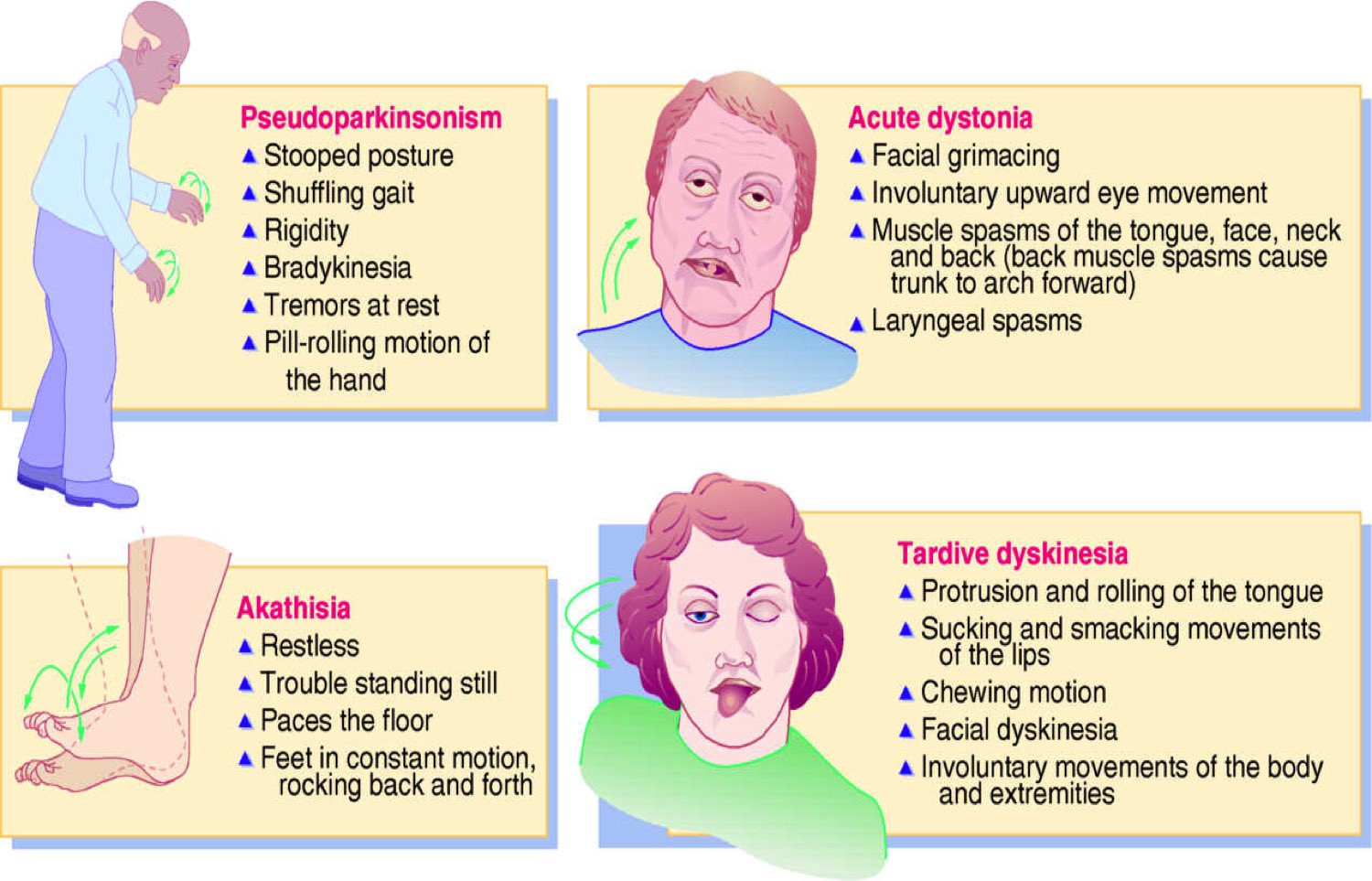
- Akathisia. If you experience these symptoms, you may feel restless or stiff or have a strong urge to move around. In children, these symptoms may appear as restlessness, anxiety, or irritability. You may also find that shaking your legs or rubbing your face repeatedly relieves the restlessness.
- Acute Dystonia. Acute dystonia is a muscle twitch that occurs without being realized. This muscle twitch usually occurs repeatedly and can be in the form of blinking of the eyelids, turning the head, sticking out the tongue, tilting the head, and so on. This movement can occur briefly but can affect posture and make muscles stiff in the long term. In severe cases, you can choke or have difficulty breathing if the twitching occurs in the throat muscles.
- Parkinsonism. As the name suggests, these symptoms refer to symptoms similar to Parkinson's disease. The most common symptom is muscle stiffness in the arms and legs. You may also experience tremors (muscle shaking), increased salivation, slowness of movement, and changes in posture or gait. These symptoms may resolve if treated or the medication is stopped.
- Tardive Dyskinesia. Tardive dyskinesia occurs slowly. Symptoms include repetitive, involuntary movements of the facial muscles, such as tongue rolling, chewing, tasting, puffing out the cheeks, and grimacing.
- Neuroleptic Malignant Syndrome (NMS). This syndrome is very severe but rare. Typically, the first symptoms of NMS are muscle stiffness and high fever, followed by drowsiness and confusion. You may also experience seizures and other neurological disorders. This syndrome usually appears within hours of starting antipsychotic therapy and can be life-threatening. This syndrome is an emergency condition that requires special attention, so it will be discussed further separately.
Diagnosis
Diagnosis of extrapyramidal syndrome is based on history and examination. Usually, these symptoms are more quickly recognized by others around you. If you start antipsychotic therapy, it is a good idea to tell those closest to you, such as your family, partner, and close friends. These people can help you recognize the symptoms of extrapyramidal syndrome.
You may also feel changes in movement. For example, you may feel more restless when not moving and have to move to relieve the restlessness. You can tell your doctor when and how the symptoms appeared and who first noticed them. The doctor will also ask if the symptoms appeared before or after starting antipsychotic medication.
Laboratory and imaging tests are usually not necessary to diagnose extrapyramidal syndromes.
Management
If a person experiences extrapyramidal symptoms, the doctors are going to keep the airway open, particularly if the person has acute dystonia. The doctor may decide to discontinue or change the antipsychotic medication, particularly if it is a first-generation antipsychotic. The doctor may also consider symptom-relieving therapies such as anti-anxiety medications, Botox (botulinum toxin), muscle relaxants, deep brain stimulation, and Parkinson's disease medications.
Your doctor may also reduce the dose of antipsychotics you are taking. However, this requires cooperation from the patient and loved ones, as reducing the dose can cause psychosis symptoms to reappear. Dose adjustments are important to achieve the minimum dose to prevent psychosis from occurring. If you are very disturbed by extrapyramidal syndrome, you can consult a doctor. Your doctor can help you with medication or other support so that you can continue your daily activities.
Complications
Complications are rare but can include rhabdomyolysis (muscle breakdown) or dystonic storms (life-threatening episodes involving high fever, increased heart rate and breathing, high blood pressure, excessive sweating, difficulty swallowing, and respiratory failure). Extrapyramidal syndrome can also decrease medication adherence, leading to psychosis relapse and hospitalization. Untreated symptoms may result in aggression or suicidal behavior.
Prevention
Extrapyramidal syndrome cannot be prevented, because its occurrence in each person is unknown. If you have a condition that requires antipsychotic therapy, it is very difficult to know whether you will experience extrapyramidal syndrome or not. Not only that, it is difficult to know what symptoms you will experience. However, you can prepare yourself by knowing the possibility of each symptom occurring, namely:
- Akathisia affects 5-36% of users
- Acute dystonia occurs in 25-40% of users, especially in children and young adults, often within 48 hours of starting the drug
- Parkinsonism affects 20-40% of users, developing gradually over days
- Tardive dyskinesia affects about 30% of users, particularly with first-generation antipsychotics
- Neuroleptic malignant syndrome affects about 0.02% of users, usually within hours of starting the drug
When to See a Doctor?
If you are taking antipsychotic medications and experience symptoms such as restlessness, difficulty stopping movement, experiencing involuntary muscle twitching or muscle stiffness, or other movement disorders, you can consult your doctor. If these symptoms are accompanied by shortness of breath or choking, you can immediately go to the nearest emergency room, because these symptoms can potentially cause respiratory arrest.
Looking for more information about other diseases? Click here!
- dr. Alvidiani Agustina Damanik
D'Souza, R., & Hooten, W. (2021). Extrapyramidal Symptoms. Retrieved 22 March 2022, from https://www.ncbi.nlm.nih.gov/books/NBK534115/
Hebebrand, K., & Begum, J. (2021). What Are Extrapyramidal Effects?. Retrieved 22 March 2022, from https://www.webmd.com/schizophrenia/what-are-extrapyramidal-effects
Raypole, C., & Carter, A. (2019). Extrapyramidal Symptoms: What Causes Them and How to Stop Them. Retrieved 22 March 2022, from https://www.healthline.com/health/symptom/extrapyramidal-symptoms