Definisi
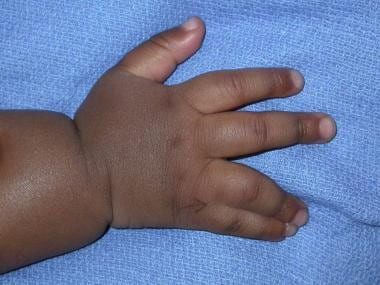
Sindaktili adalah suatu kondisi di mana anak terlahir dengan jari yang menyatu atau berselaput seperti kaki bebek. Sekitar setengah dari anak dengan sindaktili mengalami kondisi ini pada kedua tangan. Pada kebanyakan kasus, sindaktili hanya terjadi pada jari tangan, namun terkadang dapat pada jari kaki.
Dua atau lebih jari tangan dapat menyatu, namun sindaktili paling banyak terjadi pada jari tengah dan jari manis. Jari dapat terhubung satu sama lain dengan kulit yang menyerupai selaput. Pada kasus lainnya, jari yang menyatu dapat tampak hampir seperti satu jari saja.
Sindaktili adalah kondisi yang cukup sering ditemukan. Kondisi ini terjadi pada sekitar 1 dari setiap 2.500 bayi. Sindaktili juga merupakan cacat bawaan pada anggota gerak yang paling banyak.
Keterlibatan Jari
- Sekitar 50% pada jari tengah dan jari manis
- Sekitar 30% pada jari manis dan jari kelingking
- Sekitar 15% pada jari telunjuk dan jari tengah
- Sekitar 5% pada ibu jari dan jari telunjuk
Penyebab
Perkembangan anggota gerak atas dimulai sejak awal perkembangan janin. Perkembangan anggota gerak atas normal meliputi pembentukan selaput di antara jari-jari tangan dan kaki. Tangan dan kaki akan tampak mirip seperti tangan dan kaki bebek yang berselaput.
Pada usia kehamilan 6 minggu, tubuh akan memberi sinyal melalui protein pensinyal yang spesifik (salah satu yang penting disebut dengan sonic hedgehog) untuk menyebabkan regresi atau penghilangan selaput di antara jari-jari tangan dan kaki. Proses ini disebut dengan apoptosis interdigital. Ketika terdapat kegagalan regresi maka selaput akan tetap ada, menjadi sindaktili. Proses apoptosis interdigital atau regresi selaput ini adalah alasan mengapa manusia memiliki selaput di bagian pangkal jari tangan dan kaki.
Sindaktili seringnya diturunkan di keluarga. Sekitar 10-40% anak dengan sindaktili mendapatkan kondisi ini dari salah satu orang tuanya. Pada beberapa kasus, kondisi ini merupakan bagian dari sindrom genetik, seperti sindrom Poland, sindrom Apert, Acrosyndactyly, sindrom Carpenter.
Faktor Risiko
Sindaktili cenderung lebih banyak terjadi pada laki-laki dibandingkan perempuan.
Gejala
Gejala sindaktili bervariasi bergantung pada tipe yang dialami anak. Terdapat 3 tipe sindaktili yaitu sederhana, kompleks, dan rumit.
- Sindaktili sederhana berarti jari-jari menyatu atau disatukan dengan kulit dan jaringan lunak saja
- Sindaktili kompleks berarti tulang di dalam jari juga ikut menyatu
- Sindaktili rumit berarti terdapat kelainan tulang, dan tendon serta ligamen juga
Pada kebanyakan kasus, jari yang terdampak hanya kulit yang menyatu; tulang yang ikut menyatu jarang terjadi. Selain itu, sindaktili juga dibedakan menjadi komplit dan inkomplit. Pada sindaktili komplit, kulit menyatu sampai dengan ujung jari. Sedangkan pada tipe inkomplit, kulit tidak menyatu sampai ujung jari.
Diagnosis
Sindaktili seringnya terdiagnosa saat lahir. Terkadang, kondisi ini dapat terdeteksi lebih dini pada saat pemeriksaan ultrasonografi (USG) kehamilan. Dokter dapat menggunakan pemeriksaan rontgen untuk menilai struktur di dalam jari-jari tangan anak dan menentukan rencana terapinya. Dokter juga akan mengevaluasi lengan, bahu, dada, kaki, kepala, dan wajah bayi untuk mencari adanya tanda abnormalitas lainnya.
Jika terdapat abnormalitas lainnya, pemeriksaan genetik dan radiologi pada bagian tubuh lainnya dapat direkomendasikan untuk mengidentifikasi adanya sindrom dan abnormalitas genetik tertentu.
Tata Laksana
Sindaktili bisa ditangani dengan operasi, untuk memisahkan jari tangan yang menyatu. Anak kemungkinan akan disarankan menjalani operasi ketika mereka berusia antara 1-2 tahun. Sindaktili yang sederhana pada jari telunjuk, tengah, dan manis; operasi untuk memisahkan jari harus dipertimbangkan sebelum anak mencapai usia 2 tahun. Penting bagi anak untuk memiliki fungsi tangan yang maksimal saat masa kanak-kanak awal ketika mereka mengalami perkembangan kemampuan motorik halus dan kasar yang cepat.
Jika anak memiliki sindaktili yang melibatkan ibu jari atau kelingking, operasi untuk memisahkan jari direkomendasikan pada tahun pertama kehidupan anak. Ibu jari dan kelingking memiliki panjang yang sangat berbeda dari jari sebelahnya dan pemisahan dini akan memungkinkan jari sebelahnya untuk berkembang lebih normal dan tumbuh mencapai ukuran normalnya.
Sindaktili kompleks juga harus diperbaiki pada usia 1 tahun. Perbaikan dini dapat mencegah cacat atau kelainan bentuk jari akibat dari penyatuan tulang, dan memungkinakn jari untuk bertumbuh.
Selama operasi, kulit di antara 2 jari akan dipisahkan dengan seimbang. Anak mungkin akan membutuhkan skin graft atau pengganti kulit untuk menutupi jari yang sudah dipisahkan. Skin graft biasanya diambil dari siku atau pergelangan tangan untuk meminimalisis pembentukan jaringan parut.
Untuk menghindari kemungkinan komplikasi, hanya satu sisi selaput jari yang dipisahkan pada satu waktu. Jika anak Anda mengalami ngalami sindaktili pada beberapa jari, mereka akan membutuhkan lebih dari satu kali operasi.
Setelah operasi, anak Anda akan menggunakan cast atau verban yang menutup tanganna, lengan bawah, dan siku selama 2 sampai 3 minggu. Hal ini bertujuan untuk menjaga tangan tidak bergerak dan melindungi kulit yang sedang dalam proses penyembuhan. Saat cast lepas, anak akan menggunakan splint untuk menjaga jari tetap terpisah satu sama lain selama 6 minggu.
Dokter anak Anda akan merekomendasikan terapi okupasi untuk mengurangi pembentukan skar, mengatasi kekakuan dan bengkak, serta untuk meningkatkan fungsi.
Beberapa anak yang sudah menjalani operasi mengalami web creep seiring pertumbuhannya. Hal ini terjadi ketika jaringan parut tumbuh pada celah di antara jari, sehingga tampak seperti sindaktili yang muncul kembali. Bila hal ini terjadi, anak mungkin akan membutuhkan operasi kedua. Web creep lebih sering terjadi ketika jari-jari dipisahkan sebelum usia 1 tahun.
Anak Anda harus mengikuti jadwal kontrol dengan dokter untuk memastikan tangan mengalami penyembuhan dan dapat digerakkan dengan baik. Anak mungkin perlu untuk menjalani kontrol rutin selama beberapa tahun. Beberapa anak membutuhkan operasi tambahan untuk meningkatkan fungsi dan tampilan tangannya.
Komplikasi
Komplikasi sindaktili dapat meliputi:
- Web creep. Ini adalah komplikasi operasi yang paling sering. Kondisi ini diterapi dengan merekonstruksi web yang terbentuk dengan skin flap
- Web creep yang timbul awal paling sering disebabkan oleh kematian skin graft
- Web creep yang timbul saat remaja disebabkan oleh pertumbuhan yang tidak seimbang antara jaringan parut atau skin graft dan jaringan sekitarnya saat pertumbuhan yang cepat pada masa remaja
- Deformitas kuku (kelainan bentuk kuku)
Jika tidak ditangani, sindaktili dapat mengganggu pertumbuhan jari dan fungsi tangan.
Pencegahan
Anda tidak dapat mencegah terjadinya kondisi genetik seperti sindaktili selama masa kehamilan Anda. Namun, sindaktili dan kondisi genetik lainnya dihubungkan dengan faktor lingkungan tertentu, seperti:
- Konsumsi alkohol
- Merokok atau menggunakan produk tembakau
- Konsumsi obat-obatan terlarang
Anda sebaiknya berkonsultasi ke dokter mengenai makanan, minuman, atau aktivitas tertentu yang harus dihindari saat Ibu sedang hamil.
Kapan Harus ke Dokter?
Anda sebaiknya berkonsultasi ke dokter jika Anda menyadari adanya perubahan pada tangan atau kaki bayi Anda. Selain itu, jika anak Anda telah menjalani operasi, sebaiknya mengunjungi dokter jika jari anak mengalami salah satu dari gejala di bawah ini:
- Perdarahan
- Perubahan warna
- Pembengkakan
- Keluar cairan
- Nyeri
Mau tahu informasi seputar penyakit lainnya? Cek di sini, ya!
- dr Anita Larasati Priyono

Syndactyly (no date) Syndactyly | Boston Children's Hospital. Available at: https://www.childrenshospital.org/conditions/syndactyly
Wang, J.H., Fei, T. and Veltre, D. (no date) Syndactyly, Orthobullets. Available at: https://www.orthobullets.com/hand/6076/syndactyly
Syndactyly (extra digits): Types, causes & treatment (2022) Cleveland Clinic. Available at: https://my.clevelandclinic.org/health/diseases/23521-syndactyly-webbed-digits
What is Syndactyly? (2020) The Hand Society. Available at: https://www.assh.org/handcare/blog/what-is-syndactyly