
Definisi
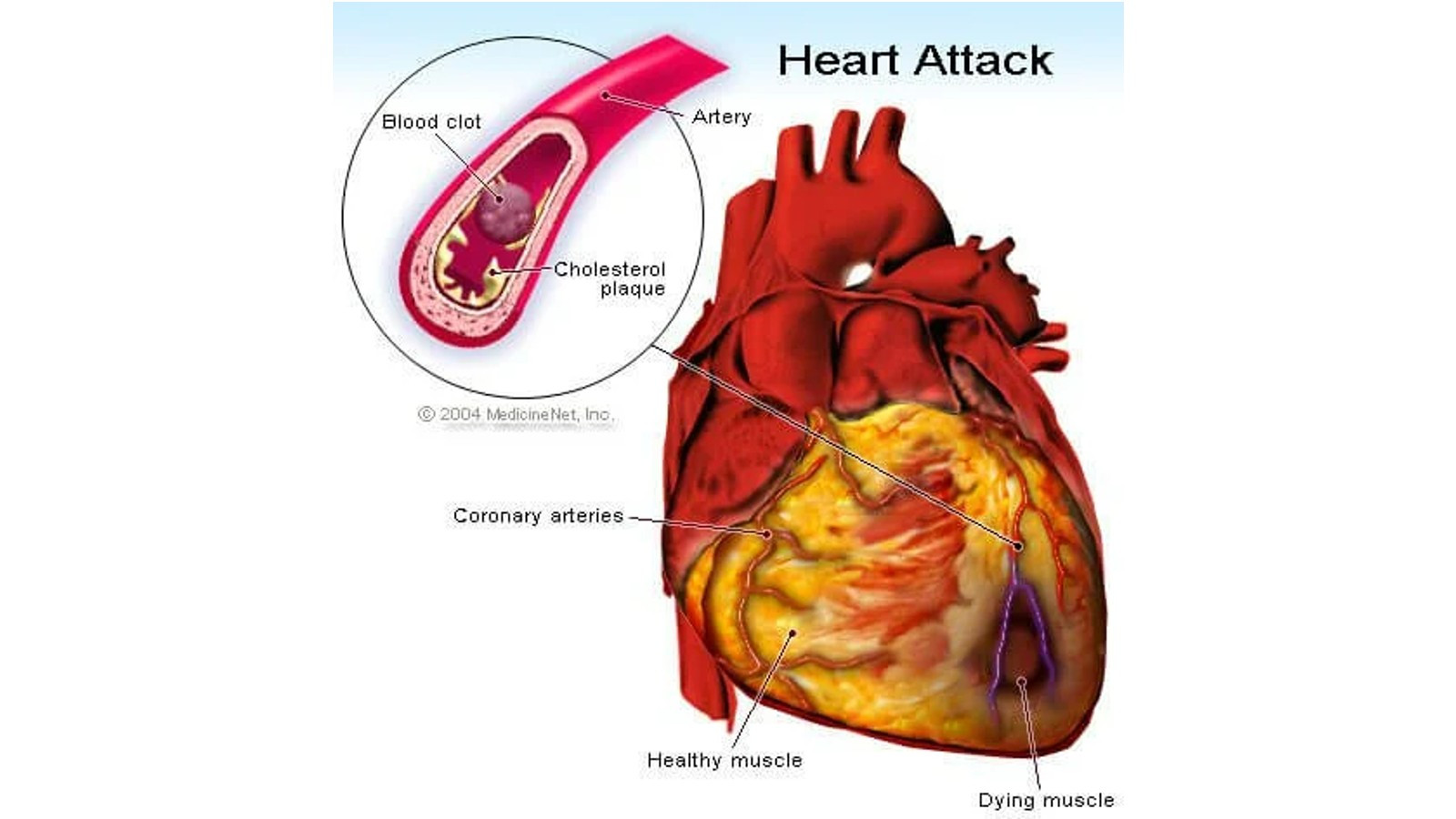
Serangan jantung atau Infark miokard merupakan suatu kondisi kerusakan jaringan jantung akibat penurunan secara tiba-tiba atau adanya gangguan pada aliran darah di pembuluh darah koroner jantung yang menyuplai oksigen ke jantung. Pembuluh darah koroner adalah pembuluh darah arteri kecil yang mengelilingi sekitar jantung untuk membawa oksigen ke otot jantung sehingga dapat berkontraksi secara normal. Ketika pembuluh darah ini tersumbat karena suatu penyebab tertentu, maka jantung tidak akan mendapatkan suplai oksigen yang cukup.
Infark miokard termasuk penyakit yang cukup umum terjadi pada orang dewasa, tetapi sangat jarang ditemukan pada anak-anak dan remaja. Pada orang dewasa, infrak miokard seringkali berkembang dari adanya penumpukan lemak dan plak pada arteri koroner sehingga bisa menimbulkan sumbatan aliran darah ke jantung. Akan tetapi, infark miokard pada anak-anak biasanya berkaitan dengan adanya penyakit jantung bawaan sejak lahir, atau kelainan struktur dan bentuk dari arteri koroner.
Penyebab
Timbulnya infark miokard pada dasarnya disebabkan karena suplai oksigen ke jantung yang mengalami penurunan secara tiba-tiba akibat adanya gangguan pada arteri koroner di jantung. Keadaan sel jantung yang mengalami penurunan suplai oksigen ini disebut sebagai iskemia. Apabila kondisi ini terus berlangsung, maka dapat memicu berbagai respon peradangan, yang pada akhirnya menyebabkan kematian sel (infark).
Pada anak-anak, menurunnya suplai oksigen dan aliran darah pada arteri koroner dapat disebabkan oleh berbagai kondisi, seperti:
- Adanya penyakit jantung bawaan
- Kelainan pada letak dan struktur arteri koroner, seperti ALPACA (Abnormal Left Coronary Artery Originating from the Pulmonary Artery)
- Penyakit protrombotik kongenital (gangguan pembekuan darah yang sudah ada sejak bayi lahir)
- Vaskulitis (radang pada pembuluh darah), seperti penyakit Kawasaki, polyarteritis nodosa, SLE, Takayasu arteritis
- Prosedur pembedahan jantung sebelumnya
- Asfiksia perinatal (sesak napas sesaat setelah bayi lahir)
- Sepsis (infeksi luas yang menyebar ke seluruh tubuh)
- Kelainan genetik, seperti ALKaptonuria, Fabry’s disease, familial hypercholesterolemia, homosisteinuria, Hurler’s Syndrome, Pompe’s Disease
- Kelainan pada otot jantung
- Penggunaan obat-obatan tertentu, seperti epinefrin, amfetamin, benzodiazepin
- Penggunaan narkoba, seperti kokain, marijuana
Faktor Risiko
Infark miokard pada anak-anak cukup jarang ditemukan. Risiko anak untuk mengalami infark miokard akan meningkat jika memiliki struktur dan lokasi arteri koroner yang abnormal atau penyakit jantung bawaan, seperti:
- Kardiomiopati hipertrofik, yaitu suatu kelainan pada otot jantung yang membuatnya menjadi sangat tebal. Kondisi otot jantung yang tebal ini terkadang membutuhkan lebih banyak suplai oksigen daripada yang dapat disediakan oleh arteri koroner. Keadaan ini tidak hanya mencederai otot jantung, tetapi seiring waktu, juga dapat menyebabkan gangguan irama jantung yang tidak normal, yang dapat mengancam jiwa.
- Kelainan pada struktur dan lokasi arteri koroner. Sekitar 1 dari 100 bayi dilahirkan dengan arteri koroner yang dimulai di tempat yang tidak biasa. Dalam kasus yang jarang terjadi, kondisi ini dapat menyebabkan gejala yang mengancam jiwa.
- Memiliki riwayat penyakit tertentu. Anak-anak dengan riwayat kelainan jantung bawaan, penyakit Kawasaki, dan penyebab genetik yang menyebabkan kadar kolesterol tinggi, memiliki risiko yang lebih tinggi untuk mengalami serangan jantung akibat terbentuknya sumbatan pada arteri koroner.
- Miokarditis, yaitu radang pada otot jantung. Miokarditis terjadi ketika sistem kekebalan tubuh menyebabkan terjadinya kerusakan pada otot jantung. Kondisi ini sering terjadi saat sedang melawan infeksi oleh suatu virus. Miokarditis dapat mengancam jiwa dan mengakibatkan fungsi jantung yang buruk, serta irama jantung yang tidak normal. Akan tetapi, miokarditis juga cukup jarang terjadi pada anak-anak, dengan angka kejadian sekitar 1 dari 100.000 anak setiap tahun.
Gejala
Gejala utama infark miokard biasanya berupa nyeri dada kiri. Akan tetapi, pada anak-anak seringkali cukup sulit untuk menentukan nyeri dada yang dirasakan apakah timbul sebagai akibat gangguan jantung atau kondisi lain. Kebanyakan anak-anak tidak bisa menggambarkan dengan jelas nyeri dada yang dirasakannya.
Pada bayi, gejala infark miokard yang mungkin muncul, meliputi:
- Gangguan makan
- Tampak tidak peka terhadap lingkungan sekitar
- Rewel
- Diare
- Berkeringat berlebihan
- Muntah
- Tampak pucat
- Pernapasan yang cepat
- Sesak napas
Pada anak yang berusia lebih dewasa, infark miokard mungkin menimbulkan gejala-gejala, seperti:
- Kelelahan
- Berkurangnya nafsu makan
- Tampak pucat
- Sesak napas
- Pernapasan yang cepat
- Denyut nadi yang cepat
- Tekanan darah yang rendah (hipotensi)
- Denyut nadi yang teraba lemah
- Gangguan irama jantung
- Kaki dan tangan yang teraba dingin
- Pingsan
Diagnosis
Dalam mendiagnosis infark miokard pada anak, dokter akan mulai dengan melakukan wawancara dengan orang tua anak, pengasuh anak, atau langsung dari anak jika berusia cukup dewasa. Dokter akan menanyakan gejala-gejala yang dialami anak, seperti gangguan makan, nafsu makan berkurang, mudah rewel, diare, muntah, kaki dan tangan dingin, pucat dan pernapasan yang cepat. Anak yang lebih besar mungkin dapat menggambarkan nyeri dada yang dirasakan dengan baik dan dapat menjelaskan penyebaran nyeri. Nyeri dada seperti rasa tertekan pada dada kiri yang menyebar ke lengan kiri dan bahu menunjukkan nyeri dada berasal dari gangguan jantung. Dokter juga akan menanyakan riwayat penyakit apa saja yang pernah diderita sebelumnya, termasuk riwayat penyakit jantung bawaan.
Pemeriksaan Fisik
Setelah itu, dokter akan melanjutkan dengan melakukan pemeriksaan fisik. Dokter akan memeriksa tingkat kesadaran anak (apakah anak tidak sadar, tampak lesu, tampak rewel), memeriksa denyut nadi dengan meraba di sekitar pergelangan tangan, memeriksa bunyi paru-paru dan bunyi jantung dengan menggunakan stetoskop, dan memeriksa tekanan darah penderita.
Pemeriksaan Penunjang
Selain wawancara dan pemeriksaan fisik, pemeriksaan EKG (elektrokardiogram) harus dilakukan pada semua penderita, untuk melihat aktivitas listrik jantung dan menentukan bagian jantung mana yang mengalami infark. Pemeriksaan sinar-X juga dapat dilakukan untuk menyingkirkan kemungkinan penyebab dari sistem pernapasan. Pemeriksaan enzim jantung (troponin, Creatine Kinase Myocardial Band/CK-MB) juga dapat menunjukkan adanya kerusakan jaringan jantung jika mengalami peningkatan. Pemeriksaan ekokardiografi juga dapat dilakukan untuk menentukan adakah kelainan bentuk atau struktur pada aretri koroner.
Tata Laksana
Infark miokard termasuk suatu kondisi gawat darurat dan membutuhkan tatalaksana segera. Tatalaksana pertama yang diberikan kepada penderita bertujuan untuk menstabilkan keadaan umum penderita dengan pemberian oksigen, pemberian cairan melalui infus, dan penggunaan obat-obatan tertentu. Prinsip tatalaksana awal infark miokard adalah untuk menurunkan kebutuhan jantung terhadap oksigen, dan dengan memberikan suplai oksigen tambahan dari luar. Setelah kondisi penderita stabil, terapi pembedahan mungkin akan dipertimbangkan untuk dilakukan agar dapat memperbaiki aliran darah pada arteri koroner. Teknik pembedahan yang sering dipilih adalah dengan PCI (Percutaneous Coronary Intervention), yaitu suatu prosedur dengan membuat luka sayatan kecil pada kulit untuk memasukkan suatu tabung kecil yang fleksibel ke dalam pembuluh darah, dan kemudian diarahkan menuju arteri koroner untuk menghilangkan sumbatan yang terjadi. Selain itu, penting juga untuk mengobati penyakit jantung yang mendasari timbulnya infark miokard pada anak.
Komplikasi
Jika tidak segera diobati, infark miokard pada anak dapat menyebabkan timbulnya komplikasi, seperti gangguan irama jantung, dan bahkan kematian.
Pencegahan
Risiko terjadinya infark miokard pada anak dapat diturunkan dengan mengontrol dan mengobati kondisi atau penyakit yang mendasarinya, seperti penyakit jantung bawaan atau kelainan pada arteri koroner.
Kapan Harus ke Dokter
Segera bawa anak Anda ke IGD (Instalasi Gawat Darurat) jika mengalami nyeri dada kiri yang menjalar ke lengan dan rahang bawah. Gejala infark miokard pada anak-anak terkadang cukup sulit untuk dikenali, maka dari itu, konsultasikan anak Anda ke dokter jika mengalami suatu gejala yang Anda tidak tahu penyebab timbulnya.
Mau tahu informasi seputar penyakit lainnya? Cek di sini, ya!
- dr Anita Larasati Priyono

Bezold, Louis I, et al. Myocardial Infarction in Childhood. (2020). Retrieved 12 April 2022, from https://emedicine.medscape.com/article/897453-overview
Bilici, Meki, et al. Myocardial Infarction in Children. (2018). Retrieved 12 April 2022, from https://www.intechopen.com/chapters/60068
Ravekes, William John. Chest Pain in Children: Is It a Heart Condition?. Retrieved 12 April 2022, from https://www.hopkinsmedicine.org/health/conditions-and-diseases/chest-pain-in-children-is-it-a-heart-condition
Renno, Markus S., et al. Chest Pain in Children: Common Causes & When to Be Concerned. Retrieved 12 April 2022, from https://www.healthychildren.org/English/health-issues/conditions/heart/Pages/Chest-Pain-in-Children.aspx#