
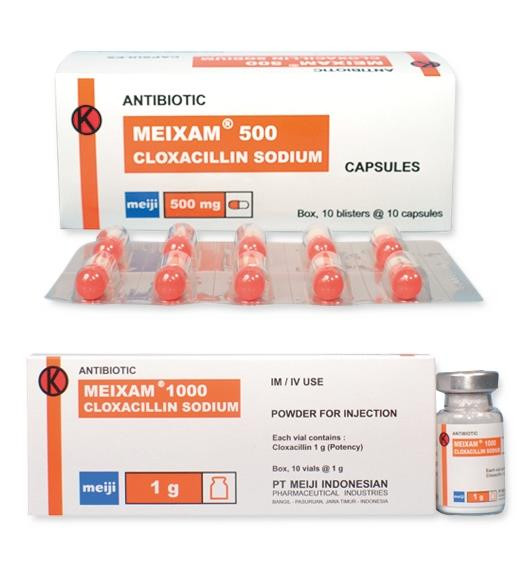

Other Brands/Names
Cloxacillin is sold under several trade names, including Cloxacilin and Meixam.
How it Works
Cloxacillin is a bactericidal antibiotic, so it can directly kill bacteria. It acts by blocking the production of proteins that form the bacterial cell wall. Without this protective wall, the bacteria will weaken, break apart, rupture, and eventually die.
Indications
This medication is used for the treatment of conditions such as:
-
Staphylococcal infections resistant to penicillin antibiotics
-
Infections of the heart tissue (endocarditis)
-
Lung infections (pneumonia)
-
Bone and joint infections
-
Skin and soft tissue infections
Contraindications
Cloxacillin should not be taken by individuals with a history of allergic reactions (hypersensitivity) to cloxacillin, penicillin-class antibiotics, or cephalosporins.
Side Effects
Some commonly reported side effects include:
-
Heartburn
-
Nausea and vomiting
-
Diarrhea
-
Bloating
More serious side effects that may occur are:
-
Persistent sore throat
-
Pain in the bones or joints
-
Easy bleeding or bruising
-
Pink, red, or dark-colored urine
-
Changes in urination frequency or amount (indicating kidney problems)
-
Ongoing nausea and vomiting
-
Yellowing of the eyes or skin (jaundice)
A life-threatening allergic reaction (anaphylaxis) is also possible, with symptoms such as:
-
Generalized skin redness
-
Swelling of the face, mouth, or throat
-
Fever and chills
-
Difficulty breathing
-
Dizziness or headache
Types
Cloxacillin is available as 500 mg tablets/capsules and as injectable vials.
Dosage
The recommended dose varies depending on age and the severity of infection:
Adults
-
Oral form: 250–500 mg every 6 hours (4 times daily). The maximum daily dose is 6,000 mg. Dosage and treatment length may be adjusted depending on the infection type, severity, and patient response.
-
Injectable/IV form: 250–500 mg every 6 hours, with possible dose increases in severe infections. The maximum daily dose is 6,000 mg.
Children
-
Oral form: For children weighing ≤ 20 kg, the dose is 25–50 mg/kg body weight per day, divided into 3–4 doses. For children weighing more than 20 kg, the dosage is the same as for adults.
-
Injectable/IV form: Dosing follows the same guidelines as oral treatment.
Safety
Cloxacillin is classified as pregnancy category B. Animal studies have not shown harmful effects on the fetus, but no adequate studies exist in pregnant women. Its safety for breastfeeding mothers remains uncertain.
Drug Interactions
Cloxacillin may interact with other drugs, such as:
-
Probenecid (used for gout): These drugs together may raise cloxacillin levels in the blood.
-
Warfarin and other anticoagulants: These drugs together may reduce the blood-thinning effectiveness of anticoagulants.
-
Tetracyclines (antibiotics): These drugs together can decrease the effectiveness of cloxacillin.
-
Methotrexate (a cancer treatment): The serum levels of methotrexate may increase, raising the risk of toxicity.
Looking for more information about other drugs? Click here!
- dr Hanifa Rahma
Cloxacillin – Mims Indonesia. (2022). Retrieved 18 June 2022, from https://www.mims.com/indonesia/drug/info/cloxacillin?mtype=generic
Kloksasilin – Badan POM RI. (2018). Retrieved 18 June 2022, from http://ioni.pom.go.id/monografi/kloksasilin
Cloxacillin-Oral – HealthLinkBC. healthlinkbc.ca. (2021). Retrieved 18 June 2022, from https://www.healthlinkbc.ca/medications/cloxacillin-oral
Cloxacillin Capsules – Drugs.com. drugs.com. (2021). Retrieved 18 June 2022, from https://www.drugs.com/cdi/cloxacillin-capsules.html