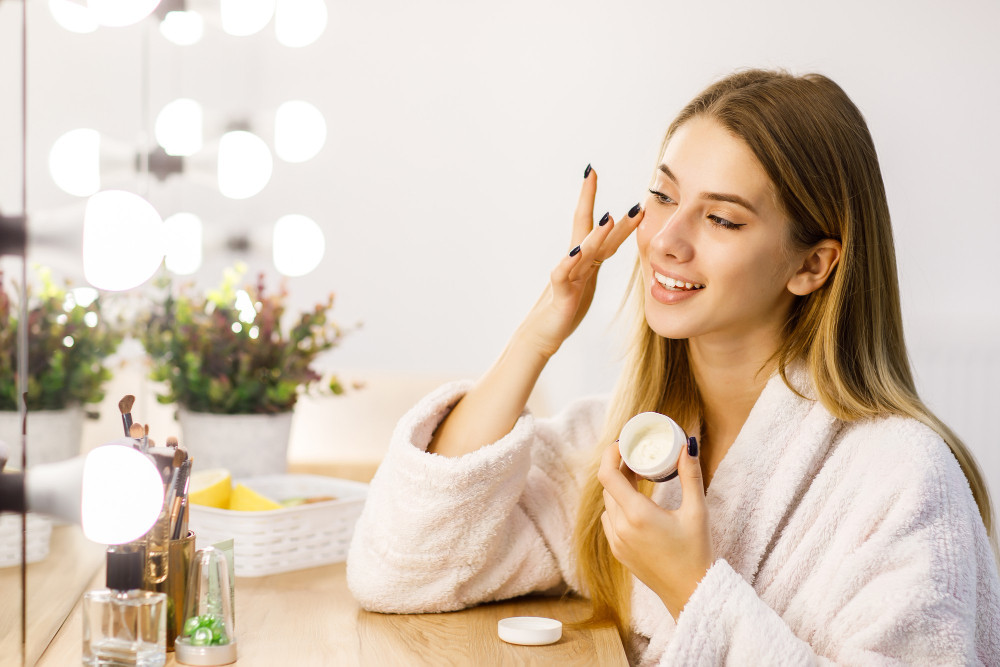
Dalam menggunakan skincare, bukan hanya kandungan produk saja yang perlu diperhatikan. Urutan penggunaan skincare pun dapat memengaruhi efektivitas penggunaan rangakaian perawatan kulit yang Anda gunakan. Salah satu pertanyaan yang sering ditanyakan adalah mengenai urutan penggunaan skincare: mana yang digunakan terlebih dahulu, sunscreen atau moisturizer?
Urutan Penggunaan Moisturizer dan Sunscreen
Sunscreen dan moisturizer adalah dua produk skincare yang direkomendasikan untuk digunakan setiap hari. Penggunaan sunscreen bukan hanya diperlukan saat berada di bawah terik matahari. Ketika cuaca mendung atau beraktivitas di dalam rumah pun kulit Anda memerlukan perlindungan dari paparan sinar UV yang dapat merusak kulit.
Pelembap atau moisturizer juga merupakan produk yang sebaiknya digunakan setiap hari. Penggunaan moisturizer membantu menghidrasi kulit, membuat kulit segar dan tetap lembap dan mencegah kulit kering akibat kehilangan kandungan air.
Urutan penggunaan skincare dapat memengaruhi seluruh rangkaian skincare yang Anda gunakan. Jika urutan penggunaannya tidak tepat, produk yang Anda gunakan tidak akan optimal dan dapat menyebabkan jerawat atau peradangan.
Baca Juga: Kesalahan Penggunaan Skincare yang Sering Dilakukan
Saat akan menggunakan moisturizer dan sunscreen, terkadang urutan penggunaan skincare yang Anda gunakan belum tepat. Dilansir dari Byrdie, berikut ini urutan penggunaan skincare yang tepat untuk pagi dan malam hari:
Pagi hari:
- Cleanse atau membersihkan wajah dengan sabun muka, milk cleanser atau cleansing balm
- Toner
- Serum
- Moisturizer
- Krim mata
- Sunscreen
Sore atau malam hari:
- Cleanse atau membersihkan wajah dengan sabun muka, milk cleanser atau cleansing balm
- Toner
- Toner atau serum eksfoliasi
- Krim mata
- Moisturizer
Dapat dilihat dalam daftar di atas bahwa penggunaan sunscreen secara umum digunakan setelah menggunakan moisturizer. Pendapat lain mengungkapkan bahwa jika Anda menggunakan sunscreen kimiawi, sebaiknya gunakan sebelum moisturizer. Sebaiknya gunakan sunscreen lalu diamkan selama 15 menit sebelum pergi ke tempat yang terpapar sinar matahari.
Sedangkan dalam menggunakan sunscreen physical atau sunscreen mineral, Anda bisa menggunakannya di tahapan terakhir penggunaan skincare yaitu setelah moisturizer.
Mineral sunscreen perlu berada di lapisan terluar di kulit Anda agar optimal menghalangi kulit dari sinar matahari. Untuk itu produk ini dapat digunakan di rangkaian skincare terakhir sebelum menggunakan make up.
Baca Juga: Jangan Keliru, Ini Urutan Penggunaan Skincare yang Benar Agar Kulit Tampak Sehat
Bagaimana dengan Moisturizer dengan SPF?
Sebagai langkah perlindungan, sebaiknya gunakan sunscreen yang mengandung SPF minimal 30 untuk penggunaan sehari-hari. Namun saat ini telah beredar produk moisturizer yang dilengkapi dengan SPF. Penggunaan produk moisturizer yang mengandung SPF ini dapat menghemat uang dan waktu, namun para ahli menganjurkan untuk tetap menggunakan sunscreen secara terpisah
Penggunaan produk moisturizer dan sunscreen secara terpisah membuat penyerapan produk dan perlindungan pada kulit menjadi lebih optimal. Meskipun demikian, menggunakan moisturizer yang mengandung SPF masih lebih baik daripada tidak menggunakan sunscreen atau tabir surya sama sekali.
Dalam memilih produk skincare sebaiknya pilih yang sesuai dengan jenis kulit Anda. Apabila terdapat iritasi akibat penggunaan skincare atau sunscreen, hentikan penggunaan produk tersebut untuk sementara lalu ganti dengan produk yang sesuai jenis kulit.
Mau tahu tips dan trik kesehatan, pertolongan pertama, dan home remedies lainnya? Cek di sini, ya!
- dr. Monica Salim

Herndon, J. (2022). Moisturizer and Sunscreen: Which One First?. Available from: https://www.verywellhealth.com/should-i-mix-my-moisturizer-and-sunscreen-514401
Vinall, M. (2021). How to Moisturize Your Face: Expert Tips, When to Do It, and Ingredients to Look For. Available from: https://www.healthline.com/health/beauty-skin-care/how-to-moisturize-face
American Academy of Dermatology Association. Available from: https://www.aad.org/public/everyday-care/sun-protection/shade-clothing-sunscreen/how-to-apply-sunscreen#
Gould, H. (2022). Are Moisturizers With SPF Actually Effective?. Available from: https://www.byrdie.com/moisturizers-with-spf