Definition
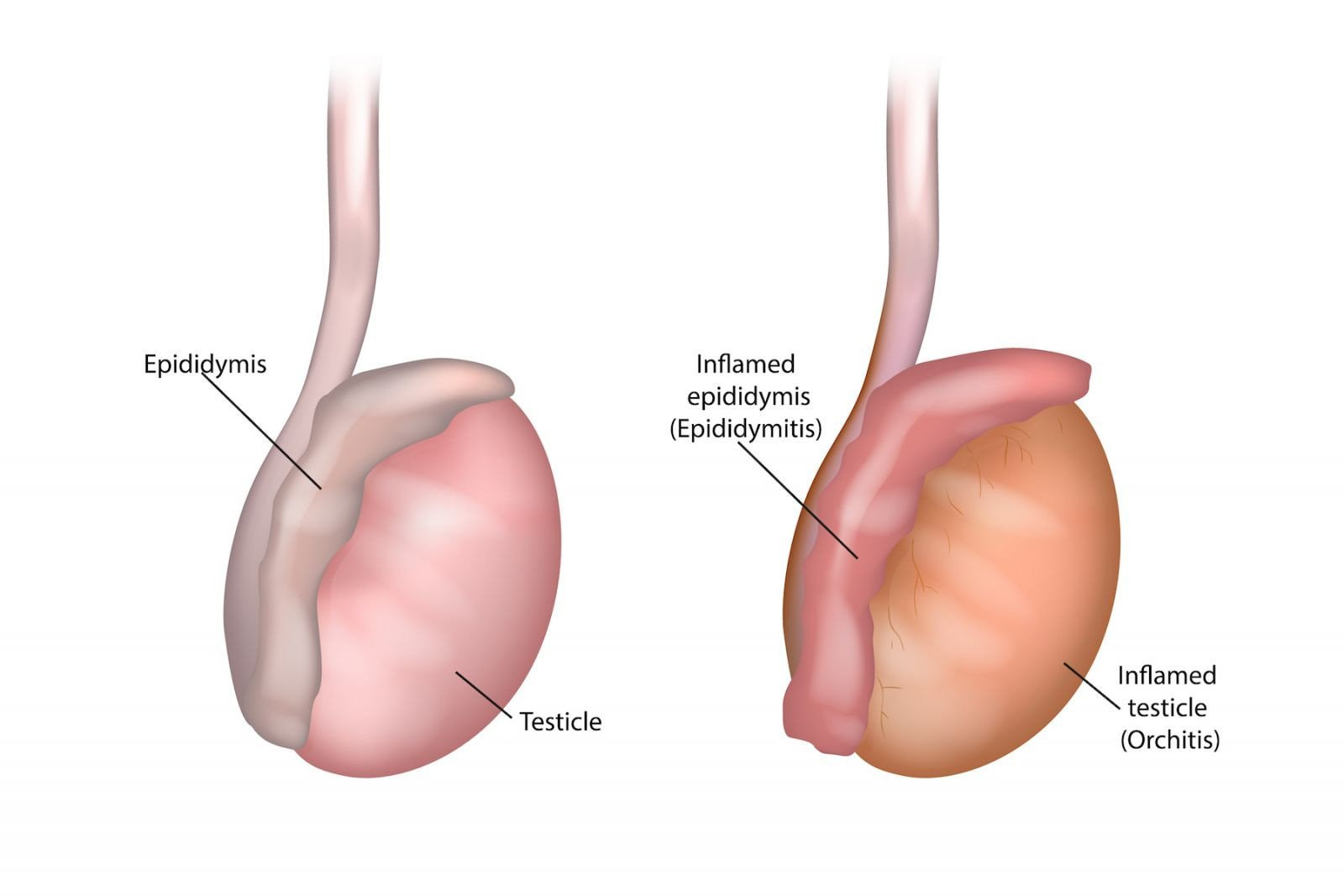
An epididymal cyst is a fluid-filled lump located in the epididymal duct, which is attached to the back of the testicle (testis) and serves as a storage and maturation site for sperm. The fluid collected in the epididymal cyst consists of dead and inactive sperm.
Generally, epididymal cysts are benign, harmless, and measure about 2-4 millimeters. These cysts can be treated and sometimes may shrink on their own as the fluid is absorbed by the body. They do not interfere with fertility. However, occasionally these cysts can grow larger, causing pain and discomfort. Large cysts may require further treatment. Epididymal cysts can appear on one or both sides.
Men most commonly experience epididymal cysts in middle age. Epididymal cysts are rare in children before adolescence. It is difficult to estimate the exact percentage of boys or men who have epididymal cysts.
Causes
Epididymal cysts occur due to a blockage in the epididymal duct, causing fluid to accumulate and not be able to exit. The exact causes of these cysts are still unknown.
Risk Factor
The exact risk factors for epididymal cysts are also unknown, but they most commonly occur in men of productive age (20-50 years). In some cases, they can occur in children and adolescents, but this is quite rare.
Epididymal cysts are also associated with some congenital diseases, such as cystic fibrosis (a disease that causes mucus accumulation in the lungs and digestive tract) and polycystic kidney disease (many cysts in the kidneys). Additionally, abnormalities in testicular formation during fetal development can potentially be a risk factor for developing epididymal cysts later in life.
Symptoms
Epididymal cysts usually do not cause symptoms when small. As the cyst grows, complaints may include:
- Pain or discomfort in one side or the entire testicle
- Feeling of a smooth and firm lump in the testicle
- Swelling and redness in the testicle or tip of the penis
- A feeling of pressure at the tip of the penis
- Pain that can radiate to the groin, back, and lower abdomen
Diagnosis
The doctor will conduct an interview, physical examination, and additional tests to establish a diagnosis. During the interview, the doctor will ask about the patient's main complaints and any accompanying symptoms, such as:
- Swelling and pain in the testicle
- Feeling of pressure or fullness in the testicle and penis
The doctor will also inquire about personal medical history and family medical history. Following this, a physical examination will be conducted to inspect the affected areas. This begins with checking vital signs like blood pressure, temperature, respiratory rate, and pulse. Then, the doctor will examine the penis and testicles.
- Checking for changes in shape and color of the testicles
- Palpating for any lumps suspected to be epididymal cysts
The doctor will then perform a special examination called transillumination, where a light is shone on the lump to determine if it is fluid-filled or solid. Since epididymal cysts contain fluid, the examination should show a bright and slightly transparent result as light passes through the lump.
For further assessment, the doctor may recommend an ultrasound (USG). An ultrasound can help rule out other lumps, such as testicular tumors, and confirm the number of cysts since epididymal cysts can sometimes appear in multiples.
Management
Since epididymal cysts are benign and not life-threatening, not all cases require treatment. This depends on the patient's condition, the size of the cyst, and the severity of the symptoms.
Therapy is usually not required if the patient:
- Experiences no symptoms
- The size of the cyst does not change or grow larger
- The cyst shrinks over time
In these situations, treatment is not mandatory because the body can absorb the fluid inside the cyst. However, if the patient experiences symptoms and the cyst grows larger over time, the doctor will provide pain relief and consider several treatment options:
- Surgical Intervention
This is commonly performed if the patient feels pain and the cyst enlarges. Known as a spermatocelectomy, this procedure removes the epididymal cyst. It can be done under local or general anesthesia. However, surgery does not guarantee that the cyst will not recur after removal.
- Aspiration with or without Sclerotherapy
Aspiration involves inserting a needle into the cyst to drain the fluid. If combined with sclerotherapy, a chemical is injected into the sac to help reduce recurrence. This procedure is now less common due to potential scarring and impact on male fertility.
Prevention
There are no specific ways to prevent epididymal cysts. However, you can self-examine your testicles monthly to check for any changes. Signs to watch for include:
- Lumps or swelling
- Redness
- Pain in the penis, groin, and testicles
You can examine by checking for skin color and shape changes in your testicles in front of a mirror, then use your index and middle fingers to feel for lumps at the base of your testicles. Rotate your fingers to determine the consistency of the lump, whether it is solid or fluid-filled, round or oval, and whether the lump's borders are clearly defined.
Normal testicles should feel smooth, round, or oval and have clear borders. Regular self-examination helps you understand your testicle condition and respond promptly to changes. Abnormalities can be detected and treated sooner.
Complications
Epididymal cysts rarely cause complications. However, if the cyst becomes large and painful, it can twist (torsion). This is a medical emergency and requires immediate treatment. If this happens, surgery is usually necessary to remove the cyst and fix the twisted cyst. Torsion causes severe pain, and surgery is recommended within 30 minutes.
Note that complications can arise from surgical procedures. Surgery can disrupt the ducts that transport sperm from the epididymis to the penis. Damage to these structures post-surgery can affect male fertility. Additionally, surgery can lead to complications such as bleeding in the scrotum and a risk of the epididymal cyst reoccurring.
When to See a Doctor?
You should see a doctor if you experience pain, swelling, and redness in the testicles, groin, and lower abdomen. You can visit a general practitioner first, who may refer you to a urologist if necessary.
Looking for more information about other diseases? Click here!
- dr. Alvidiani Agustina Damanik
An Overview of an Epididymal Cyst. (2022). Retrieved 25 July 2022, from https://www.verywellhealth.com/epididymal-cyst-overview-4687689
Epididymal Cyst. (2021). Retrieved 25 July 2022, from https://patient.info/mens-health/scrotal-lumps-pain-and-swelling/epididymal-cyst
Mukendi, AM. (2020). Bilateral Epididymal Cyst with Spontaneous Resolution from https://www.ncbi.nlm.nih.gov/pmc/articles/PMC7752435/