
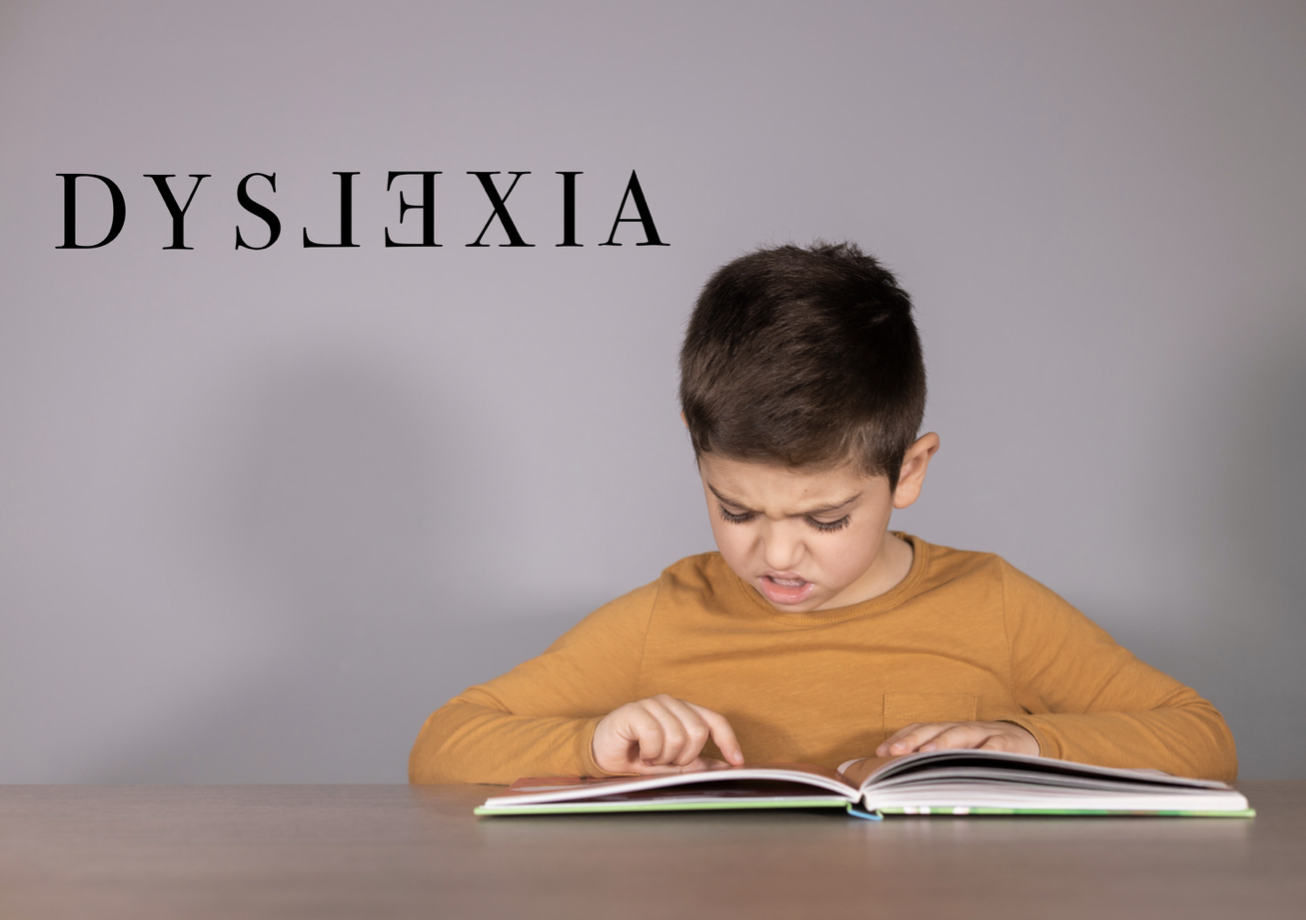
Definition
The word "dyslexia" derives from the Greek words "dys," meaning difficulty, and "lexis," meaning language. Thus, dyslexia translates to "difficulty with language." In reality, the difficulties extend beyond language activities to include other language-related abilities such as reading, writing, and social language. Dyslexia is based on neurobiological differences where individuals with dyslexia process language information differently. This includes how they receive (input), understand, remember, and organize information in their minds (cognitive processing) to produce responses (output) and how they convey these responses.
Although children with dyslexia tend to have below-average language abilities or those not matching their age, they often have good cognitive potential. They have normal intelligence levels, with some even above average.
Dyslexia can affect anyone, regardless of gender, ethnicity, and socioeconomic status. According to the DSM-V (Diagnostic and Statistical Manual of Mental Disorders V), diagnosis typically occurs at school age, around seven years old, though symptoms suggesting dyslexia can be observed much earlier.
Causes
Dyslexia is often hereditary. Children born to families with learning disorders have a higher risk of developing dyslexia. Some studies indicate abnormalities in brain development in the fetus, affecting the brain areas responsible for language (Wernicke), word production (Broca), and the connection between these regions in the arcuate fasciculus. The inability to identify words is related to abnormalities in other brain areas, including the angular gyrus, medial occipital area, and right hemisphere of the brain.
Risk Factor
Factors that can increase the risk of dyslexia include:
- Family history of dyslexia or learning disorders
- Premature birth or low birth weight
- Exposure to nicotine, drugs, alcohol, and infections during pregnancy affecting brain development
- Individual differences in each human brain
Symptoms
Dyslexia can be challenging to detect before a child starts school, but the following signs can be early indicators. Once in school, teachers might first notice learning problems. Dyslexia becomes more apparent as children start learning to read.
Before School Age
Signs indicating dyslexia in preschool-aged children include:
- Delayed speech
- Difficulty learning new words
- Problems forming words correctly, such as reversing words when spoken or struggling to distinguish words with similar sounds
- Difficulty remembering names, numbers, and colors
School Age
At school age, dyslexia signs and symptoms become more identifiable:
- Reading more slowly than peers
- Difficulty processing or understanding words
- Trouble finding the correct answers to questions and forming sentences
- Difficulty remembering
- Trouble recognizing similarities and differences in similar words
- Inability to pronounce unfamiliar words
- Difficulty spelling
- Taking longer to complete reading and writing tasks
- Avoiding reading activities
Teenagers and Adults
Symptoms in teenagers and adults with dyslexia are similar to those in children. These include:
- Difficulty reading
- Trouble completing tasks involving reading and writing
- Problems spelling words
- Disliking reading activities
- Frequently mispronouncing names or objects
- Difficulty understanding expressions or jokes with implied meanings (idioms)
- Struggling to summarize stories
- Difficulty learning new languages
- Trouble remembering
- Difficulty learning math
Diagnosis
Children suspected of having learning disorders or dyslexia need to undergo screening or assessments of reading, speech, and language abilities, as well as hearing, cognitive, and psychological evaluations to identify strengths and weaknesses in learning processes. These evaluations are conducted by trained healthcare professionals.
Doctors will inquire about the child's complaints, their ability to keep up with school lessons, and any family history of dyslexia or other learning disorders. Parents may be asked to fill out questionnaires to screen the child's condition. Other tests, such as hearing and vision assessments, can be done as needed. A psychological evaluation of the child is also necessary, as psychological conditions can exacerbate learning difficulties. Neurological exams may be conducted to identify secondary causes and rule out other conditions like seizures.
Management
Dyslexia is a long-term condition, but early detection and management can improve a child's learning success.
Educational Interventions
Dyslexia can be managed with educational approaches and techniques. Instructors using these techniques will employ methods to train auditory and visual skills to enhance the child's reading abilities. Educational techniques aim to:
- Help children identify the basic sounds that form words (phonemes)
- Understand written and spoken words (phonics)
- Comprehend what they read
- Read aloud to improve accuracy, speed, and fluency
- Build a vocabulary they understand
Communicate your child's condition to their teachers to develop a plan that supports their learning.
For Parents
Your support is crucial to your child's success.
- Implement early intervention. If you suspect your child has dyslexia, consult with their doctor and teacher.
- Read to your child. Start reading books to your child from six months old or younger. Teach your child using audiobooks and read stories together.
Complications
Complications from dyslexia can include:
- Learning difficulties. Since reading is a fundamental skill for schoolwork, children with dyslexia will struggle more with assignments and school activities compared to their peers.
- Social problems. If untreated, dyslexia can lead to low self-confidence, personality issues, anxiety, and withdrawal from friends, environments, and teachers.
- Adult issues. Inability to read and comprehend knowledge can hinder children from reaching their full potential as adults, affecting their future in education, social, and economic aspects.
Prevention
Dyslexia cannot be prevented, but early detection and intervention can prevent more severe complications. Children with dyslexia who receive intervention from kindergarten to first grade can improve their reading skills and perform well at advanced levels. In contrast, children with untreated dyslexia will face significant difficulties in school. Although children with dyslexia may always struggle with reading, early intervention helps them develop strategies to enhance their learning and quality of life.
When to See a Doctor?
Although most children start learning to read in kindergarten and first grade, children with dyslexia cannot grasp basic reading concepts like their peers. Consult your child's doctor if you notice their reading abilities are not on par with their peers or if they show signs of dyslexia. Delayed management of dyslexia can hinder your child from reaching their full potential as an adult.
Looking for more information about other diseases? Click here!
- dr. Alvidiani Agustina Damanik
Mayo Clinic Staff. (2021). Dyslexia. MayoClinic. Available from: https://www.mayoclinic.org/diseases-conditions/dyslexia/symptoms-causes/syc-20353552
Jeffery A, Carol AB, Brian C. Diagnostic and statistical manual of mental disorders (DSM-5). 5thd Ed. New York: American Psychiatric Association; 2013.
Sulkes SB. (2020). Dyslexia. MSD Manual Professional Edition. Available from: https://www.msdmanuals.com/professional/pediatrics/learning-and-developmental-disorders/dyslexia
Remien K, Marwaha R. Dyslexia. [Updated 2021 May 12]. In: StatPearls [Internet]. Treasure Island (FL): StatPearls Publishing; 2021 Jan-. Available from: https://www.ncbi.nlm.nih.gov/books/NBK557668/