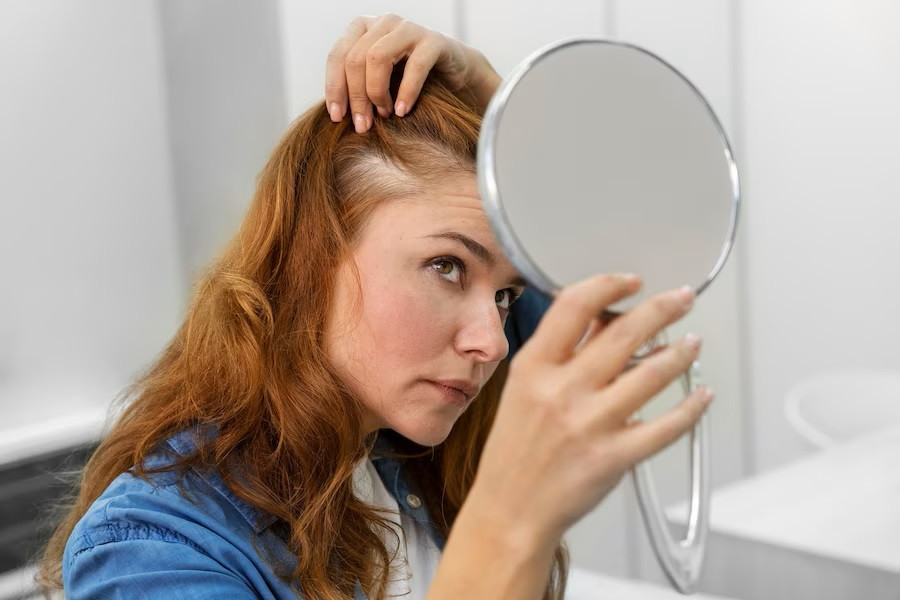
Hair loss can be triggered by alopecia areata, an autoimmune condition in which the immune system mistakenly targets hair follicles, leading to hair shedding. This condition can affect individuals of all ages, from children to adults. In mild to moderate cases, hair loss due to alopecia areata can be managed through a combination of various hair treatments.
Understanding Alopecia Areata
Alopecia areata is an autoimmune disease that results in patchy hair loss. The immune system mistakenly identifies hair follicles as harmful foreign substances, leading to an attack that causes hair to fall out. This hair loss often appears in small, coin-sized patches.
Although alopecia areata can lead to hair loss anywhere on the body, it primarily affects the scalp. The severity of hair loss can vary, ranging from small isolated patches to extensive loss. In some cases, hair shedding can progress to complete baldness on the scalp or even throughout the body.
Based on the extent and pattern of hair loss, alopecia areata is categorized into different types:
- Alopecia Areata Totalis – Complete hair loss on the scalp.
- Alopecia Areata Universalis – Hair loss affecting the entire body, including the scalp, face, and other areas.
- Local Alopecia Areata – Hair loss occurring in a few small patches, usually round or oval in shape.
Treatment for Alopecia Areata
At present, there is no definitive cure for alopecia areata. The available treatments focus on managing hair loss, but no medication can completely halt the condition. Severe forms, such as alopecia areata totalis and universalis, generally do not respond well to treatment.
It is important to understand that treatment effectiveness varies for each individual, and in some cases, medical intervention may not be necessary. Doctors assess various factors before recommending treatment, including:
- The extent of hair loss
- The duration of hair shedding
- The location of hair loss
- The patient’s age
For children experiencing a few bald spots for less than a year, doctors may suggest a wait-and-see approach, as hair regrowth often occurs naturally without treatment.
Some treatment options available for alopecia areata include:
Corticosteroids
Corticosteroids are considered effective in managing hair loss for both children and adults. These medications can be administered through injections into the scalp or applied topically as creams or ointments.
Visible improvements from corticosteroid therapy typically take about three months. However, corticosteroids may cause side effects such as increased appetite, weight gain, mood changes, and blurred vision.
Minoxidil
Many patients use minoxidil following corticosteroid treatment. Noticeable results from minoxidil typically appear after 12 weeks of consistent use. Since it has fewer side effects compared to corticosteroids, minoxidil is often recommended for children.
Possible side effects of minoxidil include headaches, skin irritation, and unusual hair growth.
Phototherapy
Hair loss can also be treated with ultraviolet (UV) light therapy using specialized lamps. Phototherapy utilizes UV light waves to stimulate the growth of skin, nails, and hair, making it a potential treatment for alopecia areata.
Immunotherapy
Doctors may suggest topical immunotherapy, which involves applying allergens to the skin to modify the immune response, preventing further attacks on hair follicles. However, this treatment can cause side effects such as scalp irritation, swollen lymph nodes, eczema, and skin discoloration.
The choice of treatment for alopecia areata depends on the severity of hair loss and the patient’s age. If you notice unusual hair loss, consult a doctor as soon as possible. You can also seek medical advice through the Ai Care app, available for download on the App Store and Play Store.
Looking for more information about other diseases? Click here!
- dr Hanifa Rahma
American Academy of Dermatology Association. Hair Loss Types: Alopecia Areata Diagnosis and Treatment. Available from: https://www.aad.org/public/diseases/hair-loss/types/alopecia/treatment
Cleveland Clinic. Alopecia Areata. Available from: https://my.clevelandclinic.org/health/diseases/12423-alopecia-areata
McIntosh, J. (2024). Treatments, causes, and signs of alopecia areata. Available from: https://www.medicalnewstoday.com/articles/70956
Mayo Clinic. Hair Loss. Available from: https://www.mayoclinic.org/diseases-conditions/hair-loss/diagnosis-treatment/drc-20372932
Yale Medicine. Alopecia Areata. Available from: https://www.yalemedicine.org/conditions/alopecia-areata#