
Definition
Carpenter syndrome is a rare genetic disorder that can be inherited or appear spontaneously. So far, only about 70 cases have been documented in medical literature, with an estimated occurrence of 1 in 1 million births.
This condition is an autosomal recessive disorder, meaning the child inherits two copies of the mutated gene from each parent. Although neither parent may have the disease, both can be carriers of the abnormal gene. If both parents carry the gene, each child has a 25% chance of inheriting the disorder. However, Carpenter syndrome may also occur sporadically without any known cause.
Causes
Carpenter syndrome is associated with mutations in either the RAB23 or MEGF8 genes. Most cases involve mutations in the RAB23 gene, which is located on chromosome 6. This gene helps produce proteins crucial for the development and formation of various body parts.
The MEGF8 gene provides instructions for producing a protein, though its exact function is not well understood. It is believed that this protein plays a role in body part formation during embryonic development.
While the exact mechanism by which mutations in these genes lead to the symptoms of Carpenter syndrome is still unclear, research suggests that individuals with mutations in the MEGF8 gene are more likely to experience a malposition of the heart (on the right side of the chest), other organ malpositions, and severe issues with skull sutures fusion in infants.
Risk Factor
The exact cause and risk factors for Carpenter syndrome are not fully understood. However, parents who carry one copy of the abnormal gene can pass it on to their children. While Carpenter syndrome can sometimes appear without a clear cause, genetic factors increase the likelihood that the child may become a carrier in the future.
Symptoms
The symptoms of Carpenter syndrome typically manifest at birth or shortly afterward. The severity and presentation of symptoms can vary from one individual to another, ranging from mild to severe. Carpenter syndrome is primarily characterized by growth disorders in children, including:
- Craniosynostosis
At birth, a baby's skull consists of several bone plates that are not yet fully fused. The connective tissue between these plates, called sutures, keeps the skull plates together while the child grows. In Carpenter syndrome, these sutures close prematurely, before the baby’s brain is fully formed.
This early closure can lead to a deformity in the skull, often resulting in a pointed head shape (acrocephaly). Additionally, craniosynostosis can affect facial features and brain development, which may lead to intellectual disabilities in some children.
- Facial Asymmetry
The premature closure of skull sutures can also impact the child’s facial appearance. A child with Carpenter syndrome may have a face that appears asymmetrical, with a wide gap between the eyes, unusually shaped eyes and ears, and a flat nose with wide nostrils. The teeth may be smaller than normal, and the jaw may not develop properly.
- Organ Displacement
In Carpenter syndrome, some organs in the abdomen and chest may be displaced, appearing on the opposite sides of the body from their typical positions. For instance, the heart might be located on the right side of the chest instead of on the left side.
- Hand and Foot Displacement
The fingers and toes may appear abnormal. These may be fused together by skin or bone (syndactyly), or the child may have extra fingers or toes (polydactyly). The fingers may also be shorter than usual (brachydactyly).
- Other Disorders
In addition to the symptoms mentioned above, individuals with Carpenter syndrome may also experience:
-
-
Learning disabilities and developmental delays (ranging from mild to severe)
-
X-shaped legs (genu valgum)
-
Hearing impairment
-
Deformed pelvis
-
Short stature
-
Excess weight or obesity
-
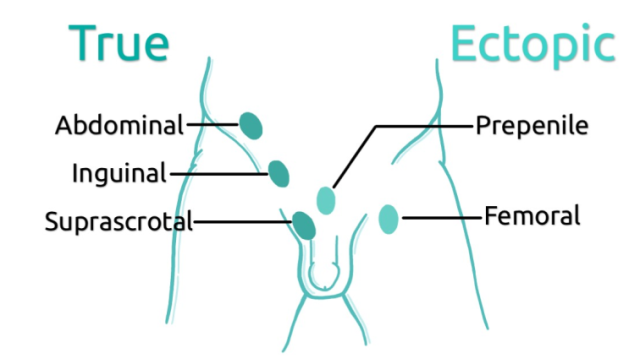
Genital abnormalities, such as undescended testicles
-
Spinal abnormalities
-
Congenital heart disease
-
Vision problems
-
Diagnosis
Due to the rarity of Carpenter syndrome, diagnosing this hereditary condition can be challenging. Doctors will typically assess the child's medical history, the family’s medical history, and the symptoms reported by the parents. A physical examination will also be conducted, along with supporting tests.
If the doctor suspects a skull deformity or another congenital condition, further tests may be recommended to confirm the diagnosis, such as:
-
Blood tests to check for genetic mutations, particularly in the RAB23 or MEGF8 genes.
-
Genetic testing on tissue samples, including hair, skin, or other cells.
-
CT scans or MRI to obtain images of the skull, heart, bones, and other organs.
-
Electrocardiogram (ECG) or echocardiogram (echo) to evaluate heart function.
-
Hearing tests.
Management
There is no cure for Carpenter syndrome. Treatment typically involves a multidisciplinary team of specialists from various medical fields. The approach to treatment and therapy depends on the specific symptoms and their severity.
Surgeries that may be performed include:
-
Closing a hole in the heart
-
Preventing or correcting the premature fusion of skull plates
-
Reducing the pressure on the brain caused by skull deformities
-
Separating fused fingers or removing extra fingers
-
Correcting spinal abnormalities
After surgery, the child will receive care in a pediatric intensive care unit. The effectiveness of therapy depends on the severity of the condition. While some children can grow into independent adults, others may experience intellectual disabilities that require assistance with education and daily activities. Heart problems associated with Carpenter syndrome can also influence the patient's life expectancy.
Complications
Complications that may arise due to Carpenter syndrome include:
-
Visual impairment
-
Hearing loss
-
Breathing difficulties
-
Heart problems
Prevention
There is no known method to prevent the genetic mutation associated with Carpenter syndrome. However, if you are considering having children, genetic testing can help determine whether you or your partner carries the abnormal gene. Genetic counseling for you and your family can also provide valuable information.
When to See a Doctor?
Contact a doctor if you notice any of the following signs in your child:
-
Difficulty breathing
-
Frequent ear infections, difficulty hearing, or an inability to respond to sounds
-
Failure to meet developmental milestones appropriate for their age
-
Signs of infection at surgical wound sites, such as redness, swelling, or discharge of pus
Looking for more information about other diseases? Click here!
- dr Hanifa Rahma
Carpenter Syndrome. (2022). Retrieved 26 December 2022, from https://my.clevelandclinic.org/health/diseases/23404-carpenter-syndrome
What is Carpenter Syndrome. (2022). Retrieved 26 December 2022, from https://www.news-medical.net/health/What-is-Carpenter-Syndrome.aspx.
Carpenter Syndrome. (2019). Retrieved 26 December 2022, from https://www.gosh.nhs.uk/conditions-and-treatments/conditions-we-treat/carpenter-syndrome/.
Carpenter Syndrome. (2022). Retrieved 26 December 2022, from https://www.med.unc.edu/surgery/plastic/forpatients/pediatric-plastic-and-craniofacial-surgery/carpenter-syndrome/.
Carpenter Syndrome Symptomps and Treatment. (2022). Retrieved 26 December 2022, from https://www.verywellhealth.com/carpenter-syndrome-2860663.