Definition
Ellis-van Creveld syndrome (EVC) is a rare genetic disorder that impacts bone development, resulting in individuals having a notably short body stature. Also known as chondroectodermal dysplasia, this condition is inherited from one generation to the next.
In addition to a short body stature, individuals with this syndrome may have shortened arms and legs, abnormalities in their fingernails and toenails, dental issues, and extra fingers (polydactyly). Over 50% of those affected may also experience heart problems, some of which can lead to life-threatening complications.
This syndrome is uncommon, with an occurrence rate of approximately 1 in 60,000 to 200,000 births. Fewer than 300 cases have been documented in various studies and case reports. Ellis-van Creveld syndrome was first identified by Dr. Richard Ellis and Dr. Simon van Creveld in 1940.
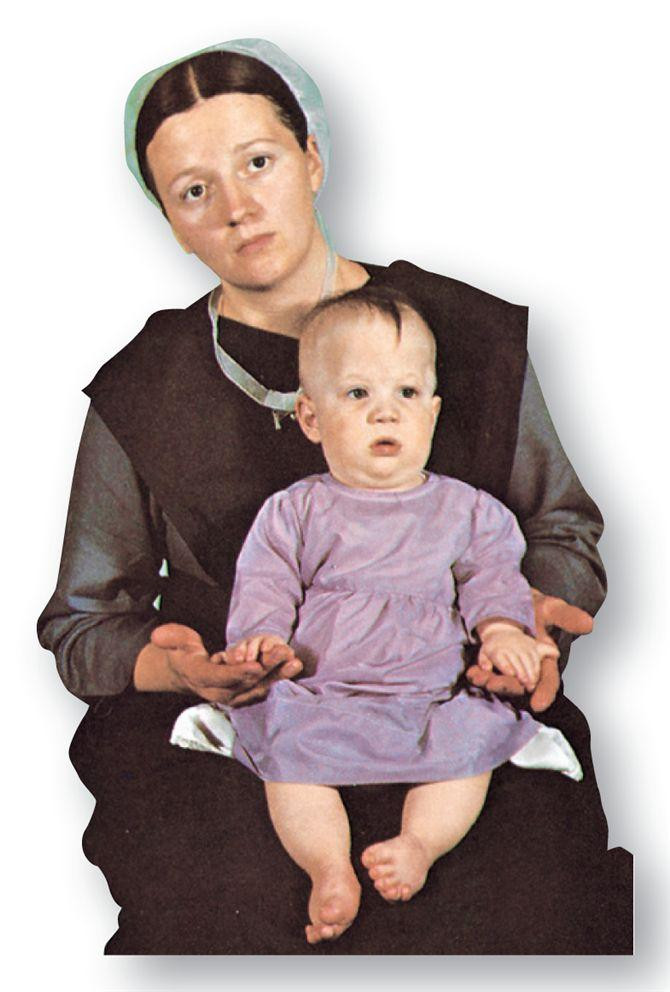
Due to its rarity, determining the exact prevalence of this condition is challenging. However, it is more commonly found within the Amish community in Pennsylvania, USA, and the indigenous populations of Western Australia.
Causes
Ellis-van Creveld syndrome is caused by mutations or alterations in the EVC or EVC2 genes. Genes are segments of DNA that provide instructions for the body to create specific molecules, typically proteins. The exact function of the proteins produced by the EVC and EVC2 genes is not fully understood. However, it is believed that these proteins play a role in cell growth, cell differentiation, and the development of normal body structures.
When mutations occur in the EVC or EVC2 genes, the resulting proteins become malformed and fail to function properly. The exact mechanism by which these defective proteins lead to the symptoms of EVC syndrome remains unclear.
It is thought that these gene mutations interfere with signaling pathways in the body, which regulate the growth and formation of various body structures, such as bones, teeth, and other parts. Mutations in the EVC and EVC2 genes account for more than half of all EVC syndrome cases. The causes of the remaining cases are still not fully understood.
Risk Factor
Ellis-van Creveld syndrome is a rare condition, but it occurs more frequently in certain populations, such as the Amish and the indigenous people of Western Australia. In the Amish community, the disease affects approximately 1 in 200 births, with around 13% of the population carrying the gene responsible for the syndrome.
The condition follows an autosomal recessive inheritance pattern, meaning that a child must inherit two copies of the mutated gene—one from each parent—for the disease to manifest. Parents with EVC syndrome may carry one copy of the mutated gene but typically do not show any symptoms. When both parents carry the gene, there is a 25% chance their child will inherit two copies of the mutation, resulting in the development of the syndrome.
Symptoms
People with Ellis-van Creveld syndrome can experience a range of physical abnormalities and disorders, including:
-
Cleft lip
-
Short and disproportionate body size
-
Abnormal location of the urinary outlet in males, such as epispadias (located at the top of the penis) or hypospadias (located at the bottom of the penis)
-
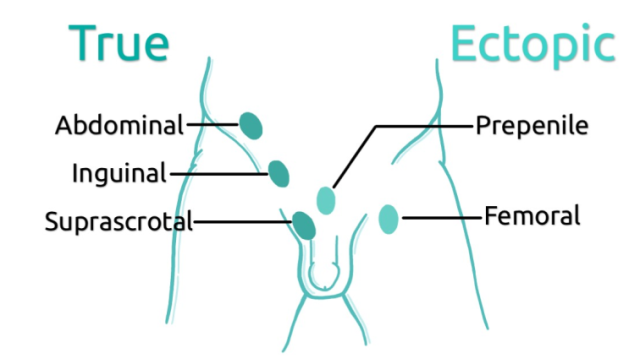
Undescended testicles (cryptorchidism)
-
Extra fingers (polydactyly)
-
Limited limb movement
-
Nail abnormalities, including missing nails or irregular nail shapes
-
Shortened arms and legs, particularly in the upper arms and lower legs
-
Genu valgum, a condition where the knees touch or nearly touch, creating a knock-knee appearance (shaped like the letter X)
-
Dental problems, such as small, sharp teeth (microdontia) or gaps between teeth
-
The presence of teeth at birth or the complete absence of teeth
-
Heart-related issues
Diagnosis
Ellis-van Creveld syndrome (EVC) presents with a wide range of symptoms, which means that different individuals with the condition may show varying signs. A doctor will first inquire about the patient’s family history to check for any genetic disorders or previous occurrences of similar conditions in the family.
After gathering this information, the doctor will conduct a physical test to identify common symptoms, such as a short, disproportionate body size, short limbs, nail abnormalities, extra fingers (polydactyly), knock-knees (genu valgum), and heart-related issues.
In some cases, additional tests may be conducted, including:
-
Chest X-ray
-
Echocardiography (heart ultrasound)
-
Genetic testing
-
Bone X-ray
-
Ultrasound
-
Urinalysis (urine test)
Management
Treatment for Ellis-van Creveld syndrome depends on the specific areas of the body affected. Although there is no cure for this genetic disorder, its associated complications can be managed effectively. Treatment generally involves multiple specialists to address the different abnormalities that arise in various parts of the body. Common treatments include:
- Treatment for Dental Issues
If a baby is born with teeth (neonatal teeth), they may need to be removed to avoid interfering with feeding. In cases of tooth shape abnormalities, such as microdontia (abnormally small teeth), dental procedures like crown buildup can be used to restore the teeth. If teeth fail to develop, implants or prosthetics may be used to replace missing teeth.
- Treatment for Other Body Abnormalities
Bone surgery may be required to correct deformities such as polydactyly (extra fingers) or genu valgum (knock-knees).
Chondrodysplasia, which results in short stature, cannot be corrected by surgery. However, hormone therapy may be recommended if there is a growth hormone deficiency.
If congenital heart disease is present, heart surgery may be needed. For abnormalities in the location of the urinary opening (epispadias or hypospadias), surgery can be performed to correct the position.
Complications
EVC syndrome can lead to various complications. In the first month of life, heart and chest abnormalities can result in respiratory difficulties, which could be fatal. Other possible complications include:
-
Bone deformities
-
Respiratory issues
-
Congenital heart defects, particularly atrial septal defects (ASD)
-
Kidney problems
For babies who survive without serious heart or lung issues, the life expectancy tends to be normal. Adults with EVC syndrome typically have a height between 119 cm and 161 cm. Some case reports also suggest that individuals with this syndrome may experience brain formation disorders or developmental delays.
Prevention
Currently, there are no specific preventive methods to stop the birth of a child with Ellis-van Creveld syndrome. However, genetic counseling can help individuals understand the risk of this disease if it runs in the family and guide them on how to manage the care of a child with this condition.
When to See a Doctor?
If your child exhibits any signs that could be linked to EVC syndrome, such as short stature, short arms or legs, dental issues, or extra fingers (polydactyly), it is important to consult a doctor as soon as possible.
Looking for more information about other diseases? Click here!
- dr Hanifa Rahma
Baujat G, Merrer ML. Ellis-Van Creveld syndrome. Paris: Orphanet J Rare Dis 2. Retrieved January 22, 2023, from https://doi.org/10.1186/1750-1172-2-27.
Defendi GL. (2019, September). Ellis-van Creveld Syndrome Clinical Presentation. Medscape. Retrieved January 22, 2023, from https://emedicine.medscape.com/article/943684-clinical#showall.
Kamal R, Dahiya P, Kaur S, Bhardwaj R, Chaudhary K. (2013, January). Ellis-van Creveld syndrome: A rare clinical entity. J Oral Maxillofac Pathol. Retrieved January 22, 2023, from https://www.ncbi.nlm.nih.gov/pmc/articles/PMC3687170/pdf/JOMFP-17-132.pdf.
Johns Hopkins Medicine - Chondroectodermal Dysplasia (Ellis-van Creveld Syndrome). Retrieved 28 January 2023, from https://www.hopkinsmedicine.org/health/conditions-and-diseases/chondroectodermal-dysplasia-ellisvan-creveld-syndrome.