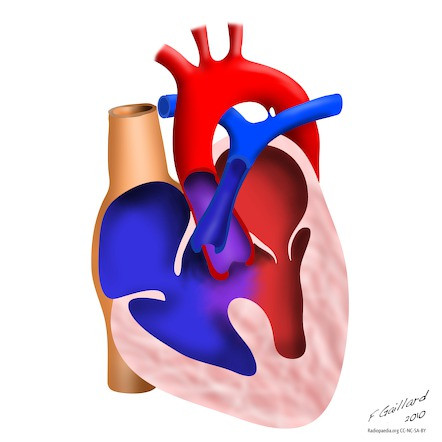
Definisi
Tetralogy of fallot (ToF) adalah penyakit jantung bawaan yang dapat menyebabkan sianosis pada permukaan kulit tubuh (kulit berwarna kebiruan). Sianosis yang terjadi merupakan proses yang diakibatkan oleh kurangnya kadar oksigen di dalam aliran darah yang ada dari jantung ke seluruh organ tubuh, termasuk kulit. Normalnya, darah yang memiliki kandungan oksigen cukup, memberikan warna merah muda pada permukaan kulit.
Penyakit ini ditandai dengan adanya stenosis pulmoner (penyempitan pada pembuluh darah vena pulmonalis (paru-paru)), kelainan septum interventikuler (adanya celah pada ruang bilik jantung), aliran darah yang lebih banyak ke aorta (pembuluh aeteri terbesar), dan pembesaran otot-otot pada ruang bilik jantung kanan.
Penyakit ini merupakan penyakit jantung sianosis yang termasuk jarang namun paling sering pada anak yang sudah bertahan sejak lahir tanpa pengobatan, dan membutuhkan penanganan dalam satu tahun kehidupannya. Angka kejadian penyakit ini berjumlah sekitar 7-10% dari kelainan kongenital. Penyakit ini dapat terjadi baik pada laki-laki dan perempuan dengan angka kejadian yang tidak berbeda bermakna dan muncul pada 3-5 kasus dari setiap 10.000 kelahiran hidup.
Penyebab
Hingga saat ini, terdapat banyak faktor (multifaktorial) yang menjadi penyebab berkembangnya tetralogy of fallot. Penyakit ini dapat dikaitkan dengan:
- Kondisi diabetes pada ibu selama hamil yang tidak tertangani atau tidak terkontrol dengan baik
- Konsumsi obat asam retinoate (obat metabolit vitamin A) pada ibu hamil
- Kondisi fenilketonuria (suatu kelainan genetik dimana tubuh tidak mampu mengurai asam amino fenilalanin)
- Kelainan kromosomal (seperti sindrom down)
Selain itu ada juga beberapa mutasi genetik lainnya yang dihubungkan dengan kejadian tetralogy of fallot.
Faktor Risiko
Pengenalan mengenai beberapa faktor risiko sangat berperan penting dalam pencegahan hingga pengobatan tetralogy of fallot. Beberapa faktor risiko yang dihubungkan dengan penyakit ini diantaranya:
- Konsumsi alkohol selama kehamilan
- Diabetes selama hamil
- Usia ibu saat hamil lebih dari 40 tahun
- Konsumsi makanan yang memiliki gizi tidak seimbang atau kurang selama persiapan hamil
- Terkadang pasien dengan tetralogy of fallot memiliki kelainan bawaan lainnya seperti sindrom Down, sindrom Allagile, dan sindrom DiGeorge (kondisi medis yang dapat menyebabkan kelainan jantung, kadar kalsium yang rendah, dan fungsi sistem imun yang buruk)
Gejala
Beberapa gejala dari tetralogy of fallot dapat muncul saat lahir atau beberapa hari setelah lahir. Gejala-gejala yang mungkin timbul diantaranya:
- Permukaan kulit berwarna kebiruan
- Jari berbentuk tabuh (clubbed finger)
- Terdapat masalah makan,
- Gagal bertumbuh
- Terlambat dalam proses perkembangan
- Terdapat beberapa kali episode pingsan atau hilang kesadaran
- Selama periode sianosis, pasien akan melakukan jongkok (squatting) sebagai bentuk kompensasinya
Diagnosis
Diagnosis tetralogy of fallot merupakan diagnosis yang dapat ditegakkan melalui wawancara medis, pemeriksaan fisik, hingga pemeriksaan penunjang bila tersedia dan diperlukan.
Pada wawancara medis, dokter akan menanyakan gejala yang dirasakan oleh pasien saat ini. Gejala-gejala yang ada dapat mengarahkan ke suatu penyakit tertentu sehingga sebagai wali anak Anda perlu mengutarakan gejala yang dirasakan selengkap mungkin dan disertai dengan sejak kapan gejala tersebut mulai dirasakan. Informasi ini penting bagi dokter dalam rangka menegakkan diagnosis medis tertentu. Apabila gejala yang dirasakan mengarahkan ke penyakit tetralogy of fallot, maka dokter akan melanjutkan ke pemeriksaan fisik dan pemeriksaan penunjang.
Pada pemeriksaan fisik, dokter akan melakukan pemeriksaan sesuai dengan gejala yang dirasakan oleh pasien sehingga dapat ditemukan beberapa tanda klinis yang merupakan tanda objektif yang didapatkan oleh dokter melalui pemeriksaan fisik. Pada kasus tetralogy of fallot, dokter dapat mendengar adanya kelainan suara jantung melalui stetoskop berupa adanya suara tambahan yang abnormal pada area jantung selama pemeriksaan fisik atau dokter dapat melihat adanya kebiruan pada permukaan kulit anak.
Apabila tanda klinis yang ditemukan mengarahkan ke penyakit tetralogy of fallot, maka dokter akan melanjutkan ke pemeriksaan penunjang bila alat tersedia dan dibutuhkan.
Pemeriksaan penunjang juga memiliki peran dalam menegakkan atau memastikan diagnosis dari tetralogy of fallot. Pemeriksaan penunjang yang mungkin akan dilakukan oleh dokter diantaranya pemeriksaan darah lengkap, pemeriksaan elektrokardiogram, pemeriksaan rontgen dada untuk melihat apakah ada kelainan, pemeriksaan ekokardiogram untuk mengetahui adanya kelainan pada denyut jantung dan bentuk jantung, pemeriksaan MRI jantung untuk melihat masalah struktur jantung, atau pemeriksaan tes oksimetri untuk mengukur kadar oksigen di dalam darah hingga kateterisasi jantung apabila diperlukan.
Tata Laksana
Penanganan tetralogy of fallot membutuhkan tindakan pembedahan. Tindakan pembedahan untuk memperbaiki tetralogy of fallot dilakukan saat anak masih berusia muda, umumnya sebelum berusia 6 bulan. Terkadang pembedahan perlu dilakukan lebih dari satu kali untuk penanganan tetralogy of fallot. Ketika tindakan pembedahan lebih dari satu kali, pembedahan yang pertama dilakukan untuk membantu meningkatkan aliran darah menuju paru. Pembedahan untuk mengkoreksi masalah dapat dilakukan di waktu selanjutnya. Namun, pembedahan koreksi hanya sekali dilakukan pada beberapa bulan pertama kehidupan. Pembedahan koreksi dilakukan untuk melebarkan bagian saluran pulmonal (paru-paru) yang menyempit dan menutup kecacatan dinding pemisah antar ruang bilik jantung (ventrikel) dengan sebuah tambalan khusus.
Komplikasi
Komplikasi yang mungkin dapat timbul pada tetralogy of fallot adalah pertumbuhan dan perkembangan yang terlambat, adanya gangguan irama jantung (aritmia), kejang selama periode saat tidak cukup oksigen, hingga kematian akibat henti jantung bahkan setelah proses pembedahan.
Kebanyakan kasus dapat dikoreksi dengan tindakan pembedahan. Bayi yang telah menjalani proses pembedahan umumnya mendapatkan hasil yang baik. Lebih dari 90% kasus tetralogy of fallot dapat bertahan hidup hingga usia dewasa dan dapat hidup aktif, sehat serta produktif. Kematian dapat terjadi pada usia 20 tahun apabila tidak melakukan proses pembedahan. Kontrol secara rutin perlu dilakukan oleh pasien-pasien ke dokter spesialis jantung agar kondisi kesehatan tetap terpantau oleh ahlinya.
Pencegahan
Hingga saat ini tidak ada pencegahan khusus untuk kasus tetralogy of fallot. Meskipun demikian, ada beberapa upaya yang dapat dikerjakan agar tetralogy of fallot tidak terjadi pada anak. Beberapa upaya tersebut meliputi:
- Menghindari konsumsi alkohol selama kehamilan
- Kontrol gula darah agar tetap stabil pada ibu hamil dengan diabetes
- Menghindari untuk hamil saat usia di atas 40 tahun
- Konsumsi makanan yang memiliki gizi seimbang selama persiapan hamil hingga selama kehamilan berlangsung
- Melakukan vaksinasi lengkap terutama vaksin rubella karena dapat memengaruhi proses pembentukan jantung pada janin selama kehamilan
Kapan Harus ke Dokter?
Jika permukaan kulit tampak berwarna biru pada anak atau ada keluhan yang menyerupai tanda klinis dari tetralogy of fallot, sebaiknya Anda memeriksakan anak Anda lebih lanjut ke dokter spesialis jantung dan pembuluh darah (Sp.JP) atau spesialis anak (Sp.A). Dokter akan melakukan wawancara medis, pemeriksaan fisik, hingga pemeriksaan penunjang tertentu untuk menetapkan diagnosis pasti dan tata laksana yang tepat.
Mau tahu informasi seputar penyakit lainnya? Cek di sini, ya!
- dr Nadia Opmalina

Diaz-Frias J, Guillaume M. Tetralogy of Fallot. [Updated 2022 Jan 18]. In: StatPearls [Internet]. Treasure Island (FL): StatPearls Publishing; 2022 Jan-. Available from: https://www.ncbi.nlm.nih.gov/books/NBK513288/
Medline Plus. Tetralogy of fallot. October 2019. https://medlineplus.gov/ency/article/001567.htm#:~:text=Tetralogy%20of%20Fallot%20causes%20low,the%20right%20and%20left%20ventricles)
Healthline. Tetralogy of fallot. March 2017. https://www.healthline.com/health/tetralogy-of-fallot#:~:text=These%20defects%20are%20known%20as,four%20problems%20associated%20with%20it.