Sejak pandemi, penggunaan masker mulai diwajibkan dalam kegiatan sehari-hari. Banyak orang yang belum terbiasa menggunakan masker sehingga tak sedikit yang menurunkan masker ke dagu saat merasa terlalu pengap. Padahal, menurunkan masker ke dagu dapat meningkatkan risiko tertular virus corona. Lalu, bagaimana cara mengatasinya?
Bahaya Menurunkan Masker ke Dagu
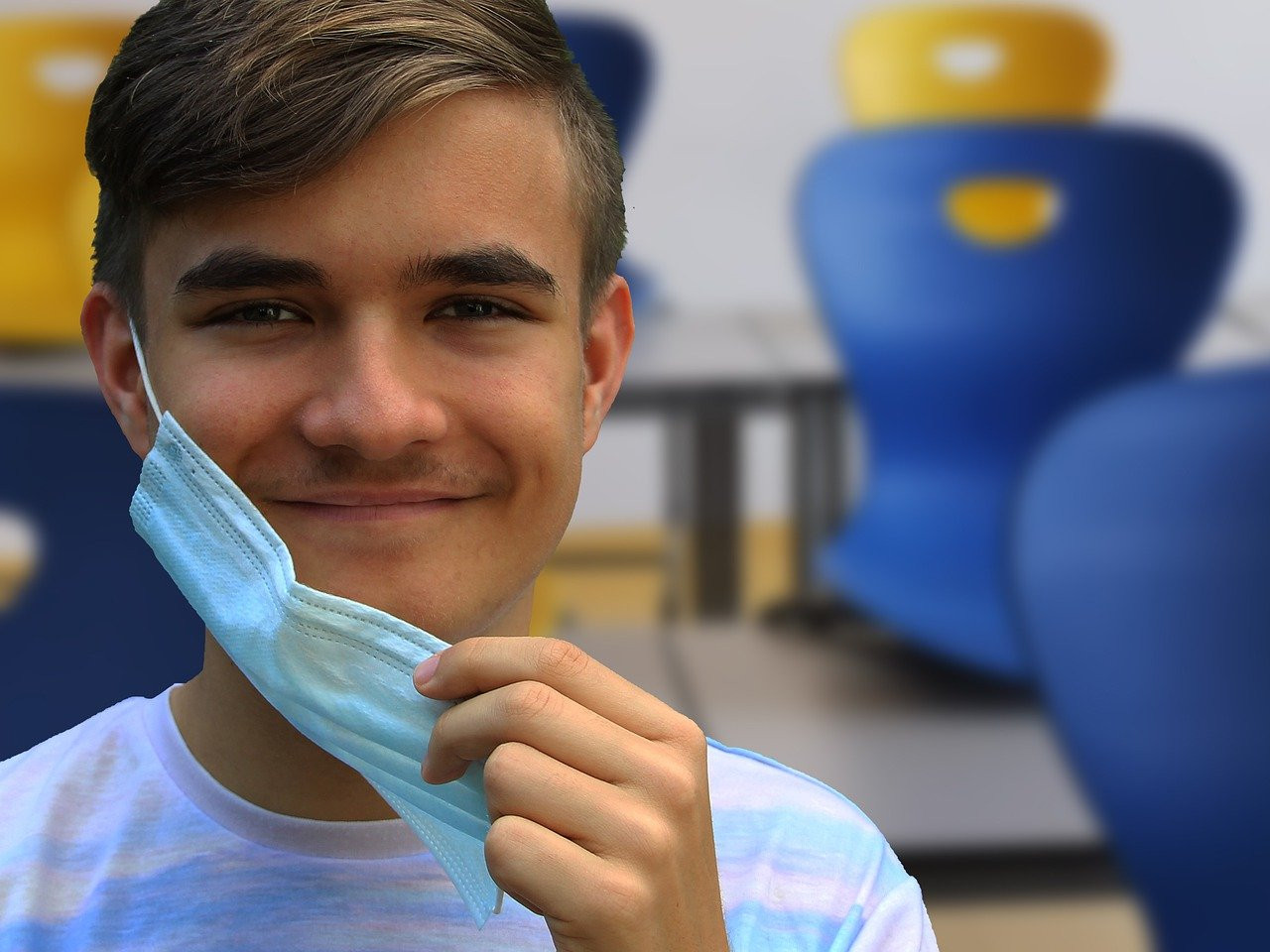
Ada beberapa penyebab mengapa orang gemar menurunkan masker ke dagu, di antaranya ketika sedang makan, saat sedang pengap, atau ketika sedang menyetir sendirian. Padahal, menurunkan masker ke dagu dapat meningkatkan risiko penularan virus Covid-19.
Bagian dagu yang selama ini jarang tertutup masker punya risiko tertempel berbagai virus dan bakteri dari udara. Ketika masker diturunkan ke dagu, akan terjadi transfer bakteri dan virus dari dagu ke masker dan sebaliknya. Saat masker dinaikkan kembali, penggunaan masker menjadi tidak optimal.
Selain itu, menurunkan masker ke dagu juga berarti tindakan menyentuh masker yang berisiko mengontaminasi masker dan ada risiko tangan menyentuh wajah. Hal ini yang dikhawatirkan dapat meningkatkan risiko penularan virus Covid-19.
Solusi Aman Agar Tidak Menurunkan Masker ke Dagu
Jika menurunkan masker ke dagu ternyata berisiko, lalu apa yang harus dilakukan ketika masker tidak digunakan, misalnya saat makan? Berikut ini ada solusi aman yang bisa Anda lakukan:
1. Lepas dan Simpan Masker yang Anda Gunakan
Saat makan, Anda tentu perlu melepas masker. Untuk amannya, Anda bisa melepas masker kemudian menyimpannya di kantong. Caranya, lepaskan dengan pegang tali masker dan pastikan hanya memegang tali maskernya saja. Hindari menyentuh area masker lainnya dan anggota tubuh seperti hidung, mata, dan mulut saat membuka masker. Jangan lupa untuk mencuci tangan sebelum dan sesudah membuka masker.
Setelah masekr dilepas, simpan masker Anda di kantong yang kering dan berongga seperti kantung kertas atau kantung tas dengan bahan jala. Jika Anda tidak membawa kantung, simpan masker Anda sementara di kantung baju atau celana. Setelah selesai makan, ambil dan gunakan kembali masker Anda.
Jika masker yang Anda gunakan terasa basah, maka simpan masker dalam kantung plastik tertutup. Jika Anda menggunakan masker kain, segera cuci masker kain Anda menggunakan air dan sabun untuk mencegah timbulnya jamur.
2. Lepas dan Ganti Masker Anda
Beberapa pendapat menyarankan untuk meletakkan masker Anda di meja ketika sedang makan atau ketika masker tidak sedang digunakan. Namun, cara ini juga banyak ditentang karena bakteri tetap dapat menempel di masker ketika digunakan kembali.
Cara paling aman adalah lepas dan simpan masker Anda seperti cara di atas, lalu ganti masker Anda dengan masker yang baru. Selalu sediakan masker cadangan di tas Anda ketika Anda bepergian untuk berjaga-jaga ketika masker Anda basah atau kotor. Apalagi, WHO mengimbau untuk mengganti masker setiap 4 jam sekali. Untuk itu, selalu sediakan masker, kantung kertas dan kantung plastik untuk mengakomodir imbauan tersebut.
Hingga saat ini penggunaan masker masih menjadi cara terbaik untuk mencegah penularan Covid-19. Namun, jika penggunaan masker masih belum tepat maka penggunaan masker akan sia-sia. Selain menghindari menurunkan masker ke dagu, hindari menyentuh masker tanpa mencuci tangan terlebih dahulu.
Mau tahu informasi dan artikel kesehatan mengenai penyakit Covid-19? Cek di sini, ya!
- dr Ayu Munawaroh, MKK

Miller K. The CDC is Reminding People That Face Masks Shouldn't Be Worn Below THe Chin (2020). Available from: https://www.prevention.com/health/a33403481/wearing-face-mask-under-chin/.
State Government of Victoria. Face Masks - When Wher Face Mask (2020). Available from: https://www.coronavirus.vic.gov.au/face-masks-when-wear-face-mask.