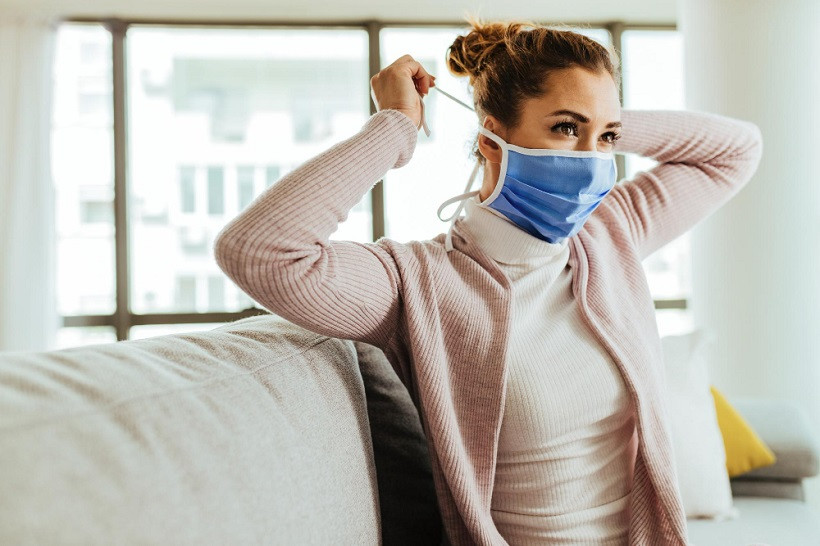

Lately, wearing an air purifier necklace has become a trend in our society. These necklaces are said to help purify the air the user breathes so it will become fresher and free of the COVID-19 virus. But are air purifier necklaces actually effective at preventing COVID-19 transmission?
Benefits of Air Purifiers in Preventing the Spread of COVID-19 Infection
COVID-19 spreads through droplets and airborne transmission. One study shows the virus can remain suspended in the air for up to three hours in aerosol form. Aerosolized particles can linger and travel farther through the air. If these aerosols are inhaled, a person can become infected with COVID-19.
To help remove aerosols from indoor air, you can use an air purifier. Air purifiers employ filters designed to capture dust, pollutants, germs, and viruses. These machines draw room air in, push it through a filter, and then recirculate the filtered air. After filtration, cleaner air is dispersed back throughout the space.
Air purifiers are commonly used to support people with asthma, allergies, and other breathing issues triggered by dust and pollution. In terms of COVID-19 prevention, air purifiers are believed to help reduce the virus transmission, especially in rooms with poor air ventilation.
Several studies indicate that air purifiers equipped with high-efficiency particulate air (HEPA) filters can capture coronaviruses down to roughly 0.1 microns. HEPA filters are rated to trap particles in the 0.1–0.3 micron range, so using an air purifier with a HEPA filter may help circulate cleaner air that is safer with respect to the COVID-19 virus.
For an air purifier to work well against the COVID-19 virus, filters must be cleaned and replaced regularly. In addition, make sure the device’s Clean Air Delivery Rate (CADR) matches the size of the room where it will be used.
Effectiveness of Air Purifier Necklaces
So, do air purifier necklaces actually block the COVID-19 virus? According to the Smart Air Filter site, a study from China and California tested how well air purifier necklaces reduce pollution and virus spread. Results showed three of four devices cut fewer than 10% of airborne particles within 20 cm in a closed room. This performance is considered inferior to the protection offered by wearing a mask to limit COVID-19 transmission.
Moreover, several studies suggest air purifier necklaces can generate ozone, which is harmful to the lungs. That’s because these devices typically use ionizers rather than HEPA filters. Ozone output varies by brand and model, but the EPA notes such emissions can still be unsafe for human respiration.
Continue to Adhere to Health Protocols
The WHO stresses the importance of good air circulation to help prevent COVID-19 transmission. If you use air conditioning, set it to allow exchange with outside air to reduce indoor air recirculation. Air purifiers for COVID-19 with HEPA filters are safe to use as long as their CADR is appropriate for each room.
However, to protect yourself from the spread of the COVID-19 virus, the WHO still recommends following health protocols. Wear a mask, maintain physical distance, avoid crowds, wash your hands frequently with soap, and get a full COVID-19 vaccination.
Looking for more information and health articles about Covid-19? Click here!
- dr Hanifa Rahma
Smart Air Filter. (2021). Wearable Air Purifier Necklaces: Do They Work?. Available from: https://smartairfilters.com/en/blog/personal-necklace-air-purifier-review/
https://www.tandfonline.com/doi/full/10.1080/02786826.2016.1139045
EPA. What are ionizers and other ozone generating air cleaners. Available from: https://www.epa.gov/indoor-air-quality-iaq/what-are-ionizers-and-other-ozone-generating-air-cleaners
CDC. Efficacy of Portable Air Cleaners and Masking for Reducing Indoor Exposure to Simulated Exhaled SARS-CoV-2 Aerosols. Available from: https://www.cdc.gov/mmwr/volumes/70/wr/mm7027e1.htm
EPA. Air Cleaners, HVAC Filters, and Coronavirus (COVID-19). Available from: https://www.epa.gov/coronavirus/air-cleaners-hvac-filters-and-coronavirus-covid-19
CDC. (2021). Ventilation in Buildings. Available from: https://www.cdc.gov/coronavirus/2019-ncov/community/ventilation.html#