
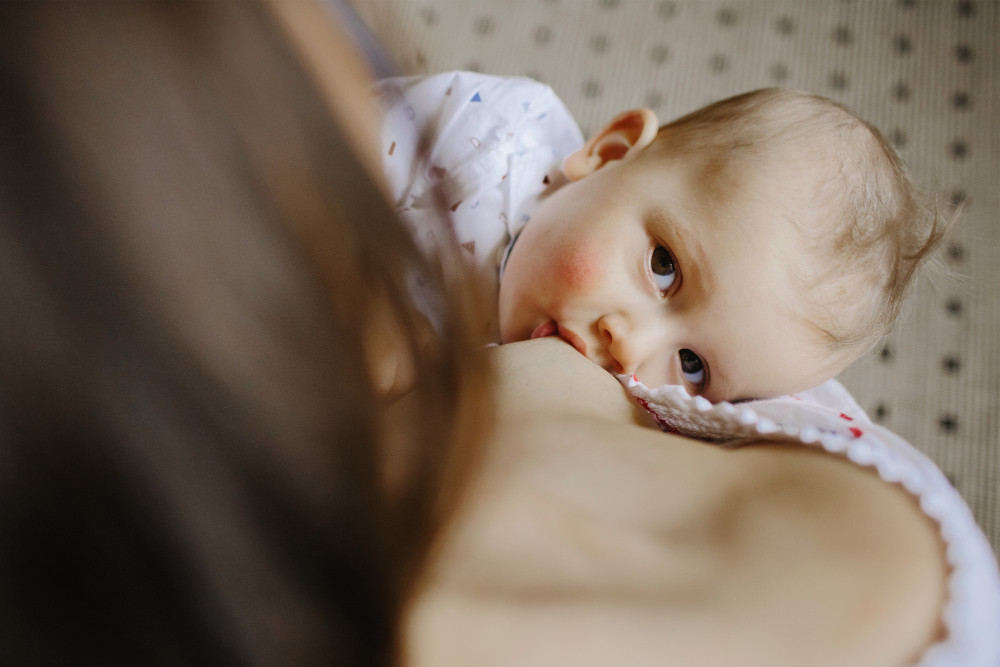
A red rash on a baby’s face can often cause concern for parents. Many people mistakenly assume that the rash is caused by splashes of breast milk during breastfeeding, leading to the term "dairy allergy rash." But can breast milk really cause rashes on a baby’s face?
What is Dairy Allergy Rash?
Experts confirm that dairy allergy rash is not caused by breast milk splashes. The rash commonly seen on a baby's cheeks is actually eczema or atopic dermatitis. This is an inflammatory condition that leads to red, irritated, rough, and scaly skin. In some cases, the rash is also accompanied by fluid-filled bumps. In addition to the cheeks, eczema can also appear on other parts of the body, such as the hands and feet.
Eczema in babies is quite common, especially in newborns. According to Everyday Health, about 90% of children experience eczema before the age of 5, and the American Academy of Dermatology reports that this condition is particularly common in children under 1 year old. In toddlers, eczema is also referred to as infantile eczema or infantile atopic dermatitis.
Causes and Symptoms of Infantile Eczema
Eczema typically appears in babies when they are 6 months old or younger. At this age, babies are usually exclusively consuming breast milk or formula, which leads some to mistakenly believe that the rash could be caused by breast milk or a milk allergy.
However, experts state that the cause of eczema is still unclear. According to Kids Health, eczema can be triggered by an immune system reaction, allergies, and other environmental or genetic factors. Family health history is also a contributing factor, babies whose parents have a history of conditions like asthma, atopic dermatitis, or hay fever are more likely to develop eczema.
Symptoms that appear include red rash (especially on the cheeks and forehead), dry, scaly, and itchy skin, cracked and oozing skin, fussiness and discomfort from irritation. It’s important not to scratch the rash, as this can cause pain, result in yellowing skin, and lead to more red bumps.
Treating Infantile Eczema
Mothers should not panic if their baby has eczema. While there is no cure for eczema, there are several ways to alleviate the symptoms. Here are some effective treatments:
1. Applying Moisturizer
To help manage eczema, it’s recommended to keep your baby’s skin well-moisturized. Apply a moisturizer 2-3 times a day after bathing. Choose creams that contain moisturizing agents like petroleum jelly or other products with a high water content.
2. Applying Eczema Medication
If eczema becomes bothersome, eczema-specific medications can be applied to the affected areas. Some of these medications include steroid or cortisone creams that help reduce inflammation and provide relief.
3. Choose Safe Baby Soaps and Skincare Products
For babies with eczema, it is important to use hypoallergenic baby soaps and skincare products that are free from fragrances and dyes. These ingredients can irritate the skin and worsen eczema symptoms.
Eczema in babies can often subside on its own over time. However, if the condition becomes troublesome or persists, it’s best to consult a doctor for appropriate treatment. Avoid using any over-the-counter medications without professional guidance to prevent further complications.
Looking for more information about pregnancy, breastfeeding, women's and children's health? Click here!
- dr Hanifa Rahma
Bennington-Castro. J. (2021). An Essential Guide to Baby Eczema: Causes, Symptoms, Treatment, and More. Available from: https://www.everydayhealth.com/eczema/guide/baby-eczema/
Watson, S. (2018). Your Baby’s Diet and Eczema. Available from: https://www.webmd.com/skin-problems-and-treatments/eczema/features/baby-diet
WebMD. Your Newborn’s Skin and Rashes. Available from: https://www.webmd.com/parenting/baby/baby-skin-rashes#1
Kids Health. (2019). Eczema (Atopic Dermatitis). Available from: https://kidshealth.org/en/parents/eczema-atopic-dermatitis.html