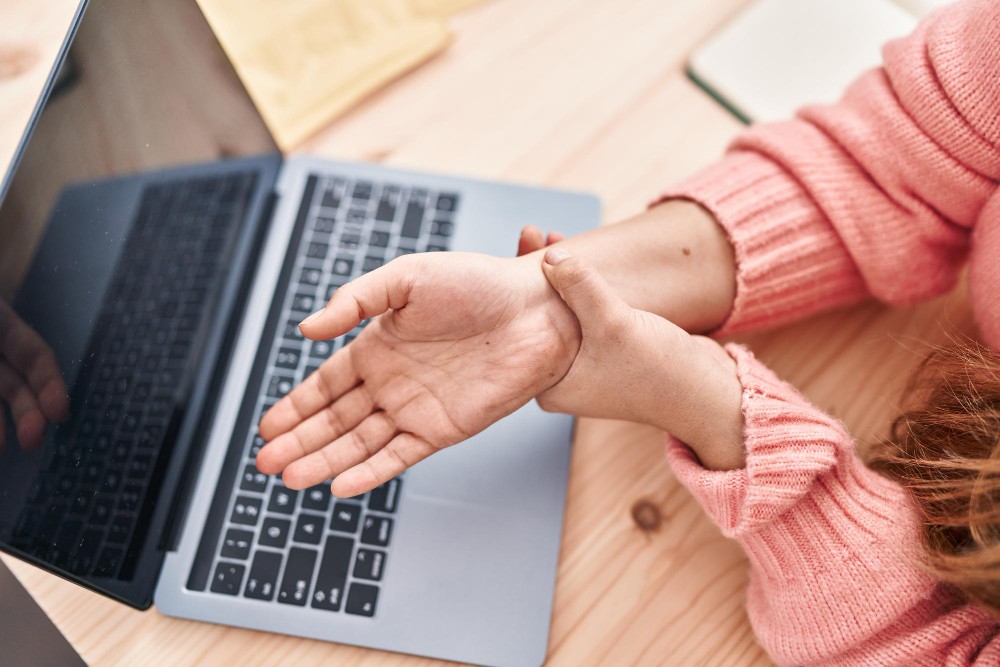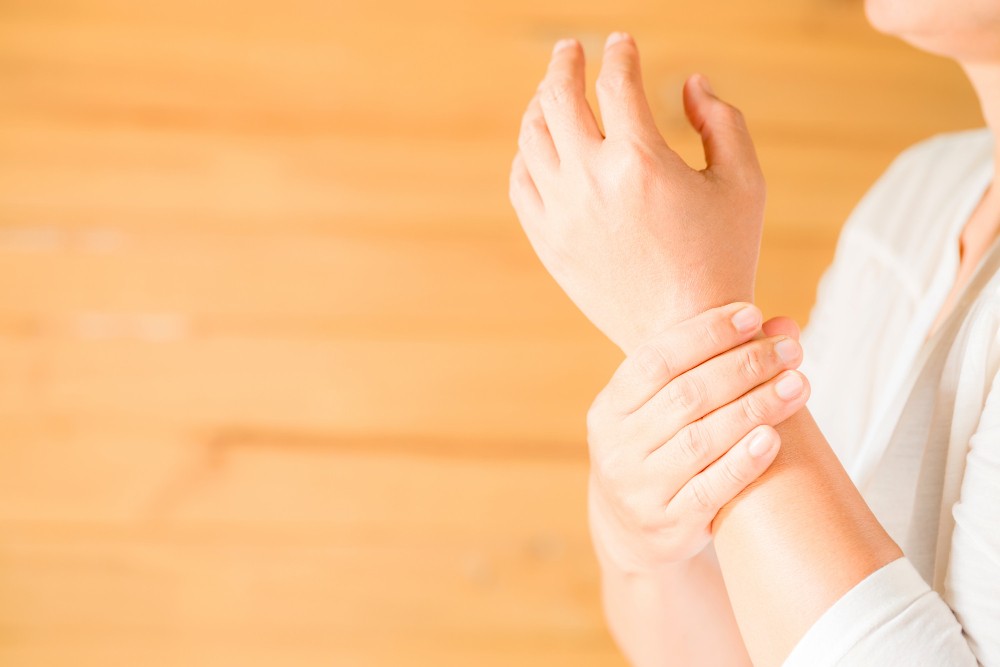
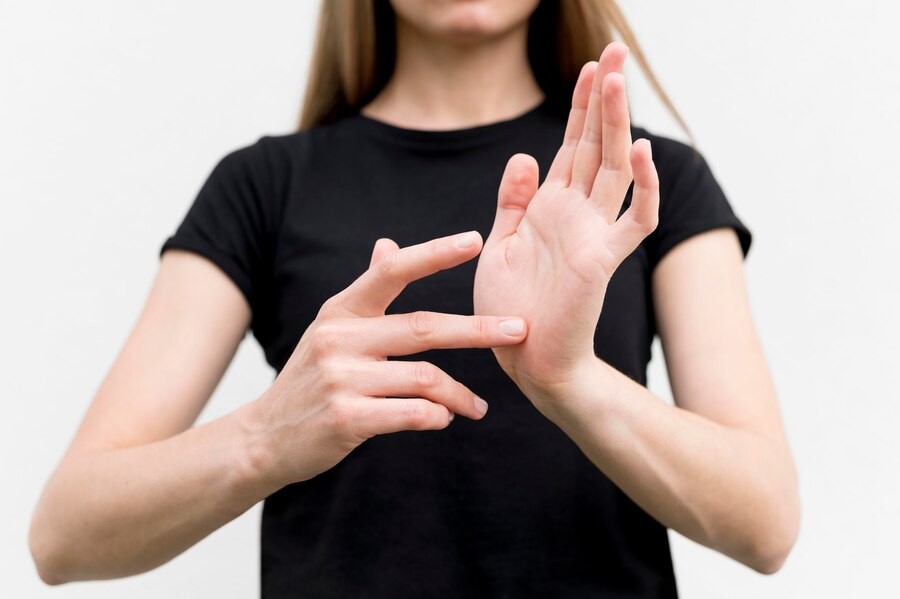
Sindrom terowongan karpal atau Carpal Tunnel Syndrome (CTS) merupakan kondisi yang sering dialami oleh ibu hamil. Kondisi ini menyebabkan rasa nyeri, kesemutan, dan kelemahan pada tangan serta pergelangan tangan.
CTS terjadi akibat tekanan pada saraf median yang melewati terowongan karpal di pergelangan tangan. Pada ibu hamil, kondisi ini sering dipicu oleh retensi cairan dan perubahan hormon yang menyebabkan pembengkakan dan penekanan saraf. Selain itu, penambahan berat badan selama kehamilan serta kebiasaan melakukan gerakan tangan berulang dapat memperburuk gejala CTS.
Kenali Gejala Sindrom Terowongan Karpal pada Ibu Hamil
Gejala CTS biasanya muncul secara bertahap dan cenderung memburuk seiring bertambahnya usia kehamilan. Berikut adalah beberapa gejala yang sering dirasakan oleh ibu hamil:
- Rasa seperti ditusuk jarum di tangan
- Nyeri atau mati rasa di tangan
- Kelemahan di tangan
- Sensasi terbakar di jemari tangan
- Rasa sakit di tangan yang menyebar ke lengan atau bahu
Rasa sakit yang dirasakan umumnya memengaruhi ibu jari, jari telunjuk, dan jari tengah. Beberapa ibu hamil juga merasakannya di kedua tangan, dengan gejala yang semakin buruk pada malam hari atau menjelang pagi.
Baca Juga: Hamil, Kapan Perut Mulai Membesar?
Cara Mengatasi CTS pada Ibu Hamil
Meskipun CTS pada kehamilan umumnya akan membaik setelah melahirkan, ada beberapa cara yang dapat dilakukan untuk mengurangi ketidaknyamanan yang dirasakan, di antaranya:
Mengistirahatkan tangan
Untuk mengurangi ketidaknyamanan, cobalah untuk mengidentifikasi aktivitas yang menyebabkan rasa tidak nyaman tersebut. Hindari gerakan atau aktivitas yang bisa memicu nyeri, terutama yang melibatkan pergelangan tangan. Pastikan untuk memberi waktu istirahat yang cukup pada tangan agar dapat mengurangi tekanan.
Menggunakan penyangga pergelangan tangan
Penggunaan penyangga pergelangan tangan atau splint saat tidur dapat membantu menjaga posisi tangan dan mengurangi tekanan pada saraf median. Penyangga ini juga bisa Anda gunakan saat beraktivitas jika gejala muncul di siang hari.
Merendam tangan di air dingin atau hangat
Secara bergantian, Anda bisa merendam tangan di air dingin atau air hangat. Lakukan masing-masing selama 30 detik, sekitar 3 kali, untuk membantu mendorong aliran darah ke pergelangan tangan dan meredakan ketegangan.
Baca Juga: Aktivitas yang Perlu Dihindari saat Sedang Hamil
Terapi fisik dan latihan
Walaupun terasa nyeri, Anda perlu tetap melakukan latihan peregangan dan penguatan untuk pergelangan tangan. Latihan ini akan membantu meredakan gejala.
Contoh latihan yang bisa dilakukan adalah menekuk pergelangan tangan ke belakang secara perlahan atau latihan genggaman dengan menggunakan bola karet kecil.
Tindakan medis
Jika cara di atas tidak berhasil atau gejala yang dirasakan memburuk, dokter mungkin akan menyarankan Anda untuk menjalani operasi dekompresi. Prosedur ini bertujuan untuk memotong ligamen yang menekan saraf median sehingga mengurangi tekanan dan nyeri.
Dengan melakukan beberapa langkah pencegahan dan perawatan, diharapkan gejala CTS selama kehamilan dapat berkurang dan memberikan kenyamanan. Namun, jika gejala semakin parah atau mengganggu, sebaiknya konsultasikan dengan dokter untuk penanganan yang lebih tepat.
Anda juga bisa memanfaatkan layanan konsultasi bersama dokter pada aplikasi Ai Care yang dapat diunduh di App Store atau Play Store.
Mau tahu informasi seputar penyakit lainya? Cek di sini, yah!
- dr Nadia Opmalina

Tiffany Ayuda (2023). What to know about carpal tunnel in pregnancy. Available from: https://www.babycenter.com/pregnancy/your-body/carpal-tunnel-during-pregnancy_234
Pregnancy Birth & Baby (2024). Carpal tunnel syndrome and pregnancy. Available from: https://www.pregnancybirthbaby.org.au/carpal-tunnel-syndrome-and-pregnancy
NHS UK (2024). Carpel tunnel syndrome (CTS) in pregnancy. Available from: https://www.southtees.nhs.uk/resources/carpel-tunnel-syndrome-cts-in-pregnancy/
John Hopkins Medicine. Carpal Tunnel Syndrome. Available from: https://www.hopkinsmedicine.org/health/conditions-and-diseases/carpal-tunnel-syndrome