
Definisi
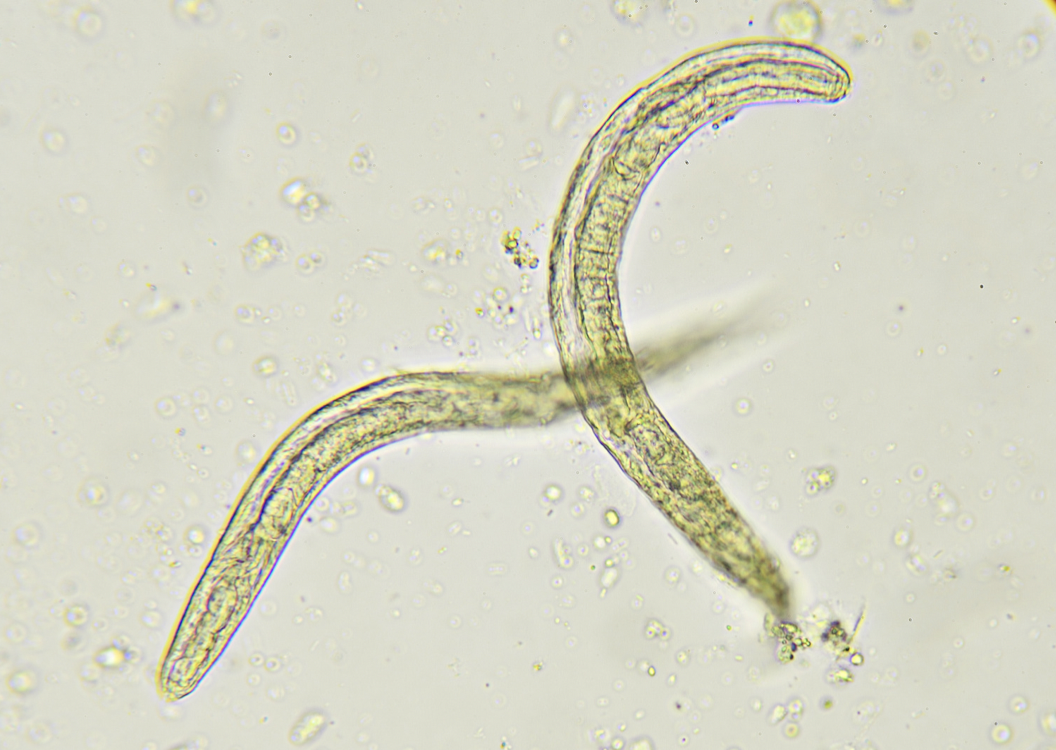
Askariasis merupakan salah satu infeksi parasit akibat cacing gelang dengan jenis Ascaris lumbricoides. Ascaris lumbricoides membutuhkan usus manusia sebagai sarana untuk berkembang dari larva atau telur menjadi cacing dewasa. Cacing dewasa dapat berkembang biak dan tumbuh hingga panjang 30 sentimeter. Askariasis merupakan salah satu jenis infeksi cacing yang cukup sering ditemui di berbagai penjuru dunia. Sebagian besar orang menderita infeksi ringan tanpa ditemui tanda atau gejala. Namun, infeksi yang berat dapat menyebabkan bermacam-macam tanda dan gejala serta berbagai komplikasi. Infeksi berat lebih sering dialami oleh populasi anak yang tinggal pada daerah tropis dan subtropis, terutama area dengan sanitasi dan kebersihan yang kurang.
Penyebab
Askariasis tidak ditularkan secara langsung dari satu orang ke orang lainnya, melainkan dengan kontak dengan tanah yang telah bercampur dengan feses manusia yang mengandung telur askariasis atau air yang terinfeksi. Di banyak negara berkembang, feses manusia masih digunakan sebagai pupuk. Terkadang penularan juga disebabkan sanitasi yang kurang baik, di mana feses manusia masih berpotensi tercampur dengan tanah di lapangan terbuka, ladang atau selokan.
Anak-anak dapat terinfeksi saat melakukan kegiatan berikut:
- Bermain di sekitar tanah kotor
- Berjalan tanpa alas kaki diatas tanah yang terkontaminasi telur cacing gelang
- Menyentuh benda atau permukaan yang telah ditempeli telur cacing
Jika seseorang yang kontak dengan benda tersebut tidak mencuci tangannya, dan memasukan tangan yang terkontaminasi tersebut ke dalam mulut, infeksi dapat terjadi. Kemungkinan penularan lainnya adalah:
- Konsumsi buah dan sayuran yang berlum di cuci dan tumbuh pada tanah yang terkontaminasi
- Memakan daging sapi, babi atau ikan air tawar mentah atau setengah matang
Faktor Risiko
Beberapa faktor yang dapat meningkatkan risiko terinfeksi askariasis meliputi:
- Usia. Sebagian besar orang yang mengalami askariasis berusia 10 tahun atau kurang. Anak-anak pada kelompok usia ini dapat memiliki risiko yang lebih tinggi karena dinilai lebih sering terpapar tanah atau kotoran
- Cuaca hangat. Askariasis lebih sering terjadi di negara-negara berkembang dengan cuaca yang hangat sepanjang tahun
- Sanitasi yang buruk. Askariasis sering ditemui di negara berkembang yang memiliki area dimana feses dapat bercampur dengan tanah lokal seperti contohnya penggunaan kotoran manusia untuk pupuk
- Orang yang tinggal di area padat penduduk
Gejala
Sebagian besar orang yang mengalami askariasis tidak menunjukkan tanda atau gejala. Namun, pada orang yang mengalami infeksi derajat sedang hingga berat, dapat terjadi berbagai tanda dan gejala, bergantung pada bagian tubuh yang terlibat. Gejala yang dapat timbul contohnya:
- Nyeri perut yang tidak spesifik bahkan dapat masuk kedalam kategori sangat nyeri apabila jumlah cacing yang menginfeksi dalam jumlah banyak
- Mual atau muntah
- Diare atau buang air besar yang disertai darah
- Bila jumlah cacing yang terdapat di usus tergolong banyak, individu dapat mengalami nyeri perut yang berat, kelelahan, muntah terus-menerus, penurunan berat badan, serta terdapat cacing pada muntah atau feses
Setelah menelan telur cacing yang berukuran sangat kecil (mikroskopis), telur dapat menetas di usus halus. Kemudian larva dapat bermigrasi melalui aliran darah atau sistem limfatik ke paru. Pada tahap ini, orang yang terinfeksi dapat menunjukkan tanda dan gejala pada saluran pernapasan, seperti:
- Batuk terus-menerus
- Sesak napas
- Bunyi napas ngik-ngik seperti serangan asma (mengi)
Setelah 6 hingga 10 hari di paru, larva dapat naik ke tenggorokan, dan kemudian dibatukkan dan tertelan kembali masuk kedalam sistem pencernaan. Larva yang tertelan ini kemudian dapat berkembang menjadi cacing dewasa di usus halus dan menetap hingga mati.
Diagnosis
Untuk menegakkan diagnosis askariasis diperlukan wawancara mendalam (anamnesis) mengenai:
- Gejala yang dialami pasien
- Perjalanan penyakit
- Riwayat kebiasaan pasien yang berhubungan dengan penyakit, seperti bermain ditanah tanpa menggunakan alas kaki
- Riwayat sanitasi di lingkungan tempat tinggal
Kemudian dokter akan melakukan pemeriksaan menyeluruh khususnya pada organ pencernaan dan anus. Pada infeksi berat dapat ditemukan cacing saat pasien batuk, muntah atau saat buang air besar. Kemudian, jika diperlukan dokter juga akan melakukan pemeriksaan penunjang, seperti:
- Analisa feses. Cacing betina di dalam usus dapat menetaskan telur yang dapat ditemukan pada pemeriksaan feses dengan mikroskop. Namun, telur tidak tampak pada feses hingga setidaknya 40 hari setelah infeksi
- Pemeriksaan darah. Pemeriksaan darah dapat dilakukan untuk mengevaluasi adanya peningkatan sel darah putih jenis eosinophil. Meskipun, askariasis dapat menyebabkan peningkatan eosinophil, namun kondisi medis lain juga dapat menunjukkan gambaran serupa
- Pencitraan. Foto rontgen dapat dilakukan untuk melihat kumpulan cacing di abdomen (perut). Bahkan pada beberapa kasus, dapat terlihat larva cacing dalam paru pada foto rontgen dada. Pemeriksaan ultrasonografi (USG) dapat dilakuan untuk menunjukkan gambaran yang lebih jelas tentang keberadaan cacing pada hati atau pankreas. Pemeriksaan penunjang seperti CT scan atau MRI juga dapat dilakukan apabila dibutuhkan untuk melihat adanya cacing yang menyumbat saluran hati atau pankreas
Tata Laksana
Pada beberapa kasus, infeksi askariasis dapat sembuh dengan sendirinya, namun umumnya, infeksi askariasis butuh penanganan. Terapi yang dapat dilakukan meliputi pemberian obat antiparasit yang merupakan penanganan lini pertama pada askariasis. Obat antiparasit yang dipilih untuk infeksi cacing gelang seperti albendazole, ivermectin atau mebendazole. Obat dapat dikonsumsi selama satu hingga tiga hari untuk membunuh cacing dewasa. Pada kasus yang sangat berat, terapi berupa pembedahan dapat dilakukan untuk mengevakuasi cacing dewasa dan memperbaiki kerusakan yang disebabkan oleh parasit ini. Biasanya dokter akan menyarankan prosedur pembedahan apabila terdapat sumbatan organ (obstruksi) atau robekan dinding usus (perforasi) yang dapat berakibat fatal.
Komplikasi
Komplikasi yang dapat timbul akibat infeksi askariasis adalah penyumbatan usus. Komplikasi ini dapat terjadi ketika sejumlah besar cacing menyumbat usus (obstruksi) yang menyebabkan rasa sakit dan muntah-muntah yang berat. Anak-anak lebih mungkin mengalami komplikasi ini, karena ukuran usus yang lebih kecil. Penyumbatan juga dapat terjadi di saluran organ hati atau pankreas, yang menyebabkan hilangnya nafsu makan dan penyerapan nutrisi yang buruk. Akibatnya penderita askariasis, terutama anak-anak bisa mengalami kekurangan nutrisi yang dapat memengaruhi pertumbuhan. Penyumbatan yang berkepanjangan dapat berakibat robeknya dinding organ tersebut karena adanya tekanan dari penyumbatan. Kondisi disebut dengan perforasi. Penyumbatan dan robekan organ ini dianggap sebagai keadaan darurat medis dan membutuhkan perawatan segera.
Pencegahan
Pencegahan yang dapat dilakukan untuk menghindari askariasis adalah dengan menerapkan kebersihan yang baik. Beberapa cara yang dapat dilakukan yaitu:
- Menjaga kebersihan tangan. Biasakan diri dan anak Anda untuk mencuci tangan sebelum menyentuh makanan. Cuci tangan dilakukan dengan dengan sabun dan air bersih yang mengalir
- Mencuci buah dan sayuran sebelum dikonsumsi. Hindari sayuran mentah kecuali bila dapat dikupas dan dicuci sendiri
- Menjaga kebersihan saat berpergian, khususnya pada daerah endemis. Anda dapat menggunakan air kemasan saat tidak yakin akan kebersihan air pada daerah tersebut
- Usahakan hanya mengonsumsi makanan yang hangat dan matang
- Mandi setiap hari. Hal ini perlu dilakukan untuk menghilangkan telur cacing gelang yang mungkin menempel, pergantian pakaian yang rutin dilakukan setiap hari juga perlu dilakukan
- Mencuci pakaian, seprai dan handuk yang diduga telah terkontaminasi cacing gelang dengan air panas. Setelah dicuci, jangan lupa untuk mengeringkan barang tersebut
- Menjaga agar ruangan tetap terang di siang hari karena telur cacing sensitif terhadap sinar matahari
- Rutin memotong kuku, karena sela kuku yang panjang merupakan sumber infeksi
Kapan harus ke dokter?
Disarankan ke dokter apabila muncul gejala seperti mual, muntah, nyeri perut, perut terasa membesar, keluar cacing di tinja/feses, diare serta penurunan berat badan terutama pada anak-anak. Penanganan segera pada infeksi cacing dapat mencegah terjadinya gangguan pertumbuhan pada anak.
Mau tahu informasi seputar penyakit lainnya? Cek di sini, ya!
- dr Ayu Munawaroh, MKK

Shoff WT, Shoff CT. emedicine.medscape.com. [Online].; 2015. Available from: https://emedicine.medscape.com/article/996482-treatment#d6
Mayo Clinic. https://www.mayoclinic.org/diseases-conditions/ascariasis/symptoms-causes/syc-20369593
Centers for Disease Control and Prevention. https://www.cdc.gov/parasites/ascariasis/index.html