Definition
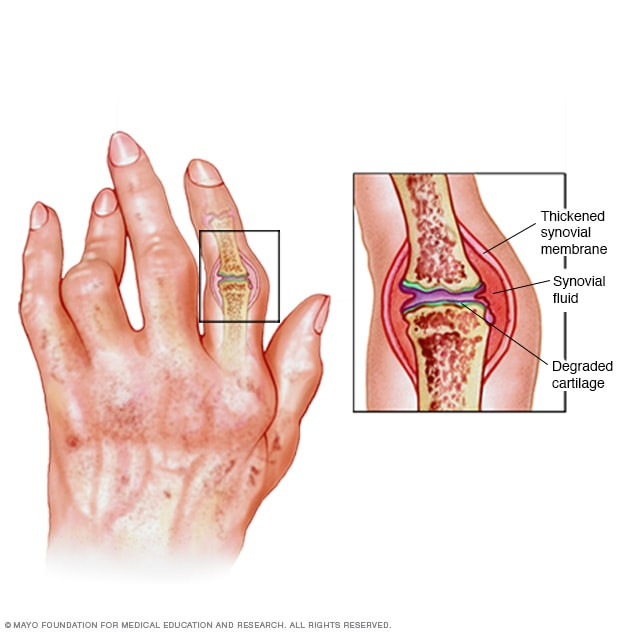
Rheumatoid arthritis (RA) is a chronic autoimmune disease that causes inflammation in the joints. In autoimmune conditions like RA, the body’s immune system mistakenly attacks healthy joint cells, perceiving them as foreign invaders.
RA typically affects multiple joints simultaneously, particularly those in the hands, wrists, and knees. The inflammation in the affected joints damages the lining, which can lead to chronic pain, limited mobility, and changes in the shape of the affected limbs. In addition to joint issues, RA can affect other tissues and organs, leading to inflammation in areas like the eyes, lungs, and heart.
Causes
RA is caused by an overactive immune response, where the body's immune system targets its own healthy cells. This leads to inflammation and swelling in the joints, causing pain and stiffness. While the exact cause of rheumatoid arthritis remains unknown, prolonged inflammation can result in damage to the joint tissue and surrounding bones.
Risk Factor
Several genetic and environmental factors contribute to a person’s risk of developing rheumatoid arthritis. These include:
- Age
Although RA can develop at any age, it is most common in individuals between 40 and 60 years old.
- Gender
Women are more likely than men to develop RA, with the risk being 2-3 times higher for women.
- Genetics
Specific genes make certain individuals more susceptible to RA. The HLA (Human Leukocyte Antigen) class II gene is particularly associated with a higher risk of developing arthritis. This risk is exacerbated by environmental factors like smoking or obesity. Individuals with a family history of RA are also more likely to develop the disease.
- Smoking
Numerous studies have consistently demonstrated that smoking elevates an individual's likelihood of developing rheumatoid arthritis (RA). In addition to increasing the risk, smoking can also exacerbate the condition in those who already suffer from arthritis.
- Childbirth History
Women who have never given birth face a heightened risk of developing rheumatoid arthritis compared to those who have been pregnant and given birth. Additionally, women who have breastfed are at a reduced risk of developing the condition.
- Obesity
Being overweight or obese significantly increases the chances of developing rheumatoid arthritis, particularly in individuals under the age of 55.
Symptoms
Rheumatoid arthritis symptoms typically appear gradually, evolving over days or weeks. The manifestations can differ from person to person, with some symptoms fluctuating, disappearing, or changing as time passes. Occasionally, flare-ups (when symptoms intensify) may occur, interspersed with periods of remission (when symptoms improve).
Below are some of the common signs and symptoms of RA, which include:
-
Pain and stiffness in multiple joints.
-
Tenderness and swelling in more than one joint.
-
Unexplained weight loss.
-
Fever.
-
Fatigue.
-
Weakness.
Initially, pain, stiffness, and swelling are often experienced in small joints, such as the hands and feet. These issues typically affect joints symmetrically on both sides of the body, although this is not always the case. For example, pain can be felt simultaneously in both hands. Additionally, these symptoms tend to worsen in the mornings or after periods of inactivity.
The inflammation caused by rheumatoid arthritis can also impact other areas of the body. For instance, if the eyes are affected, one may experience dry eyes.
Diagnosis
The doctor will inquire about your symptoms and perform a physical test. It's essential to inform the doctor about your medical background, family history, and any medications you may currently be taking. The doctor will assess your joints for tenderness, swelling, and restricted movement. As noted, RA generally impacts multiple joints symmetrically on both sides of the body.
If necessary, the doctor may suggest further tests, including x-rays or blood tests. Early diagnosis of RA can enable the patient to begin treatment promptly, potentially slowing down the disease's progression and minimizing joint damage.
Management
While there is no definitive cure for rheumatoid arthritis, treatment aims to control symptoms and slow joint damage. Therapy is also designed to prevent bone deformities. Doctors typically prescribe Disease-Modifying Antirheumatic Drugs (DMARDs).
Alongside medication, there are several lifestyle adjustments that can help reduce pain and enhance joint function.
Regular Physical Activity
Experts advise that adults should aim for at least 150 minutes of moderate-intensity physical activity weekly. Activities such as walking, swimming, or cycling for 30 minutes five days a week can be highly beneficial. Regular physical activity can also lower the risk of other chronic conditions like heart disease, diabetes, and depression.
Before starting any exercise program, it's important to consult with your doctor to ensure the activities are safe and won't exacerbate your arthritis.
Quit Smoking
Smoking not only heightens the risk of developing rheumatoid arthritis but also worsens its symptoms. Additionally, smoking contributes to other health issues, so quitting is highly recommended for improving overall health and managing RA.
Maintain a Healthy Weight
Excess weight and obesity can lead to various complications for those with rheumatoid arthritis. Maintaining a healthy weight is crucial for managing RA and preventing further joint strain.
Complications
Rheumatoid arthritis (RA) can lead to numerous challenges that significantly impact an individual’s quality of life. If left uncontrolled, the disease can result in various complications, such as:
- Chronic Diseases
People with RA are more likely to develop chronic conditions, including diabetes, heart disease, and high blood pressure. The risk factors for RA, such as smoking and being overweight, also contribute to the development of these long-term diseases. As a result, doctors often recommend quitting smoking and maintaining a healthy weight to reduce the overall risk.
- Work Difficulties
Adults with rheumatoid arthritis may face significant challenges in the workplace. Many patients find that their ability to work is impaired, especially in jobs that require physical exertion.
- Carpall Tunnel Syndrome(CTS)
Carpal Tunnel Syndrome (CTS) is a condition where the median nerve in the arm becomes compressed. This condition is relatively common among individuals with rheumatoid arthritis. Symptoms of CTS include pain, numbness, and tingling sensations in the hands and fingers.
- Extensive Inflammation
The inflammation caused by rheumatoid arthritis can affect various parts of the body beyond the joints, including the lungs, heart, eyes, and blood vessels. Inflammation in these areas can lead to symptoms like chest pain, shortness of breath, dry eyes, or narrowing of blood vessels.
If joint inflammation goes untreated, it can lead to significant damage to the joints and may result in permanent disability.
Prevention
To minimize the risk of developing rheumatoid arthritis, it is crucial to avoid smoking and maintain a healthy weight. Smoking, alongside genetic factors, is one of the leading causes of RA. Additionally, people who are both overweight and smoke are at an even greater risk of developing the condition.
When to See a Doctor?
If you are experiencing joint pain on both sides of your body, it’s important to consult a doctor. Your healthcare provider can help identify your symptoms and evaluate any risk factors you may have. Early detection of RA is crucial, as starting treatment promptly can prevent the disease from progressing and reduce the potential for joint damage.
Looking for more information about other diseases? Click here!
- dr Hanifa Rahma
Rheumatoid Arthritis. (2020). Retrieved 9 August 2022, from https://www.cdc.gov/arthritis/basics/rheumatoid-arthritis.html.
Rheumatoid Arthritis (RA) Causes & Risk Factors. (2020). Retrieved 9 August 2022, from https://www.webmd.com/rheumatoid-arthritis/the-causes-of-rheumatoid-arthritis.
Rheumatoid arthritis. (2019). Retrieved 9 August 2022, from https://www.nhs.uk/conditions/rheumatoid-arthritis/.

/669f34947bb6a.jpg)