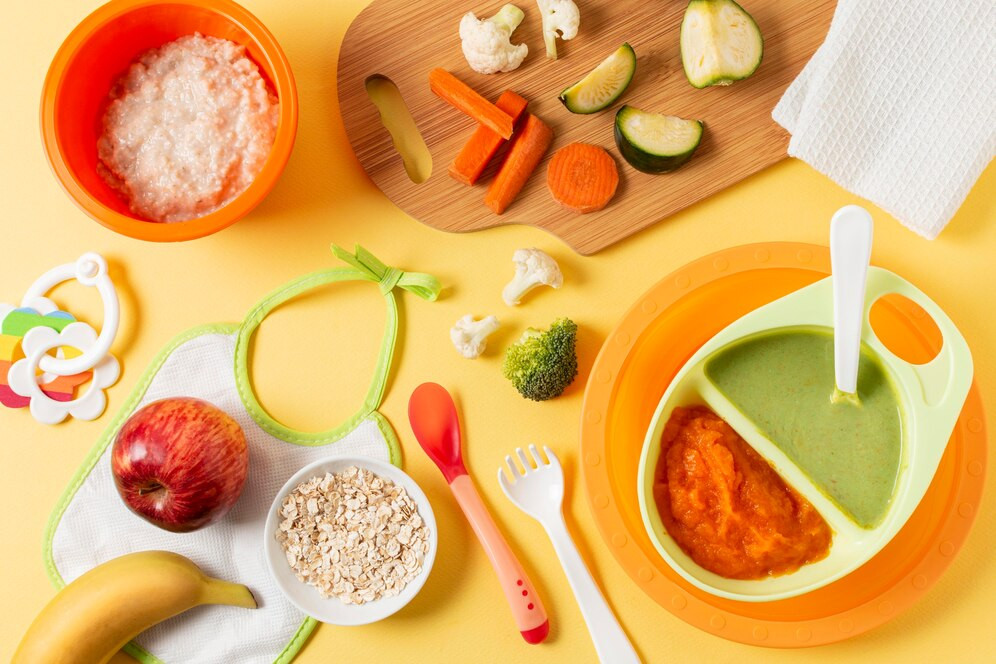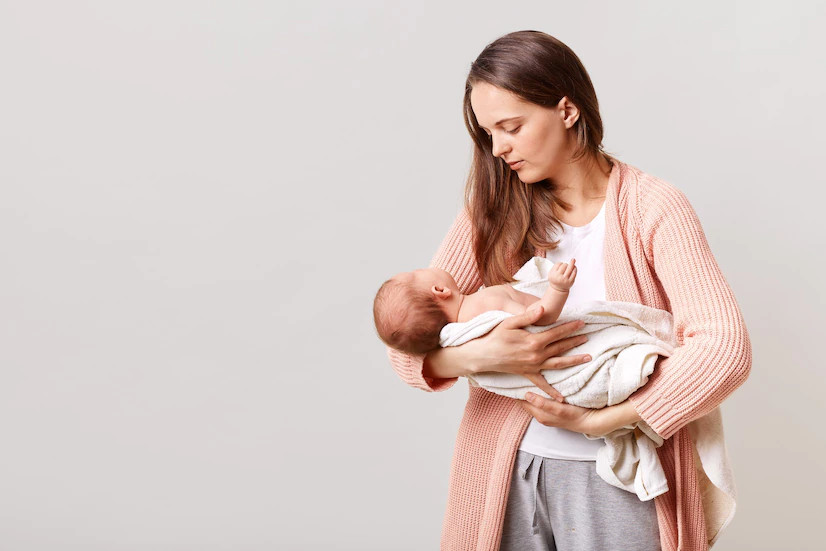
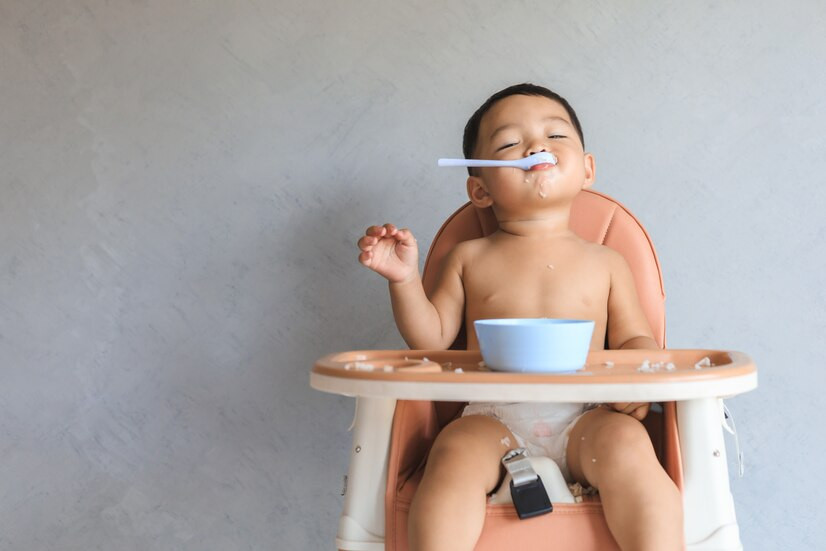
Toddlers aged 1–2 are no longer fully reliant on breast milk. At this stage, they must meet their nutritional needs from the foods they eat.
Even so, many toddlers in this age group refuse certain foods or eat only small amounts. Let’s go over practical tips to get kids to eat well.
Calorie Needs for 1–2 Years Old Babies
Between ages of 1 and 2 years old, they need a broader variety of foods. You can continue breastfeeding, but be sure the range of complementary foods is diverse so daily calorie needs are covered.
1 and 2 years old babies typically require about 1,000–1,400 calories per day, depending on age, body size, and activity level.
Milk remains important for them. Milk supplies calcium and vitamin D, which help strengthen bones.
They need about 700 mg of calcium and 600 IU of vitamin D. If your child’s diet falls short, ask your doctor about a prescription supplement.
Tips for Encouraging Babies to Eat Well
Don’t worry if your baby sometimes eats tiny portions or refuses meals. Mood, hot weather, drowsiness, or illness are common reasons why kids don’t eat well.
To help them eat well, the following feeding tips for them may be helpful:
-
Create a relaxed, happy mealtime, they can eat with other children and have them sit with family members.
-
Show them you enjoy the same foods they’re served.
-
Involve your child in simple prep for the food they’ll eat.
-
Offer new dishes when they’re in a good mood, not distracted, and not overtired.
-
Keep meals to about 20 minutes. If they refuse, end the meal and avoid offering snacks or substitutes for the main course.
-
Don’t threaten or pressure them at the table, as it can make eating harder.
-
Introduce a new menu patiently; it may take 10-15 tries before they accept it.
-
Serve the same menu so they don’t feel singled out. Adjust the food texture as needed, cut foods into smaller pieces.
-
Let your child touch, lick, and explore the food texture with their fingers while trying a new menu.
Foods That Should Not Be Given to 1–2 Years Old Babies
It’s normal for babies to refuse eating at times. As noted above, several factors can affect appetite and portion size. However, do not try to persuade or replace a main meal with the following:
-
Foods high in sugar
-
Drinks with added sugar
-
Foods high in salt
-
Fruit juice, milk, yogurt, unpasteurized cheese
-
Foods that pose a choking hazard, such as raw vegetables, peanuts, chewing gum, whole grapes, marshmallows, popcorn, sausage, candy, seeds, or large pieces of meat
When is a Doctor Consultation Needed When Your Child Refuses to Eat?
Occasional refusal is normal. You should consult a doctor if your child shows any of the following:
-
Eating only very limited foods in tiny portions
-
Refusing a variety of foods for several weeks
-
Consistently rejecting anything offered
-
Weight not tracking along their growth chart
A baby who is full may refuse more food. Don’t force your child to finish if they’ve had enough.
Looking for more information about pregnancy, breastfeeding, women's and children's health? Click here!
- dr Hanifa Rahma
Healthy Children (2022). Feeding & Nutrition Tips: Your 2-Year-Old. Available from: https://www.healthychildren.org/English/ages-stages/toddler/nutrition/Pages/Feeding-and-Nutrition-Your-Two-Year-Old.aspx
Raising Children (2022). Toddler not eating? Ideas and tips. Available from: https://raisingchildren.net.au/toddlers/nutrition-fitness/common-concerns/toddler-not-eating
KidsHealth (2021). Feeding Your 1- to 2-Year-Old. Available from: https://kidshealth.org/en/parents/feed12yr.html
KidsHealth (2018). Nutrition Guide for Toddlers. Available from: https://kidshealth.org/en/parents/toddler-food.html
Elizabeth M. Ward, RD, MS (2022). What and How Much to Feed Your Toddler. Available from: https://www.webmd.com/parenting/features/what-and-how-much-to-feed-your-toddler