
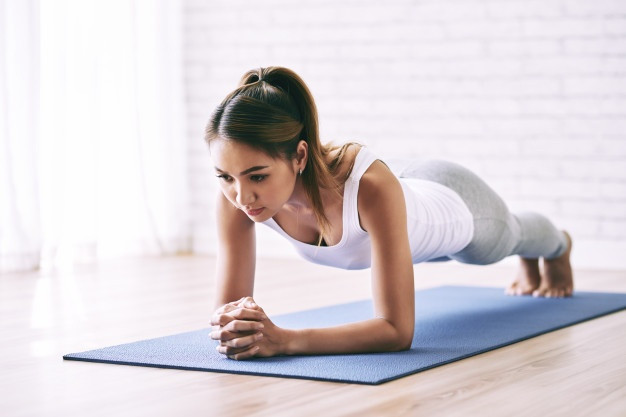
There are many paths to reach your ideal physique. Dieting and different forms of exercise can support that goal. In addition to maintaining a daily calorie deficit, you can also try planks. Planks are considered an effective exercise to support a weight loss program. Planks not only build abdominal muscles but can also strengthen the core.
According to Livestrong, planks engage the quadriceps, shoulders, and back muscles, which makes them useful for building good posture and strengthening muscles across the entire body. This versatile movement can be done anywhere without equipment, so it is a practical daily exercise to add to your routine.
Benefits of Planks
You can gain several benefits from consistent plank practice, including:
-
Building stability in the core muscles
-
Developing better posture
-
Increasing shoulder strength and stability
-
Improving overall endurance
-
Strengthening the glutes and hips
Although it appears simple, people often make errors when performing planks. According to Verywellfit, these are common mistakes during planks:
- Arching your back
If you arch your back during a plank, your movement will not engage the abdominal muscles adequately and you will place more weight on your arms. Keep your shoulders low and broad to help prevent your back from arching.
- Dropping your hips too much
This mistake often begins when your feet are set too close together, which makes your hips sag and your abdomen begin to drop. As a result, your stomach can be easily fatigued and the plank will end too soon. When you perform a plank, set your legs slightly wider and focus on engaging your abdominal muscles.
- Raising your head up
During a plank, keep your neck aligned with your body. Avoid lifting or tilting your head upward to prevent neck strain. Keep your gaze slightly ahead of your hands and hold your head level.
- Lifting your buttocks up
According to Healthline, another mistake is raising your buttocks too high. This shifts your weight to the upper body rather than the abdominal area.
- Holding your breath
Holding your breath while doing a plank will strain your body and make the exercise more difficult. Practice calm, steady breathing so you can focus on activating your abdominal muscles.
Several Plank Variations
- Forearm plank with bent knees
A plank position on the forearms with the knees bent. This variation suits beginners.
- Side plank on forearms
A plank variation that loads your body weight on one side of the abdomen.
- Plank with side taps
A more challenging variation of plank with higher difficulty. Support your body on your arms, then alternately tap each foot to the floor.
- Plank with reach under
A moderately challenging variation of plank. This movement keeps your weight on your arms while you alternately reach under and touch the lower body.
There are many plank variations you can explore. If you are a beginner, start with a high plank or a low plank and hold for 10–15 seconds, performing 3–4 set repetitions. You can lengthen the hold as your training progresses.
Important Note
Avoid planks if you have a shoulder injury or if you are pregnant. Consult your doctor or a physical therapist before planning a plank routine if you have concerns about injury or pregnancy.
Looking for more information about health tips and tricks, first aid, and other home remedies? Click here!
- dr Hanifa Rahma
Quinn E. How to Do a Plank (2021). Available from: https://www.verywellfit.com/the-plank-exercise-3120068.
Davidson K. What Muscles Do Planks Work? The Answer: A Lot (2021). Available from: https://www.healthline.com/health/fitness/what-muscles-do-planks-work.
Galic B. 5 Big Benefits of Planks — and How to Do One Perfectly (2020). Available from: https://www.livestrong.com/article/500440-what-does-the-plank-exercise-benefit/.