Definisi
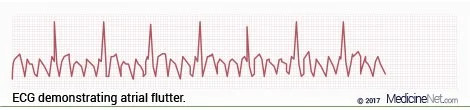
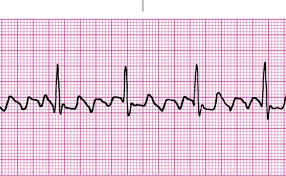
Atrial flutter adalah gangguan irama jantung di mana serambi jantung berdetak terlalu cepat akibat impuls listrik yang berlebihan. Denyut jantung normal adalah 60-100 kali per menit. Atrial flutter termasuk jenis aritmia, yaitu irama jantung yang tidak teratur, dengan laju denyut jantung yang cepat (takikardia). Takikardia adalah peningkatan denyut jantung di atas normal, yaitu lebih dari 100 kali per menit.
Atrial flutter jarang terjadi pada anak-anak tanpa penyakit jantung bawaan. Pada anak-anak dengan jantung normal, takikardia atrium ditemukan pada sebagian besar janin saat di akhir kehamilan atau pada bayi baru lahir. Pada janin dengan atrial flutter, kecepatan denyut serambi bisa mencapai 300-600 kali per menit disertai dengan blok atrioventrikular atau hambatan aliran listrik jantung antara serambi dan bilik. Kondisi ini menyebabkan laju bilik lebih lambat.
Pada anak yang lebih besar, atrial flutter biasanya terjadi karena adanya penyakit jantung bawaan, miokarditis atau radang otot jantung, dan kardiomiopati atau gangguan fungsi otot jantung.
Pada bayi dan bayi baru lahir dengan atrial flutter dan struktur jantung yang normal, atrial flutter cenderung tidak berbahaya. Setelah terapi merubah irama jantung menjadi normal, penggunaan obat antiaritmia tidak direkomendasikan karena kasus kekambuhan sangat jarang terjadi.
Penyebab
Atrial flutter meliputi sepertiga dari seluruh kasus takiaritmia (denyut jantung terlalu cepat) pada janin. Kebanyakan janin dan bayi baru lahir dengan atrial flutter memiliki struktur jantung yang normal. Sehingga, jika ada janin dengan atrial flutter, kelainan struktur jantung harus disingkirkan karena tingginya angka kelainan jantung tersebut. Beberapa bayi baru lahir dan anak kecil memiliki kondisi atau kelainan tertentu yang dapat berhubungan dengan atrial flutter.
Aneurisma atau pelebaran pembuluh darah pada serambi tampaknya terkait dengan gangguan irama jantung berkelanjutan pada bayi baru lahir. Namun, keterkaitan ini tidak sesering pada pasien dewasa. Kardiomiopati juga berhubungan dengan atrial flutter berulang. Pada sindrom Costello, kelainan yang tampak juga dikaitkan dengan takikardia atrium dan atrial flutter yang memanjang.
Atrial flutter juga dapat terjadi segera setelah operasi kelainan jantung bawaan. Peradangan selaput pembungkus jantung, terbentuknya jaringan parut, dan peradangan area jantung yang dioperasi dapat memicu atrial flutter.
Laporan kasus juga menunjukan adanya hubungan antara atrial flutter dengan konsumsi obat-obatan herbal dan makanan tertentu. Namun, atrial flutter karena sebab ini akan hilang jika Anda menghindari pemicunya.
Faktor Risiko
Pasien yang telah menjalani operasi untuk memperbaiki penyakit jantung bawaan lebih rentan mengalami atrial flutter karena adanya bekas luka operasi pada bagian serambi dan adanya pembesaran serambi kanan. Atrial flutter juga dikaitkan dengan obesitas, konsumsi alkohol, dan hipertiroidisme (kelenjar tiroid terlalu aktif). Pasien anak dengan kelainan fungsi otot jantung juga dapat mengalami atrial flutter dan kardiomiopati.
Gejala
Atrial flutter dapat menyebabkan gejala berikut:
- Nyeri atau rasa tertekan di dada
- Pingsan atau sinkop
- Kelelahan
- Rasa melayang atau pusing
- Berdebar, yaitu sensasi jantung berdenyut cepat atau tidak teratur
- Sesak nafas
Gejala bervariasi berdasarkan frekuensi, durasi, dan keparahannya. Bahkan, ada anak yang tidak mengalami gejala sama sekali. Gejala bisa timbul sebentar, hilang dengan sendirinya, atau menetap untuk waktu yang lama atau sampai terobati.
Gejala yang sering timbul atau berlangsung lama, dapat meningkatkan risiko pembentukan gumpalan darah di jantung. Jika gumpalan darah lepas dan menyumbat pembuluh darah otak, bisa menyebabkan stroke.
Atrial flutter jarang terjadi pada bayi dengan jantung yang normal. Jika hal itu terjadi, umumnya akan sembuh dalam setahun pertama kehidupan. Episode atrial flutter yang jarang dan bergejala minimal mungkin memerlukan penanganan yang lebih sedikit. Penting untuk diperhatikan bahwa beberapa anak mungkin sulit menggambarkan dan menceritakan gejala yang mereka rasakan.
Diagnosis
Selain gejala, riwayat kesehatan, dan hasil pemeriksaan fisik, terdapat beberapa pemeriksaan yang dapat membantu menegakkan diagnosis atrial flutter.
Elektrokardiogram (EKG) 12 sadapan hingga 15 sadapan adalah pemeriksaan utama untuk menegakan diagnosis atrial flutter. Pasien yang mendapat terapi antiaritmia memerlukan pemantauan kadar obat tertentu dalam darah serta kadar elektrolit, kreatinin, dan pemantauan EKG. Studi elektrofisiologi juga dapat digunakan untuk menilai aritmia.
Pertimbangkan ekokardiografi transesofageal (usg jantung melalui kerongkongan) pada pasien dengan kelainan struktur dan fungsi jantung terkait untuk memastikan adanya trombus (gumpalan darah) di dalam jantung, gangguan fungsi otot jantung, atau gangguan aliran darah yang dapat memicu atrial flutter.
Tata Laksana
Pada anak-anak dengan atrial flutter, pengobatan bertujuan untuk:
- Memastikan kestabilan aliran darah sebelum, selama, dan setelah menormalkan irama jantung
- Meminimalkan kondisi yang memicu atau mendukung gangguan irama jantung pada serambi (aritmia atrium), seperti gangguan elektrolit, penumpukan cairan di selaput pembungkus jantung, atau pemasangan selang pembuluh darah ke serambi
- Menyingkirkan dan mengatasi komplikasi seperti gangguan fungsi bilik jantung
Pengobatan atrial flutter pada anak tergantung pada usia dan struktur jantungnya. Atrial flutter pada janin biasanya diobati dengan obat antiaritmia yang diminum oleh ibu dan umumnya tidak memerlukan tindakan lebih lanjut jika fungsi bilik jantung masih baik serta tidak ada pembengkakan pada plasenta atau ari-ari.
Setelah bayi lahir, biasanya akan merespon dengan baik terhadap obat antiaritmia oral (melalui mulut) dan dapat sembuh. Pada kelompok usia lain, pasien dengan kelainan struktur jantung, atau pasien dengan bekas luka pembedahan pada jantung, umumnya dapat mengalami kekambuhan atrial flutter.
Berikut tata laksana yang dapat diberikan:
Kardioversi
Kardioversi tersinkronisasi adalah terapi utama pada pasien yang tidak stabil atau jika terapi lain gagal. Pada pasien yang stabil dan memiliki atrial flutter jangka panjang, lakukan kardioversi hanya setelah memastikan bahwa pasien bebas dari trombus (gumpalan darah) jantung atau setelah pemberian antikoagulan selama 2 minggu.
Kardioversi dapat dilakukan dengan dosis 0,5, 1,2, dan 4 J/kg. Defibrillator gelombang bifasik memungkinkan penggunaan energi yang lebih rendah. Umumnya pasien diberi bius umum kerja singkat, kecuali dalam keadaan darurat yang mengharuskan kardioversi segera.
Ketidakstabilan tanda vital membutuhkan kardioversi segera. Namun, pada pasien yang relatif stabil dapat lebih dipertimbangkan dengan cermat mengenai pilihan pengobatannya.
Saat melakukan kardioversi, pasien harus dalam posisi terlentang dan tidak dalam keadaan gelisah atau agitasi.
Pertimbangkan juga pemberian obat digoksin jika belum digunakan karena dapat meningkatkan sinyal listrik jantung dan menurunkan kecepatan bilik jantung.
Ablasi Kateter Radiofrekuensi
Saat ini, ablasi kateter radiofrekuensi cukup efektif mengobati atrial flutter pasca operasi pada anak-anak.
Pembedahan
Pembedahan bertujuan untuk mengatasi gangguan aliran darah yang dapat menyebabkan pembebanan volume serambi jantung. Oleh karena itu, perlu berhati-hati saat melakukan pembedahan pada serambi.
Pembatasan Aktivitas
Langkah yang efektif untuk mengubah atrial flutter menjadi irama sinus (irama jantung normal) dan mempertahankannya harus dilakukan pada anak-anak. Pada kasus atrial flutter yang menetap dan hanya bisa diatasi dengan kontrol kecepatan denyut jantung, anak harus menghindari olahraga yang bersifat kompetisi.
Komplikasi
Atrial flutter dapat menyebabkan curah jantung yang rendah, cedera otak dan cedera organ lainnya, hingga kematian mendadak. Gagal jantung, trombosis, dan tromboemboli adalah komplikasi lain yang bisa terjadi.
Pencegahan
Peregangan serambi jantung, terbentuknya jaringan parut akibat pembedahan, dan gangguan fungsi nodus sinus (pacu jantung) berperan penting pada perkembangan atrial flutter pada pasien dengan penyakit jantung bawaan.
Pengembangan teknik bedah baru untuk menghindari pelebaran dan terbentuknya jaringan parut pada serambi jantung dapat mengurangi kejadian atrial flutter pada pasien dengan penyakit jantung bawaan.
Upaya untuk menyelamatkan nodus sinus saat operasi diikuti dengan terapi pacu jantung pada pasien dengan gangguan fungsi nodus sinus juga berperan penting dalam pencegahan atrial flutter.
Kapan harus ke dokter?
Konsultasi ke dokter jika anak memiliki salah satu gejala atrial flutter seperti yang disebutkan di atas.
Jika anak telah didiagnosis dan sedang dalam perawatan atrial flutter, segera kunjungi unit gawat darurat rumah sakit jika:
- Mengalami nyeri dada yang berat
- Merasa pusing melayang
- Pingsan
- dr Nadia Opmalina

Horenstein MS. (2019). Pediatric atrial flutter. Retrieved 15 April 2022, from https://emedicine.medscape.com/article/894226-overview#a3
Dieks JK, Backhoff D, and Paul T. (2020). Lone atrial flutter in children and adolescents: is it really “lone”?. Retrieved 15 April 2022, from https://link.springer.com/content/pdf/10.1007/s00246-020-02491-z.pdf
Kanter RJ. (2021). Atrial tachyarrhythmias in children. Retrieved 18 April 2022, from https://www.uptodate.com/contents/atrial-tachyarrhythmias-in-children
Atrial flutter. (2022). Retrieved 21 April 2022, from https://www.ucsfbenioffchildrens.org/conditions/atrial-flutter
Notes: referensi 1 sumber utama gejala & Dx