Definisi
HBsAg (Hepatitis B Surface Antigen) adalah suatu protein yang terdapat pada permukaan luar tubuh virus hepatitis B. Protein ini akan mengalami peningkatan saat tubuh terinfeksi hepatitis B baik akut maupun kronis.
HBsAg muncul dalam darah antara 1-10 minggu setelah terpapar virus hepatitis B dan bila sudah sembuh, protein ini akan menghilang dalam waktu 4-6 bulan. Namun, jika protein ini masih ada setelah lebih dari 6 bulan, maka Anda kemungkinan mengalami infeksi hepatitis B kronis.
HBsAg mengelilingi HBcAg (hepatitis B core antigen) yaitu suatu protein yang melindungi DNA virus untuk memperbanyak diri atau bereplikasi. HBcAg berfungsi untuk melindungi virus dari serangan antibodi tubuh. Namun, sistem kekebalan tubuh tetap mampu menembus lapisan ini.
Virus hepatitis B yang mati dapat meninggalkan sisa-sisa protein antigen dari permukaan tubuh virus dan tertinggal dalam aliran darah, sehingga dapat terdeteksi dalam pemeriksaan darah.
Pemeriksaan HBsAg berfungsi untuk mendeteksi penyakit hepatitis B. Peningkatan kadar HBsAg menandakan adanya infeksi aktif dari virus hepatitis B.
Pemeriksaan HBsAg biasanya dicek bersamaan dengan pemeriksaan darah lainnya, seperti anti-HBs (hepatitis B surface antibody), anti-HBc (total antibody to hepatitis B core antigen), dan IgM anti-HBc (IgM antibody to hepatitis B core antigen).
Indikasi
Dokter akan menyarankan pemeriksaan ini bila Anda dicurigai terinfeksi hepatitis B. Tanda dan gejala hepatitis B bervariasi dari sedang hingga berat dan biasanya muncul sekitar 1-4 bulan setelah terinfeksi. Gejalanya berupa:
- Sakit perut
- Warna urine yang gelap
- Demam
- Nyeri sendi
- Kehilangan nafsu makan, mual dan muntah
- Kelelahan dan keletihan
- Jaundice (perubahan warna kekuningan pada kulit dan bagian putih pada mata).
Pemeriksaan HBsAg juga dilakukan pada orang yang berisiko tinggi terinfeksi hepatitis B, seperti:
- Ibu hamil
- Tidak melakukan vaksinasi hepatitis B
- Positif HIV
- Menggunakan obat suntik
- Bergonta-ganti pasangan seks
Kontraindikasi
Tidak ada kontraindikasi khusus yang menyebabkan pemeriksaan HBsAg tidak dapat dilakukan. Pemeriksaan ini umumnya aman dilakukan pada semua kelompok usia.
Baca Juga: Penyakit Hepatitis B - Definisi, Penyebab, Gejala, dan Tata Laksana | AI Care (ai-care.id)
Persiapan Sebelum Pemeriksaan
Pemeriksaan HBsAg tidak membutuhkan persiapan khusus. Pemeriksaan ini bisa dilakukan dalam keadaan tidak berpuasa. Meskipun demikian, Anda disarankan untuk melakukan konsultasi medis terlebih dahulu kepada dokter sebelum melakukan pemeriksaan HBsAg.
Prosedur Pemeriksaan
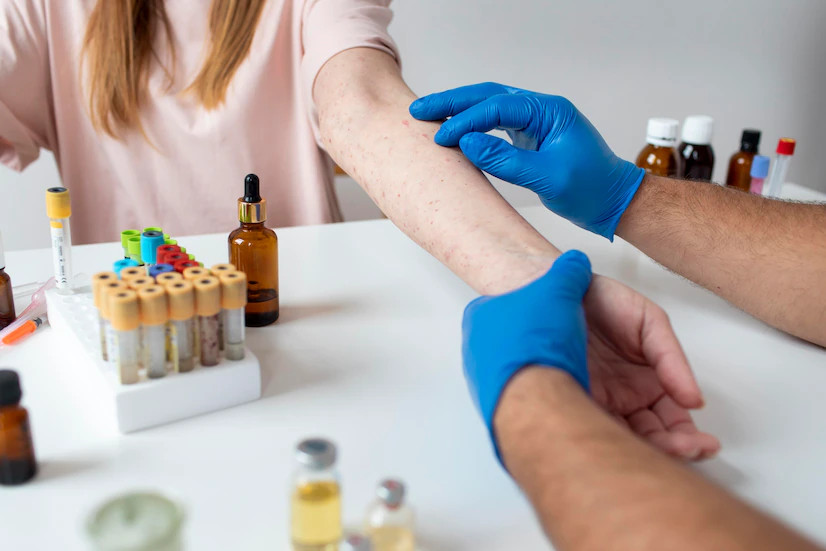
Pemeriksaan HBsAg umumnya menggunakan sampel serum darah sebanyak 0,25 - 0,5 ml. Sampel serum darah ini diambil dari pembuluh darah vena dan akan dikumpulkan ke dalam tabung khusus. Petugas laboratorium akan memakai sarung tangan khusus dan APD (Alat Pelindung Diri) saat mengambil sampel pemeriksaan.
Sebelum mengambil darah, petugas akan memasang pita elastis dan membersihkan area penusukan jarum dengan kasa antiseptik. Biasanya petugas mengambil darah di area lipatan siku. Setelah darah diambil dan dimasukkan ke dalam tabung khusus, petugas akan melepas pita elastis yang terpasang, menekan dan membersihkan area penusukan dengan kasa antiseptik. Prosedur pemeriksaan ini hanya berlangsung selama beberapa menit saja. Sampel darah yang telah didapatkan akan diperiksakan menggunakan alat khusus di laboratorium, dan hasilnya bisa diketahui dalam beberapa jam kemudian.
Baca Juga: Pemeriksaan Anti-HBs - Pemeriksaan, dan Prosedur pemeriksaan | AI Care (ai-care.id)
Nilai Normal dan Abnormal
Nilai normal HBsAg umumnya tidak dibedakan berdasarkan umur atau jenis kelamin. Secara umum, berikut ini merupakan nilai normal dan abnormal pada hasil pemeriksaan HBsAg.
| Nilai | Interpretasi |
| Non reaktif | Negatif |
| Reaktif | Positif |
Hasil dan Saran (Pemeriksaan Lanjutan)
Negatif
Hasil pemeriksaan HBsAg dengan hasil negatif menunjukkan bahwa Anda tidak terinfeksi hepatitis B. Pertahankan kesehatan Anda dengan mengonsumsi makanan bergizi seimbang, aktivitas fisik yang cukup, serta rutin melakukan pemeriksaan kesehatan.
Hasil negatif juga ditemukan pada orang yang telah sembuh dengan sendirinya dari infeksi hepatitis B. Jika Anda telah mendapatkan vaksinasi hepatitis B, maka kemungkinan pemeriksaan ini akan memberikan hasil negatif.
Positif
Jika hasil pemeriksaan HBsAg menunjukkan nilai positif, sebaiknya Anda berkonsultasi dengan dokter. Nilai positif menandakan tubuh sedang mengalami infeksi aktif hepatitis B. Dalam kondisi ini, Anda dapat menularkan virus hepatitis B melalui darah atau cairan tubuh lainnya ke orang lain.
HBsAg positif juga dapat didapatkan jika Anda sedang mengalami infeksi hepatitis B akut maupun kronis atau memiliki riwayat terinfeksi hepatitis B dimasa lampau.
Jika Anda baru saja melakukan vaksinasi hepatitis B, kemungkinan hasil pemeriksaan HBsAg juga akan positif. Dokter akan menyarankan untuk menunda melakukan pemeriksaan ini selama 1 bulan pascavaksinasi supaya hasilnya akurat.
Dokter juga akan menyarankan untuk melakukan pemeriksaan lebih lanjut dan melihat hasil pemeriksaan lainnya (seperti anti-HBs, anti-HBc, dan IgM anti-HBc) untuk menentukan kondisi hepatitis B apakah termasuk akut atau kronis.
Konsultasikan ke Dokter yang Tepat
Segera konsultasikan ke dokter umum atau dokter penyakit dalam terdekat apabila hasil pemeriksaan HBsAg Anda positif. Karena hal ini menunjukkan tubuh Anda mengalami infeksi virus hepatitis B dan dibutuhkan pengobatan serta penanganan lebih lanjut supaya tidak terjadi komplikasi dari penyakit hepatitis B.
Mau tahu informasi seputar hasil pemeriksaan laboratorium, radiologi, dan lainnya? Cek di sini, ya!
- dr Nadia Opmalina

What Does Being HBsAg Positive Mean?. (2022). Retrieved 05 September 2022, from https://www.verywellhealth.com/what-is-hbsag-1759934
Interpretation of Hepatitis B Serologic. (2022). Retrieved 05 September 2022, from https://www.cdc.gov/hepatitis/hbv/pdfs/serologicchartv8.pdf
Hepatitis B Blood Test. (2022). Retrieved 05 September 2022, from https://www.hepb.org/prevention-and-diagnosis/diagnosis/hbv-blood-tests/
Understanding Your Test Results. (2022). Retrieved 05 September 2022, from https://www.hepb.org/prevention-and-diagnosis/diagnosis/understanding-your-test-results/
Hepatitis B. (2020). Retrieved 05 September 2022, from https://www.webmd.com/hepatitis/digestive-diseases-hepatitis-b
Hepatitis B. (2022). Retrieved 05 September 2022, from https://www.healthline.com/health/hepatitis-b#fa-qs
Hepatitis B Testing. (2022). Retrieved 05 September 2022, from https://www.testing.com/tests/hepatitis-b-test/
Hepatitis Panel. (2022). Retrieved 05 September 2022, from https://medlineplus.gov/lab-tests/hepatitis-panel/
/62d244a608bfb.jpg)