
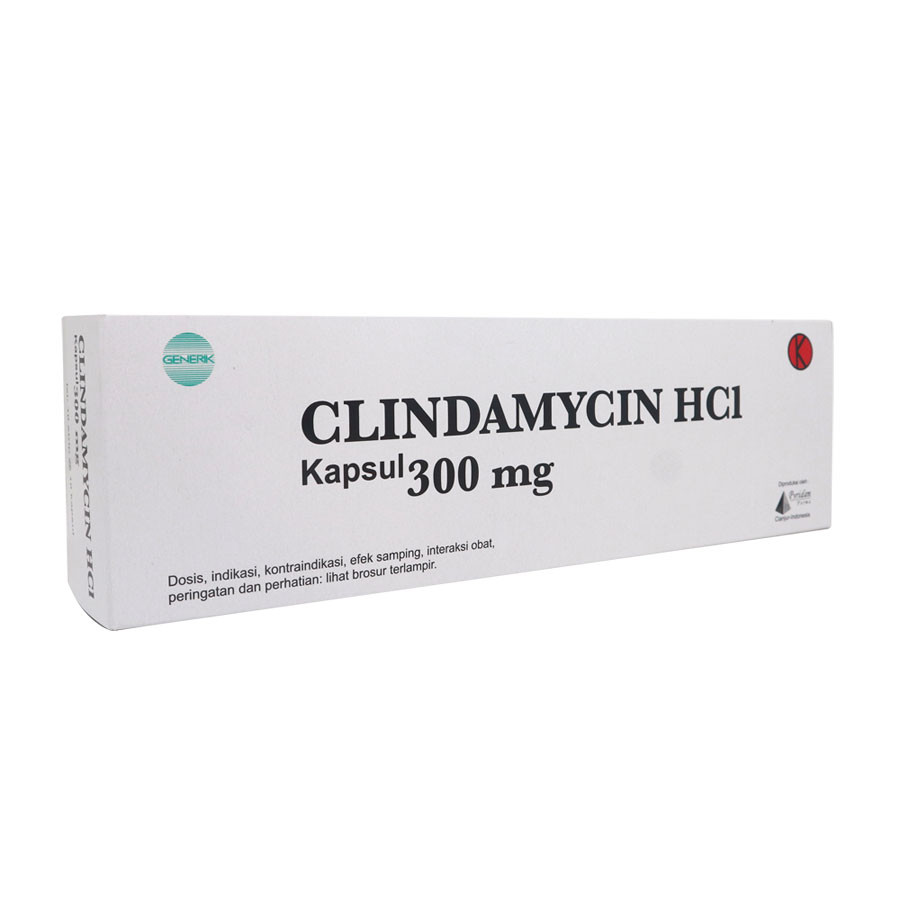

Other Brands/Names
Clindamycin is sold under various trade names, including Albiotin, Anerocid, Biodasin, Cindala, Clidacor, Climadan, Clinidac, Dacin, Dalacin, Ficodan, Glomasin, Indanox, Milorin, Probiotin dan Prolic.
How it Works
Clindamycin is an antibiotic that works by inhibiting the formation of proteins that make up bacterial cell walls. This prevents bacteria from growing and replicating.
Indications
Clindamycin is used to treat a variety of infectious conditions, such as:
-
Serious respiratory tract infections, including those affecting the lungs
-
Skin infections, such as acne
-
Soft tissue infections in the oral cavity, such as gum infections
-
Infections of the female reproductive organs (vagina, cervix, and uterus)
-
Abdominal cavity infections
-
Pelvic cavity inflammation
-
Sexually transmitted infections
-
Meningitis caused by Toxoplasma gondii in HIV/AIDS patients
-
Alternative therapy for those with a history of penicillin allergy
Contraindications
Clindamycin should not be used by individuals who have:
-
A history of allergy to clindamycin
-
A history of inflammatory bowel disease
-
A history of intestinal inflammation caused by antibiotics
-
Newborns
Side Effects
Common side effects include:
-
Diarrhea
-
Abdominal pain
-
Intestinal inflammation
-
Redness and hives on the skin
-
Nausea and vomiting
Uncommon and rare side effects may include:
-
Blood test abnormalities (such as decreased eosinophil, platelet, neutrophil, and leukocyte counts)
-
Low blood pressure
-
Sense of taste issues
-
Vaginal inflammation
-
Joint inflammation
-
Cardiac and respiratory arrest
-
Steven Johnson syndrome
-
Anaphylactic reactions (severe allergic reactions)
-
Jaundice (yellowing of the skin and eyes)
Types
Clindamycin is available in various forms, including tablets, capsules, ointments, gels, creams, liquids, and injections.
Dosage
The dosage of clindamycin depends on the infection type and severity.
- Tablets or capsules
-
Adults: 150-300 mg every 6 hours. In severe infections, the dose can be increased to 300-450 mg every 6 hours.
-
Children: 3-6 mg/kg body weight every 6 hours.
-
-
Ointments, creams, or liquid drugs can be applied as a thin layer to the affected skin twice daily.
Safety
Clindamycin is classified as a pregnancy category B drug, meaning it has not shown adverse effects in laboratory animals. However, no studies have been conducted on its use in pregnant women. Clindamycin may be excreted in breast milk, so consult your doctor before using it during pregnancy or breastfeeding.
Drug Interactions
Clindamycin may interact with other medications, including:
-
Some antibiotics, such as macrolides, ketolides, linezolid, or chloramphenicol, which may have decreased effectiveness when used with clindamycin.
-
Increased risk of bleeding when used with warfarin (a blood thinner), fluindion, and acenocoumarol.
-
Rifampin may reduce the effectiveness of clindamycin.
-
The effectiveness of topical clindamycin may decrease when used with topical erythromycin.
Looking for more information about other drugs? Click here!
- dr Hanifa Rahma
Clindamycin – Mims Indonesia. (2022). Retrieved 12 June 2022, from https://www.mims.com/indonesia/drug/info/clindamycin?mtype=generic
Klindamisin – Badan POM RI. (2022). Retrieved 12 June 2022, from https://pionas.pom.go.id/monografi/klindamisin
Durbin, K. (2021). Clindamycin. Drugs.com. Retrieved 12 June 2022, from https://www.drugs.com/clindamycin.html
Clindamycin – MedlinePlus. medlineplus.gov (2022). Retrieved 12 June 2022, from https://medlineplus.gov/druginfo/meds/a682399.html