
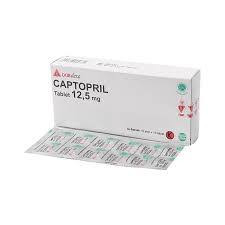

Other Brands/Names
Dexacap, dexacap plus, etapril, tetencap 12,5, prix 25, acepress, vapril 12.5, varil 25, forten 25, forten 50, authoryl.
How To Work
Captopril works by relaxing blood vessels so that blood can flow more easily / smoothly.
Indications
Captopril is used to treat high blood pressure (hypertension). This drug is also used to treat heart failure, protect the kidneys from danger due to diabetes, and to improve survival after a heart attack.
Contraindication
Captopril's history of allergies.
Side Effects
- Dizziness, mild headache, or disorders in the sense of taste / taste can occur when your body adapts to this drug. Dry cough can also occur. If any of these effects settle or worsen, tell your doctor immediately.
- Tell your doctor immediately if you have serious side effects, including: fainting, fast heart rate, high blood potassium levels (such as muscle weakness, slow/disordered heart rate), signs of infection (such as fever, cold, sore throat that does not go away), urine is cloudy.
- While captoprils can be used to prevent or treat kidney problems, captoprils can also sometimes cause serious kidney problems or worsen them. Doctors will check your kidney function when you use captoprils. Tell your doctor immediately if you have signs of kidney problems such as changes in the amount of urine.
- This drug can cause serious liver problems (although rare, but fatal). Tell your doctor immediately if you see any of the following serious side effects: eyes/smalls turn yellow, urine dark, severe stomach pain, constant nausea/ vomiting.
Ready
Captopril is available in tablet form containing 12.5 mg / 25 mg / 50 mg.
Dose
- Adult: initial dose 25-75 mg per day in 2-3 doses is divided. The dose is adjusted to the patient's clinical response and can be increased after at least 2 weeks to 100-150 mg per day in 2-3 doses divided according to the need to achieve the blood pressure target.
- Children: Neonatus (age 0-28 days) and babies (age 1 month to 2 years) and youth: 0.3 mg/kg. All doses are given 3 times a day based on the patient's response.
- Elderly: initial dose 6.25 mg 2 times a day.
Security
- This drug can make you dizzy. Don't drive, use a machine, or do anything that requires vigilance until you can do it safely.
- Too much sweating, diarrhea, or vomiting can cause dehydration and increase the risk of dizziness. Tell your doctor if you have prolonged diarrhea or vomiting. Make sure to drink enough fluids to prevent dehydration, unless your doctor directs you the other way around.
- This drug can increase your potassium levels. Before using potassium supplements or salt substitutes that contain potassium, consult your doctor.
- This drug is released through breastfeeding, but there are no reports of negative/dangerous effects for breastfeeding babies. Consult with your doctor before breastfeeding.
Drug Interaction
- Increase levels of lithium (drugs for bipolar disorder) in the blood and the risk of poisoning.
- Increase the risk of leukopenia (low condition of the number of white blood cells in the body) if given the drug procainamide (drugs for heart rhythm disorders) and immunosuppression / suppression of the immune system.
- An increase in the effect of hypotension (low blood pressure) if given with non-steroid anti-inflammatory drugs/OAINS (for example indometasin and ibuprofen).
- Potentially fatal: increased risk of hypotension, hypercalemia (calibrium levels in high blood/above normal) and kidney function disorders if given with an eyebrowirin drug (high blood pressure depletion drug). Increased risk of agioedema (swelling without pain under the skin, which can be triggered by various things, one of which is medicines) if given with a neprilysine inhibitor, for example a sacubitril (heart failure drug).
Writer : dr David Wiliam
Editor :
Last Updated : Saturday, 15 April 2023 | 17:39





