
Other Brands/Names
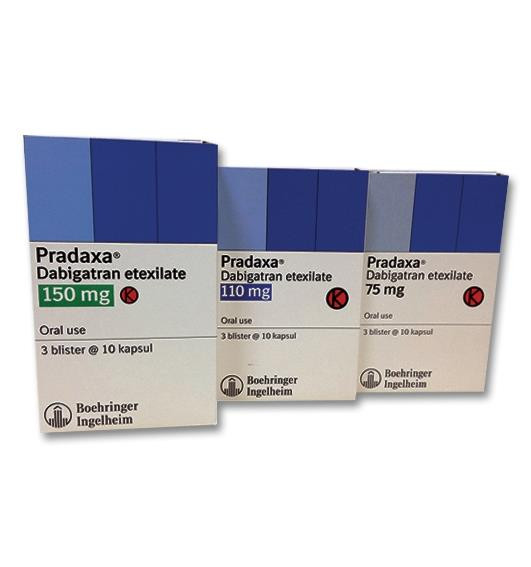
This medicine is marketed under the brand name Pradaxa.
How It Works
This anticoagulant lowers clot formation by directly inhibiting thrombin, the enzyme that converts fibrinogen into fibrin. Fibrin is a key protein in the coagulation process. When thrombin is blocked and fibrin formation falls, clot development and overall blood clotting are reduced.
Indications
This medicine is used to help prevent blood clots in the following situations:
- Stroke
- Heart attack
- Blockage in the pulmonary arteries (pulmonary embolism)
- Blood clots in the deep veins of the legs (deep vein thrombosis)
- Irregular heart rhythm such as atrial fibrillation
- After knee or hip replacement surgery
Contraindication
Do not use in the presence of any of the following:
- Active bleeding
- Liver or kidney impairment
- Conditions that raise bleeding risk
- Stomach or duodenal ulcers or open lesions
- Head or spinal injuries
- Intracranial bleeding
- Recent eye surgery
- Eye trauma
- Esophageal varices
- Other vascular abnormalities
- After heart valve replacement surgery
- Known allergy to dabigatran
- Pregnancy
Side Effects
Possible side effects of dabigatran include:
- Abdominal pain
- Nausea or vomiting
- Burning sensation in the chest
- Diarrhea
Seek urgent medical care if any of the following occur:
- Unexplained bruising or bleeding
- Pink, red, or dark urine
- Red or black stools
- Frequent nosebleeds
- Severe allergic reactions such as widespread rash, facial swelling, or shortness of breath
Types
Capsules available in 75 mg, 110 mg, and 150 mg strengths in Indonesia.
Dosage
Doses are individualized according to treatment goals and patient age.
Prevention of thrombus in deep veins after surgery
- Adults
- Give an initial 110 mg dose 1–4 hours after surgery.
- Then 220 mg once daily for 10 days (after knee surgery) or for 28–35 days (after hip surgery).
- The medicine may be stopped if clinically necessary at the physician’s discretion.
- Elderly (≥75 years old)
- 75 mg 1–4 hours after surgery.
- Then 150 mg once daily for 10 days (after knee surgery) and for 28–35 days (after hip surgery).
Stroke prevention in atrial fibrillation
- Adults: 150 mg twice daily.
- Elderly (75–80 years old): 150 mg or 110 mg twice daily, chosen according to clinical factors.
Deep vein thrombosis and pulmonary embolism
- Adults: 150 mg twice daily.
- Elderly: 150 mg or 110 mg twice daily.
Safety
Pregnancy category C: animal studies show adverse fetal effects, and adequate human data are not available. Small amounts may be present in breast milk, so safety during lactation is uncertain. Pregnant patients should avoid this medicine because it can heighten the risk of heavy bleeding during labor. Discuss individualized risks and benefits with your doctor.
Drug Interactions
- Bleeding risk increases when combined with other blood thinners, including:
- Clopidogrel (antiplatelet)
- Heparin
- Aspirin
- NSAID pain relievers
- Certain antidepressants
- Effectiveness may be reduced with:
- Anticonvulsants (phenytoin)
- Stomach acid medicine (pantoprazol)
- Antituberculosis (rifampin)
- Blood levels may rise, increasing side-effect risk, with:
- Cardiac medicine (verapamil, amiodarone)
- Antifungals (ketoconazole)
- Antiplatelet (ticagrerol)
Looking for more information about other drugs? Click here!
- dr Hanifa Rahma
Dabigatran – Mims Indonesia. (2022). Retrieved 25 June 2022, from https://www.mims.com/indonesia/drug/info/dabigatran?mtype=generic
Dabigatran – Medline Plus. (2021). Retrieved 25 June 2022, from https://medlineplus.gov/druginfo/meds/a610024.html
Dabogatran (Oral Route) - Mayo Clinic. Mayoclinic.org. (2021). Retrieved 25 June 2022, from https://www.mayoclinic.org/drugs-supplements/dabigatran-oral-route/description/drg-20074611
Pradaxa-Uses, Side Effect and More – WebMD. (2022). Retrieved 25 June 2022, from https://www.webmd.com/drugs/2/drug-154839/pradaxa-oral/details
Dabigatran – drugs.com. (2020). Retrieved 25 June 2022, from https://www.drugs.com/mtm/dabigatran.html
Dabigatran – NHS.UK. (2020). Retrieved 25 June 2022, from https://www.nhs.uk/medicines/dabigatran/