Definition
Von Recklinghausen disease, or neurofibromatosis type 1, is a genetic disorder that causes tumors to form on nerves. These tumors can affect the nervous system, skin, and bones. This disease is inherited from one individual to all of their offspring. The incidence of this disease is approximately 1 in 2,600 to 3,000 individuals. About 50% of cases are inherited genetically, while the rest occur randomly or sporadically.
Causes
Von Recklinghausen disease is an autosomal dominant genetic disease, meaning the gene is passed down by a non-sex chromosome and is dominant, thus always causing symptoms. Chromosomes are collections of deoxyribonucleic acid (DNA) located in the cell nucleus, totaling 46 (23 pairs) in normal humans, with 2 determining sex (XX in females and XY in males). The gene causing this disease is located on chromosome 17 and produces a substance called neurofibromin. Neurofibromin helps inhibit tumor growth. However, if there is a mutation (change in the chromosome) or a part of the chromosome is missing, neurofibromin cannot be produced by the body, leading to symptoms.
If an individual has a defect in this gene, they can pass it to all their children with a 50% or 100% probability, as will be explained further in the Risk Factors section. However, symptoms can vary between individuals, even within the same family.
Tumors can grow in nerve cells (throughout the body, including the brain and spinal cord) and their protective cells, Schwann cells, mast cells, which are part of the immune system located in connective tissue, and fibroblasts, cells in connective tissue that produce extracellular substances like collagen. In affected individuals, fibroblasts can produce excessive substances leading to melanin accumulation, the pigment in the skin. This causes café-au-lait spots, which are spots darker than the surrounding skin.
Risk Factor
The greatest risk factor for von Recklinghausen disease is a family history of the condition. Everyone has a pair of genes that regulate the possibility of this disorder. Individuals with this disease may have one or two abnormal genes. Symptoms will still occur if only one gene is abnormal because it is dominant. However, if only one gene is abnormal, the likelihood of passing the gene and condition to offspring is 50%. If both genes are abnormal, all offspring will inherit the condition (100% probability).
Symptoms
Symptoms of von Recklinghausen disease can appear from birth or in childhood. These may include:
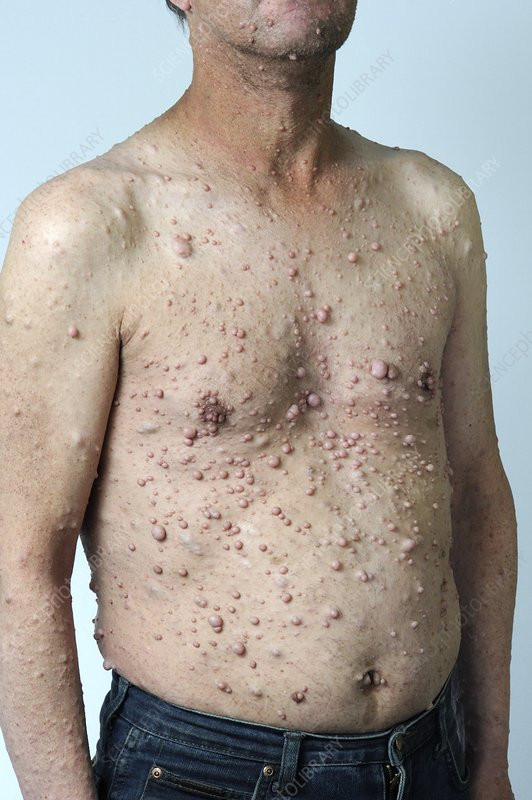
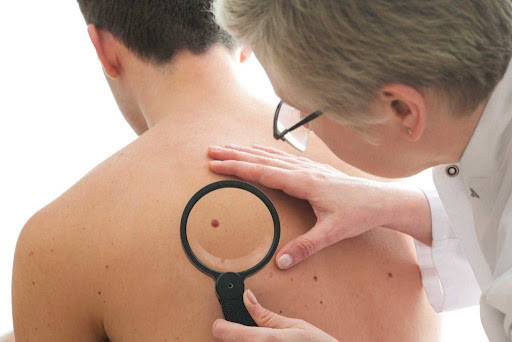
- Café-au-lait spots, darker patches on the skin than the surrounding area
- Spots in the groin and armpits, typically appearing between ages 3-5
- Lisch nodules, bumps on the iris, often invisible but not harmful to vision
- Neurofibromas, bumps on or under the skin, which can also grow internally
- Bone deformities due to abnormal bone development and decreased bone density, usually in the spine or limbs
- Tumors on the optic nerve, typically occurring in toddlers
- Learning disabilities, often specific to language and math, attention deficit hyperactivity disorder (ADHD), and delayed speech
- Larger-than-normal head size due to increased brain volume
- Short stature for age
Diagnosis
Diagnosis of von Recklinghausen disease involves examining the skin, eyes, and bones. Skin examination can reveal spots or bumps that increase with age. Eye examination may show iris nodules with the aid of a slit lamp. Bone abnormalities may be suspected if the spine and limbs appear bent, confirmed by X-ray imaging. Blood pressure monitoring is also essential, as it may be elevated.
If symptoms are insufficient for diagnosis, genetic testing for the neurofibromin gene can be done. Other tests can rule out diseases with similar symptoms, such as pheochromocytoma.
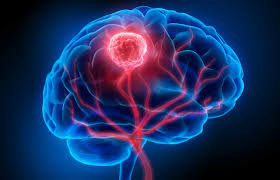
Imaging with Computed Tomography (CT) scans or Magnetic Resonance Imaging (MRI) can assess the optic nerves and brain if there are vision or learning difficulties. These tests are also helpful if a child's head circumference is too large for their age.
Management
Treatment of von Recklinghausen disease depends on the symptoms due to its genetic nature. Tumors causing pain, enlargement, muscle weakness, vision problems, or significant cosmetic concerns can be treated. Tumor management can involve surgery, laser, or electrical methods. Medications like gabapentin can alleviate pain and itching. Surgery may be needed to remove tumors compressing the airway or spinal cord.
Vision problems due to optic nerve tumors can be treated with chemotherapy. If the tumor is malignant, surgery and radiation therapy may be required. Muscle cancer (rhabdomyosarcoma) can be treated with chemotherapy, surgery, and radiation.
If brain abnormalities cause seizures, surgery may be an option. Speech delay or learning disabilities in children can involve psychiatric or psychological support and physical, speech, and occupational therapy. Psychiatrists or psychologists can also provide counseling to motivate adult patients.
Bone disorders may require orthopedic specialist intervention. Vitamin D and calcium supplements can be given if bone density is too low, as in osteoporosis.
All von Recklinghausen patients need genetic counseling to increase awareness of the disease, potential complications, and inheritance risks.
Complications
Von Recklinghausen disease can lead to various complications, including:
- Neurological disorders such as seizures and learning disabilities
- Appearance concerns due to visible bumps and spots
- Bone deformities such as spinal and limb curvature
- Vision problems from optic nerve tumors
- Hormonal changes, e.g., during puberty or pregnancy, can increase the number and size of body bumps
- Circulatory issues like high blood pressure and blood vessel abnormalities
- Breathing problems due to internal tumors compressing airways
- Cancer. About 3-5% of patients may develop malignant tumors from skin or subcutaneous bumps. Other cancers like leukemia, breast cancer, colorectal cancer, brain cancer, and other connective tissue cancers can occur
- Pheochromocytoma, a benign adrenal gland tumor that can increase blood pressure
Prevention
This disease cannot be prevented, as it is genetically inherited. However, controlling symptoms and complications is possible. Patients with von Recklinghausen disease are usually advised to visit the doctor at least once a year to monitor symptom progression or complications in various body parts. More frequent visits are recommended if symptoms are bothersome.
When to See a Doctor?
Consult a doctor if you or your child experiences signs and/or symptoms of von Recklinghausen disease, as described in the Symptoms section. Tumors in this disease are usually benign and grow very slowly.
- dr. Alvidiani Agustina Damanik
Adil, A., Koritala, T., & Singh, A. (2021). Neurofibromatosis Type 1. Retrieved 27 December 2021, from https://www.ncbi.nlm.nih.gov/books/NBK459358/
Hsieh, D. (2020). Neurofibromatosis Type 1: Practice Essentials, Background, Pathophysiology. Retrieved 27 December 2021, from https://emedicine.medscape.com/article/1177266-overview#showall
Krause, L. (2017). Von Recklinghausen's Disease (Neurofibromatosis 1). Retrieved 27 December 2021, from https://www.healthline.com/health/neurofibromatosis-1#outlook
Neurofibromatosis - Symptoms and causes. (2021). Retrieved 27 December 2021, from https://www.mayoclinic.org/diseases-conditions/neurofibromatosis/symptoms-causes/syc-20350490