Definition
Rhabdomyosarcoma is a rare type of malignancy or cancer that arises in soft tissues, specifically skeletal muscles. Skeletal muscles are attached to bones and help move different parts of the body. Rhabdomyosarcoma can also sometimes appear in hollow organs like the uterus or bladder. This disease can occur at any age, but it is most commonly seen in children and adolescents.
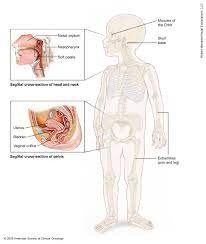
While rhabdomyosarcoma can develop in any part of the body and spread to other organs, it typically starts in:
- The head and neck area
- The urinary system, such as the bladder
- Reproductive organs, such as the vagina, uterus, and testicles.
- The arms and legs.
There are two main types of rhabdomyosarcoma:
- Embryonal Rhabdomyosarcoma (ERMS)
ERMS usually affects children under the age of six, although it can be found in older individuals. It tends to occur in the head and neck area, vagina, bladder, prostate, and testicles or surrounding regions. - Alveolar Rhabdomyosarcoma (ARMS)
ARMS is more aggressive and tends to grow faster compared to embryonal rhabdomyosarcoma. It typically affects older children or teenagers and is commonly found in large muscles of the torso, arms, and legs.
Causes
The exact cause of rhabdomyosarcoma is still unknown. It is believed to be linked to genetic mutations or changes in the DNA of a cell. DNA contains instructions that regulate the cell’s function and life cycle. Normally, cells have a specific life cycle where they grow and die at the appropriate time. In mutated cells, this process goes awry, leading to uncontrolled replication and preventing the cells from dying when they should.
These mutations cause the formation of a tumor, which can press on and damage healthy tissues. The abnormal cells can then break off from the tumor and spread to other parts of the body.
Some genetic mutations may be inherited from a parent, while others may occur spontaneously without any clear cause. Environmental or lifestyle factors have not been definitively linked to the development of rhabdomyosarcoma.
Risk Factor
A risk factor is any factor that elevates the risk of acquiring a disease such as cancer. Rhabdomyosarcoma is most common in children under the age of 10 but can also be seen in teenagers and adults. Boys are slightly more affected than girls.
Other factors that may be related to an increased risk of rhabdomyosarcoma include:
- Family history of cancer
Children with a parent or sibling who has had cancer, especially at a young age, may have a higher risk of rhabdomyosarcoma. However, most children with rhabdomyosarcoma do not have a family history of cancer. - Genetic syndromes associated with cancer risk
In rare cases, rhabdomyosarcoma is linked to genetic syndromes passed down from parents to their children, though this is very uncommon and seen in only a small number of cases. - Exposure during pregnancy
Some studies suggest that exposure to X-rays during pregnancy might slightly increase the risk of rhabdomyosarcoma. Parental drug use, such as cocaine or marijuana, has also been considered a potential risk factor. However, more research is needed to confirm any solid links.
Symptoms
The signs and symptoms of rhabdomyosarcoma vary depending on the size and location of the cancer. For example, if the cancer is located in the head and neck region, symptoms may include headaches, nausea, swelling or bulging of the eyes, and bleeding from the nose, throat, or ears. Generally, a persistent lump or swelling that doesn’t go away is common.
If the cancer is in the urinary or reproductive system, symptoms may include:
- Difficulty urinating or blood in the urine.
- Constipation.
- Lumps or bleeding from the vagina or rectum.
If the cancer is in the arms or legs, symptoms may include:
- Swelling or lumps in the arms or legs.
- Pain in the affected limbs, though sometimes there is no pain.
It is important to consult a doctor if you notice persistent symptoms that do not improve with treatment.
Diagnosis
Diagnosis usually begins with a thorough discussion of the patient's symptoms and medical history, followed by a physical examination to understand the symptoms more clearly.
Based on the physical examination, the doctor may recommend additional tests or procedures, such as:
- Imaging tests
These help investigate symptoms, look for cancer, and check for its spread. Imaging tests may include: - X-rays
- CT scans
- MRIs
- PET scans
- Biopsy
A biopsy involves removing a sample of tissue suspected of being cancerous to be examined in a laboratory. This can confirm whether the cells are cancerous and identify the type of cancer.
Management
Treatment for rhabdomyosarcoma typically involves a combination of therapies, including chemotherapy, surgery, and radiation therapy. The treatment plan recommended by the doctor depends on the size and location of the cancer, whether it is benign or malignant, and the stage of the cancer. After treatment, patients usually require lifelong monitoring to observe for potential long-term effects of intensive chemotherapy and radiation or the possibility of cancer recurrence.
Surgery
The goal of surgery is to remove all cancerous tissue. However, this is not always possible if the cancer is located near vital organs or structures in the body. When the entire tumor cannot be removed, doctors will try to remove as much as possible, and other treatments, like chemotherapy and radiation, will be used to target the remaining cancer cells.
Chemotherapy
Chemotherapy uses special drugs to kill cancer cells, typically administered through a vein. The type of drugs and the frequency of treatment vary depending on the patient’s specific condition. Chemotherapy can be used to kill remaining cancer cells or shrink the tumor.
Radiation therapy
Radiation therapy uses high-energy radiation to kill cancer cells, usually delivered by a machine that moves around the patient while directing radiation to a specific area of the body.
Radiation therapy may be recommended after surgery to kill any remaining cancer cells. It can also be used when surgery is not an option, such as when the tumor is located near vital organs or structures.
Complications
Cancer cells can spread to other parts of the body (metastasis), with rhabdomyosarcoma most commonly spreading to the lungs, lymph nodes, and bones. Additionally, there are side effects from cancer treatments. Doctors will inform you of specific symptoms to monitor in the years following therapy.
Prevention
While many common cancers in adults can be prevented through lifestyle changes such as maintaining a healthy weight and quitting smoking, there is currently no known way to prevent rhabdomyosarcoma. Therefore, methods to prevent this cancer are still unknown.
When to See a Doctor?
You should consult a doctor if you or your child has a lump or swelling in a part of the body that doesn’t go away, along with other persistent symptoms such as:
- Swelling or bulging around the eyes
- Headaches and nausea
- Urinary or digestive problems
- Blood in the urine
- Bleeding from the nose, throat, vagina, or rectum
- Swelling of one testicle
Looking for more information about other diseases? Click here!
- dr. Alvidiani Agustina Damanik
Rhabdomyosarcoma (2022) Mayo Clinic. Mayo Foundation for Medical Education and Research. Available at: https://www.mayoclinic.org/diseases-conditions/rhabdomyosarcoma/symptoms-causes/syc-20390962 (Accessed: November 18, 2022).
What is rhabdomyosarcoma? (2018) American Cancer Society. Available at: https://www.cancer.org/cancer/rhabdomyosarcoma/about/what-is-rhabdomyosarcoma.html (Accessed: November 18, 2022).
Rhabdomyosarcoma Guide: Causes, symptoms and treatment options (2022) Drugs.com. Available at: https://www.drugs.com/health-guide/rhabdomyosarcoma.html (Accessed: November 18, 2022).