Definisi
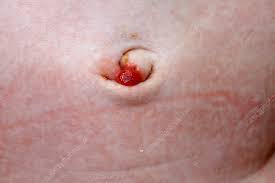
Granuloma umbilikal adalah pertumbuhan jaringan kecil pada umbilikus (pusar) bayi baru lahir dalam beberapa minggu pertama setelah tali pusat dipotong. Ketika tali pusat bayi dipotong, orang tua perlu memperhatikan perawatan pusar agar bekas luka sembuh dengan baik. Hal yang menjadi perhatian setelah pemotongan tali pusat adalah infeksi, pendarahan, serta pembentukan granuloma umbilikal.
Granuloma umbilikal adalah satu dari kelainan umbilikus yang paling sering terjadi pada bayi baru lahir. Sekitar 1 dari 500 bayi baru lahir mengalami granuloma umbilikal. Meskipun granuloma umbilikal biasanya terjadi pada bayi baru lahir, namun kondisi ini dapat juga terbentuk pada pusar orang dewasa.
Penyebab
Tali pusat (tali umbilikal) menghubungkan janin ke plasenta 'ari-ari' saat kehamilan. Di dalam tali pusat terdapat pembuluh darah yang menyalurkan nutrisi, oksigen, dan produk buangan tubuh antara ibu dan janin. Setelah bayi lahir, tali pusat dipotong, memisahkan bayi dari plasenta. Biasanya setelah tali pusat dipotong, akan terdapat puntung kecil yang tertinggal di pusar. Biasanya puntung ini akan kering dan lepas sendiri tanpa masalah dalam 1 sampai 2 minggu. Namun, terkadang setelah puntung ini lepas, terbentuk granuloma umbilikal. Dengan kata lain, granuloma umbilikal menyerupai jaringan luka yang terbentuk sebagai bagian dari penyembuhan pusar setelah tali pusat dipotong.
Pada orang dewasa, pembentukan granuloma umbilikal terkadang disebabkan oleh cedera pada pusar. Salah satu penyebab yang paling sering dari granuloma umbilikal pada orang dewasa adalah tindik pusar. Seiring penyembuhan luka tindikan, jaringan granulasi akan terbentuk di sekitar area tersebut (jaringan granulasi disebut juga jaringan penyembuhan). Jaringan ini kaya akan pembuluh darah kecil. Namun, ketika jaringan granulasi terbentuk terlalu banyak, akan timbul granuloma.
Faktor Risiko
Belum diketahui pasti faktor apa yang menyebabkan beberapa bayi mengalami granuloma umbilikal. Kondisi ini tidak berhubungan dengan kualitas perawatan bayi yang diberikan oleh orang tua atau perawat, serta tidak berhubungan dengan kondisi medis lainnya. Namun, granuloma umbilikal lebih mungkin terbentuk ketika puntung tali pusat baru terlepas setelah lebih dari dua minggu.
Gejala
Granuloma umbilikal terlihat seperti benjolan kecil berwarna kemerahan, sedikit mengkilap, lembab, dan bisa tertutup oleh sedikit cairan kental yang jernih atau kekuningan. Hal ini dapat disertai dengan iritasi ringan kulit sekitar pusar. Banyak bayi dengan granuloma umbilikal tidak mengalami masalah karena tidak menyebabkan nyeri atau rasa tidak nyaman. Namun, granuloma umbilikal bisa terinfeksi sehingga menimbulkan gejala seperti:
- Demam melebihi 38°C
- Pendarahan sekitar granuloma
- Bengkak atau kemerahan sekitar granuloma
- Nyeri sekitar pusar
- Cairan berbau atau seperti nanah yang keluar dari pusar
- Ruam di sekitar pusar
- Bayi terlihat seperti kesakitan ketika pusarnya disentuh
Jika pada bayi granuloma umbilikal tidak menimbulkan nyeri, namun pada orang dewasa, dapat terasa nyeri. Namun, jika terdapat nyeri disertai pembengkakan di sekitar pusar, maka dapat juga merupakan hernia umbilikal.
Diagnosa
Dokter akan memeriksa pusar bayi baru lahir setiap kunjungan bayi, terutama setelah puntung tali pusat terlepas. Jika terdapat granuloma, dokter akan memberikan terapi.
Tata Laksana
Granuloma umbilikal harus ditangani karena tidak dapat hilang sendiri. Kebanyakan granuloma akan perlahan tumbuh jika tidak diterapi. Terapi juga dibutuhkan untuk menghindari risiko infeksi (granuloma dapat dengan mudah terinfeksi) dan masalah kesehatan pada bayi. Kabar baiknya, kondisi ini biasanya dapat ditangani dengan mudah hanya dengan sejumlah kecil bahan kimia yang disebut perak nitrat. Zat ini bekerja dengan meluruhkan jaringan. Pada granuloma umbilikal tidak terdapat persarafan sehingga tidak terasa nyeri saat diberikan zat ini. Namun, berbeda dengan bayi, pada orang dewasa perosedur ini dapat menimbulkan nyeri sehingga mungkin dibutuhkan zat anestesi untuk menghilangkan sensasi nyeri pada area granuloma sebelum diberikan perak nitrat.
Jika pemberian perak nitrat tidak membantu atau Anda menginginkan prosedur yang lain, maka pilihannya adalah:
- Nitrogen cair. Cairan ini sangat dingin dan dapat membekukan jaringan dengan cepat. Sejumlah kecil cairan nitrogen dituangkan ke atas granuloma untuk membekukannya. Jaringan granuloma akan luruh seketika.
- Pengikatan dengan benang jahit. Pada beberapa kasus, dokter dapat mengikat jaringan granuloma dengan benang jahit. Hal ini akan memutus aliran darah ke jaringan granuloma. Lama kelamaan granuloma akan mengering, mengecil, dan hilang sendiri
- Garam. Cara lain untuk mengeringkan granuloma adalah dengan menggunakan garam. Oleh karena granuloma dilapisi cairan kental yang bening, garam dapat membantu mengeringkan. Caranya adalah dengan memberikan sejumlah kecil garam di atas granuloma dan menutupnya dengan kassa. Setelah 10 sampai 30 menit, area tersebut dibersihkan dengan kassa yang sudah dibasahi dengan air hangat. Prosedur ini diulangi dua kali sehari selama dua sampai tiga hari. Jika granuloma tidak kunjung mengecil atau mengering, maka Anda tetap harus membawa ke dokter. Jika granuloma perlahan mengecil, teruskan prosedur ini sampai granuloma menghilang dan pusar mulai penyembuhan.
- Operasi. Pada beberapa kasus yang jarang, dibutuhkan operasi untuk mengangkat granuloma. Hal ini paling sering dilakukan pada granuloma yang mengalami infeksi, karena operasi merupakan terapi yang paling cepat untuk menghilangkan granuloma. Jika granuloma terinfeksi, maka operasi akan membantu menghentikan penyebaran infeksi dan mempercepat penyembuhannya.
Setelah menjalani prosedur medis, tetap jaga kebersihan pusar dan usahakan selalu kering. Bersihkan pusar dengan lembut menggunakan air hangat dan sabun. Disarankan untuk tidak menutup pusar. Saat memakai pampers, lipat bagian depan sehingga tidak menutupi pusar. Saat mandi, hindari meletakkan bayi di air rendaman sampai pusar sembuh.
Untuk orang dewasa, terapinya sama dengan granuloma pada bayi. Namun, jika granuloma tidak kunjung sembuh dengan terapi tersebut, tindikan harus dibuka untuk memfasilitasi penyembuhan yang baik.
Komplikasi
Granuloma umbilikal biasanya dapat ditangani dengan baik tanpa menimbulkan komplikasi. Jika tidak ditangani, granuloma yang terinfeksi dapat menjadi masalah kesehatan yang penting. Granuloma tersebut terhubung dengan lubang bukaan pusar, sehingga infeksi dapat menyebar dengan cepat.
Pencegahan
Oleh karena granuloma merupakan suatu bentuk dari jaringan luka, maka sulit untuk dicegah. Namun, jika granuloma sudah terbentuk, terdapat cara untuk mencegahnya menjadi terinfeksi. Cara terbaik untuk mencegah infeksi adalah dengan melindungi pusar dan menjaga area pusar tetap bersih. Usap lembut area pusar dengan sabun dan air hangat dengan tujuan mencegah penumpukan cairan dan tumpukan bakteri.
Kapan Harus ke Dokter?
Jika Anda menyadari adanya pertumbuhan atau benjolan pada pusar Anda atau anak Anda, terutama jika disertai dengan tanda-tanda infeksi maka Anda disarankan untuk berkonsultasi ke dokter untuk memastikan kondisi apa yang sedang Anda alami. Semua granuloma harus diterapi oleh dokter. Namun, jika sudah terinfeksi perlu diterapi sesegera mungkin. Bayi mungkin memerlukan antibiotik untuk mencegah infeksi menjadi lebih buruk.
Mengidentifikasi granuloma secara dini dan memulai terapi secepatnya akan memberikan penyembuhan yang lebih cepat.
Mau tahu informasi seputar penyakit lainnya? Cek di sini, ya!
- dr Anita Larasati Priyono

Infected Umbilical Cord: Pictures, Symptoms, Treatment, Prevention. Healthline. (2022). Retrieved 19 April 2022, from https://www.healthline.com/health/baby/infected-umbilical-cord.
What to Know About Umbilical Granulomas. WebMD. (2022). Retrieved 19 April 2022, from https://www.webmd.com/parenting/baby/what-to-know-about-umbilical-granulomas.
What to Know About Umbilical Granulomas. WebMD. (2022). Retrieved 19 April 2022, from https://www.webmd.com/parenting/baby/what-to-know-about-umbilical-granulomas.
Umbilical granuloma: Symptoms, causes, and treatment. Medicalnewstoday.com. (2022). Retrieved 19 April 2022, from https://www.medicalnewstoday.com/articles/321741#outlook.