Definition
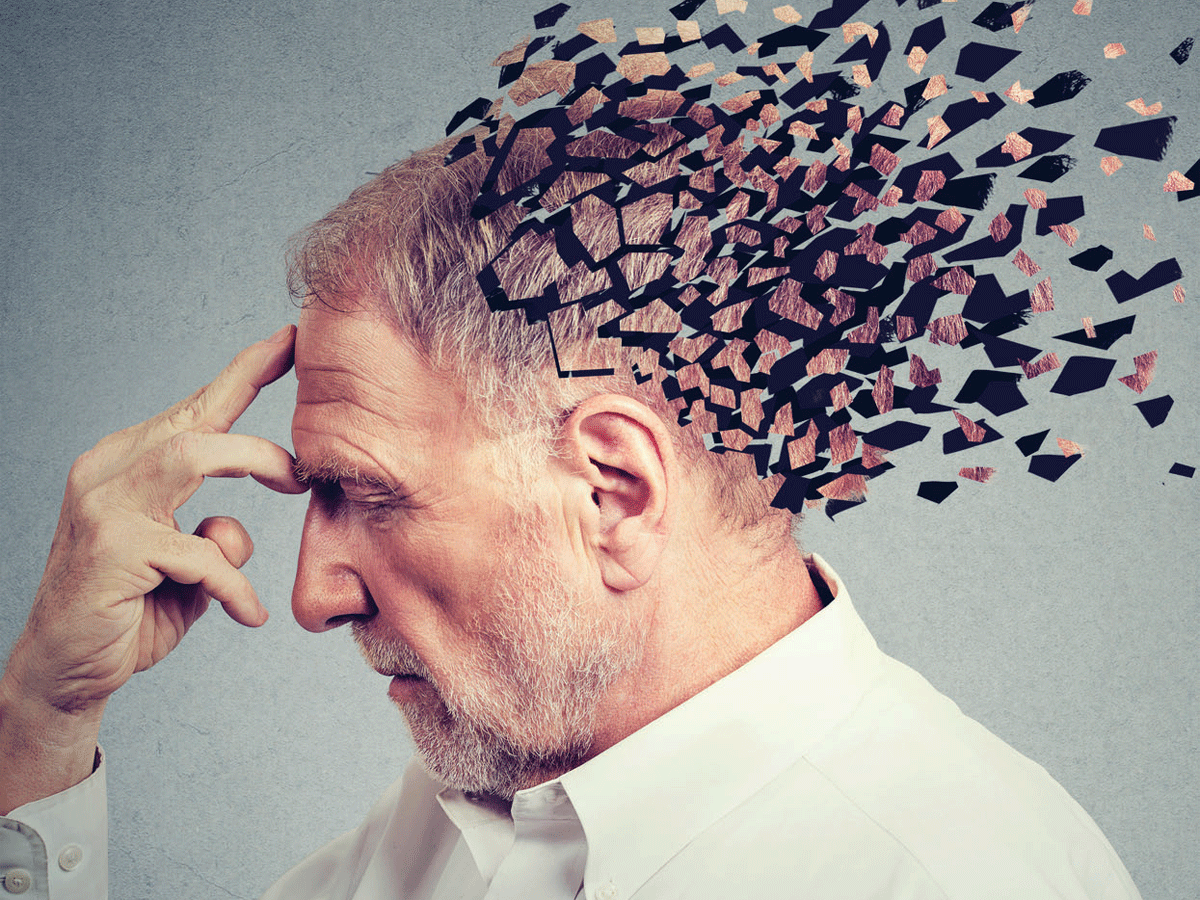
Amnesia is a term that refers to the sudden loss of memory. The word "amnesia" comes from Greek, meaning "forgetfulness," but amnesia itself is a complex condition, different from everyday forgetfulness.
For example, forgetting to take an item you planned to buy at the market is normal forgetfulness. However, if you are married and forget that you are married, this condition is abnormal and may be a sign of amnesia. People with amnesia generally know who they are but may lose memories related to important people or events in their lives or have difficulty forming new memories.
It is important to note that amnesia is different from dementia (commonly known as senility) and Alzheimer's disease. Amnesia is a symptom, while dementia is a disease and diagnosis. Alzheimer's disease is a type of dementia. Additionally, people with dementia generally also experience significant cognitive problems.
A person can suffer from more than one type of amnesia, and the condition can be temporary or permanent. There are several types of amnesia, including:
- Retrograde Amnesia
Inability to recall experiences and memories that occurred before the event that caused the amnesia. This type usually affects recent memories rather than long-ago events.
- Anterograde Amnesia
Inability to create new memories after the event that caused the amnesia. Anterograde amnesia is more common than retrograde amnesia. Patients usually have full memory before the causative event.
- Post-Traumatic Amnesia
Occurs shortly after a severe head injury. It can be retrograde, anterograde, or a combination of both. This type of amnesia is usually temporary, although the duration depends on the severity of the injury.
- Transient Global Amnesia
Sudden amnesia that, in severe cases, can include both anterograde and retrograde amnesia. Memory loss occurs suddenly and lasts up to 24 hours. This condition is very rare and more likely in older adults with vascular disease.
- Infantile Amnesia
Not a disorder but a term explaining why people cannot remember their early childhood. This is because language and memory abilities are still developing in early childhood.
- Dissociative Amnesia
A mental disorder causing amnesia after trauma from significant events. Patients usually cannot remember personal information and the traumatic event. Memory may return within minutes to days.
Causes
Memory loss in amnesia can involve facts, life experiences, and important information. People with amnesia usually remember their identity but have difficulty learning new information and forming new memories.
Amnesia can occur due to problems in brain structures (limbic system) that process memory and control emotions. Amnesia can be caused by neurological and physiological factors.
- Neurological Causes
-
- Brain infections such as encephalitis (inflammation of the brain).
- Nervous system diseases:
- Alzheimer's disease and other dementias
- Stroke
- Seizure disorders
- Brain tumors in the limbic system
- Head injuries or brain hemorrhages, which can occur from:
- Motor vehicle accidents
- Contact sports
- Falls from heights
- Stab wounds, etc.
- Other Causes:
- Insufficient oxygen flow to the brain, possibly due to carbon monoxide poisoning or a heart attack.
- Thyroid gland disorders.
- Long-term alcohol use leads to severe vitamin B1 deficiency and brain damage.
- Side effects of certain medications, such as sedatives.
- Psychological Causes
- Amnesia can also be caused by emotional trauma or stress without any visible medical condition causing the amnesia.
- Situations that can cause severe psychological stress include:
- Brutal crimes or terrorist attacks
- Being a victim of sexual crimes
- Trauma during military service
- Surviving natural disasters
Risk Factor
As explained above, the risk of amnesia increases if you experience the following conditions:
- Nervous system diseases like stroke, dementia, or seizures
- Involvement in crimes or accidents causing severe head injuries
- Prolonged alcohol use
- Heavy smoking
- Vitamin B1 and B12 deficiencies
Symptoms
The main symptoms of amnesia include:
- Inability to learn and form new memories
- Inability to recall past events
Most amnesia patients have short-term memory problems and difficulty forming new memories. They may lose memory of recent events but still remember long-ago events such as childhood. Patients might not know the current month or what they recently ate for breakfast.
In addition to these main symptoms, some cases also show:
- Decreased awareness
- Confusion
- Disorientation
- Confabulation, creating false or misdated memories
In amnesia caused by head injuries, memory loss is usually not long-lasting if the injury is mild. However, severe head injuries can cause permanent amnesia. Amnesia does not affect a person's personality, intelligence, general knowledge, attention span, or reasoning abilities.
Diagnosis
Doctors diagnose amnesia through interviews, physical exams, and diagnostic tests.
Medical Interview
The interview involves questions directed at the patient and their family or close associates. Questions typically include:
- Chief complaint
- Duration of the chief complaint
- Any accompanying physical complaints
- Medical history
- Lifestyle habits such as smoking and alcohol consumption
- Impact of symptoms on daily activities
- History of accidents, injuries, or surgeries
- History of trauma-causing events
- Family medical history
Physical Examination
Doctors will check the patient's general condition, including consciousness level, blood pressure, pulse, breathing rate, and body temperature. Specific neurological function tests will also be conducted, such as:
- Body balance
- Facial nerves
- Motor functions
- Sensory functions
Doctors will ask questions about personal information and life experiences to assess:
- Long-term and short-term memory
- The patient's judgment ability
Diagnostic Tests
Doctors may recommend several tests, including:
- CT scan or MRI to detect brain damage
- Electroencephalogram (EEG) to monitor brain waves, especially if the patient has a history of seizures
- Extracting cerebrospinal fluid from the spinal column to determine the presence of an infection in the brain
- Blood tests to check for other conditions like thyroid disorders and vitamin B1 and B12 deficiencies
Management
Currently, no specific treatment can cure amnesia. Existing treatments aim to improve brain function in processing memory to reduce future deterioration. Treatment also targets underlying conditions causing amnesia symptoms.
Therapies include:
- Occupational Therapy
The goal of this management is to help patients replace lost information with fresh information. Learning how to plan information processing strategies is another benefit of this therapy. This can help patients better understand and remember during lengthy conversations.
- Use of Technology
Smartphones and other technology can be helpful in improving memory. For example, setting appointment schedules in a calendar and creating a photo album to help you remember upcoming events. As a memory aid, patients can also keep journals and notes of their everyday activities.
- Meditation
Meditation activities are considered to help patients relax their minds and focus on recalling past events.
- Psychotherapy
Psychotherapy or Cognitive Behavioral Therapy (CBT) can help patients recover lost memories, as well as manage psychological problems that may arise related to amnesia.
- Vitamin B1 and B12 Intake
In cases of amnesia due to severe vitamin B1 and B12 deficiency, vitamin B1 and B12 supplements can be considered. Intake can be increased by consuming wheat-based cereals, nuts, or yeast. Supplementation should be under the advice and supervision of a doctor.
- Family Support
Family members may help by playing music the patient is familiar with, taking them to familiar places, and showing pictures of previous occasions.
Complications
Complications of amnesia include:
- Difficulty performing daily activities
- Mood disorders lead to depression if untreated
- Permanent brain tissue damage
- Decreased socialization ability
Prevention
To prevent conditions that can cause amnesia, consider the following measures:
- Use protective headgear like helmets to prevent head injuries
- Wear seat belts and avoid driving under the influence of alcohol
- Exercise regularly, at least three times a week for 30 minutes each session
- Eat a balanced diet, preferably a Mediterranean diet focusing on white meat, olive oil, vegetables, and nuts
- Stop smoking
- Reduce weight and cholesterol levels if you have a history of high cholesterol
- Manage stress; consult professionals if you have psychological issues
When to See a Doctor?
See a doctor immediately if you experience memory difficulties affecting daily activities. Regular checkups are also necessary if you have a history of accidents or head injuries.
Looking for more information about other diseases? Click here!
- dr. Alvidiani Agustina Damanik
Cleveland Clinic - Amnesia. (2020). Retrieved 7 September 2022, from https://my.clevelandclinic.org/health/diseases/21455-amnesia.
Mayo Clinic - Amnesia. (2020). Retrieved 7 September 2022, from https://www.mayoclinic.org/diseases-conditions/amnesia/symptoms-causes/syc-20353360.
Medical News Today - What is amnesia and how is it treated? (2022). Retrieved 7 September 2022, from https://www.medicalnewstoday.com/articles/9673#what-is-it.
WebMD - What to Know About Amnesia. (2021). Retrieved 7 September 2022, from https://www.webmd.com/brain/what-to-know-about-amnesia#091e9c5e821a4b41-1-4.