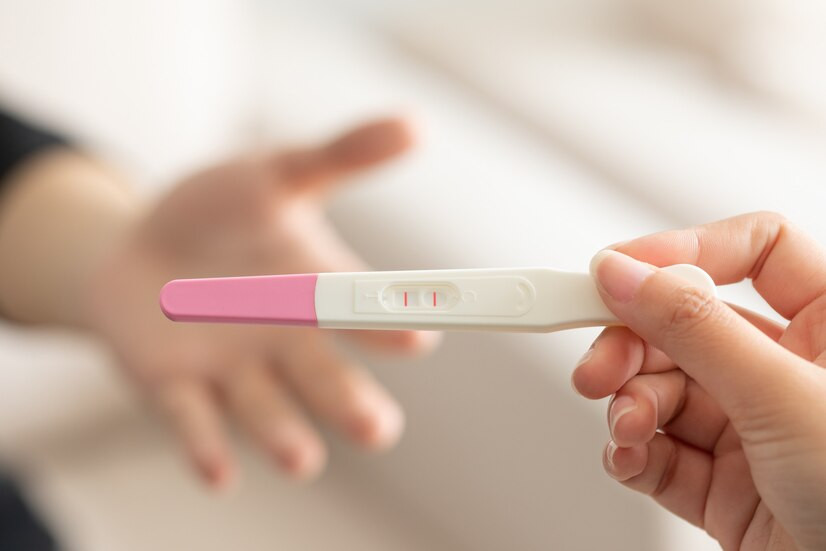
For many women, deciding to use a home pregnancy test can be nerve-wracking, especially if they have been trying to conceive for some time without success. Pressure from family or the environment can also add to this anxiety.
A home pregnancy test can be done using a pregnancy test kit, which can indicate whether you are pregnant or not in just a matter of minutes.
What Is a Home Pregnancy Test Kit?
A home pregnancy test kit is a tool designed to confirm pregnancy. It works by detecting the hormone human chorionic gonadotropin (hCG), which is naturally produced in a woman’s body during pregnancy.
From the very beginning of pregnancy, the body undergoes natural changes to support the growth of the fetus. One of the earliest changes is the production of hCG. This hormone is released once a fertilized egg successfully implants in the uterus, usually around 10 days after fertilization. The role of hCG is to sustain pregnancy by signaling the corpus luteum to keep producing progesterone.
How Does a Pregnancy Test Work?
If it is used properly, a pregnancy test kit is considered up to 99% accurate. It is also widely accessible in pharmacies, drugstores, and even supermarkets, so there’s no need to visit a doctor just to obtain one.
The test works by detecting the concentration of hCG, which rises significantly during pregnancy. Levels of hCG are detectable in both blood and urine about 10-14 days after conception, and they usually peak between the 8th and 11th week of pregnancy.
A test is read as negative if the hCG level is below 5 mIU/ml, while it is considered positive if the level is 25 mIU/ml or higher.
How to Use a Pregnancy Test Kit
Most test kits consist of a stick with a cap and a small container to hold urine. There are different types of kits available, such as standard rapid tests and digital versions that can sometimes be reused. Regardless of the type, their main purpose is the same: to detect the presence of hCG in urine.
To do the test, collect urine in the container provided or dip the test stick directly into urine as instructed. For best accuracy, use the first urine of the morning before eating or drinking anything. It’s also advised not to drink too much beforehand, as this can dilute the urine and affect the results. Always make sure to carefully follow the instructions included in the kit.
After placing the stick in the urine sample, wait a few minutes for the results.
Results may appear in different formats depending on the brand: one line for negative and two lines for positive, a minus symbol for negative and a plus symbol for positive, or even a direct display of the words “pregnant” or “not pregnant.”
The Right Time to Take a Home Pregnancy Test
Although hCG can sometimes be detected 10–11 days after conception, it is recommended to wait at least 14 days before testing. The most reliable time to test is when you notice your period is late, particularly if you track your menstrual cycle regularly.
Even though some kits are very sensitive to hCG, testing too soon increases the chance of a false negative. This means you could actually be pregnant, but the hormone level is still too low for the test to detect.
The best time of day to take the test is in the morning, right after waking up, when urine is most concentrated. This increases the accuracy of the results.
If the test shows a positive result, the next important step is to consult a doctor or midwife. They can confirm the pregnancy through an ultrasound and begin monitoring both your pregnancy and the baby’s development.
Looking for more information about pregnancy, breastfeeding, women's and children's health? Click here!
- dr Hanifa Rahma
Gurevich, R. (2022). When to Take a Pregnancy Test. Available from: https://www.verywellfamily.com/when-is-the-best-time-to-take-an-early-pregnancy-test-1960163
Stuart, A. (2020). Pregnancy Tests. Available from: https://www.webmd.com/baby/guide/pregnancy-tests
Cleveland Clinic (2021). Pregnancy Tests. Available from: https://my.clevelandclinic.org/health/articles/9703-pregnancy-tests
Smith, L. (2017). Pregnancy tests: All you need to know. Available from: https://www.medicalnewstoday.com/articles/295001