Definisi
Non-freezing injury adalah kondisi dimana jaringan terpapar suhu dingin mendekati titik beku dalam waktu tertentu. Kondisi ini biasanya terjadi pada kaki atau tangan sebagai hasil dari terpapar kondisi yang basah dan suhu dibawah beku dan umumnya ditemukan pada tentara.
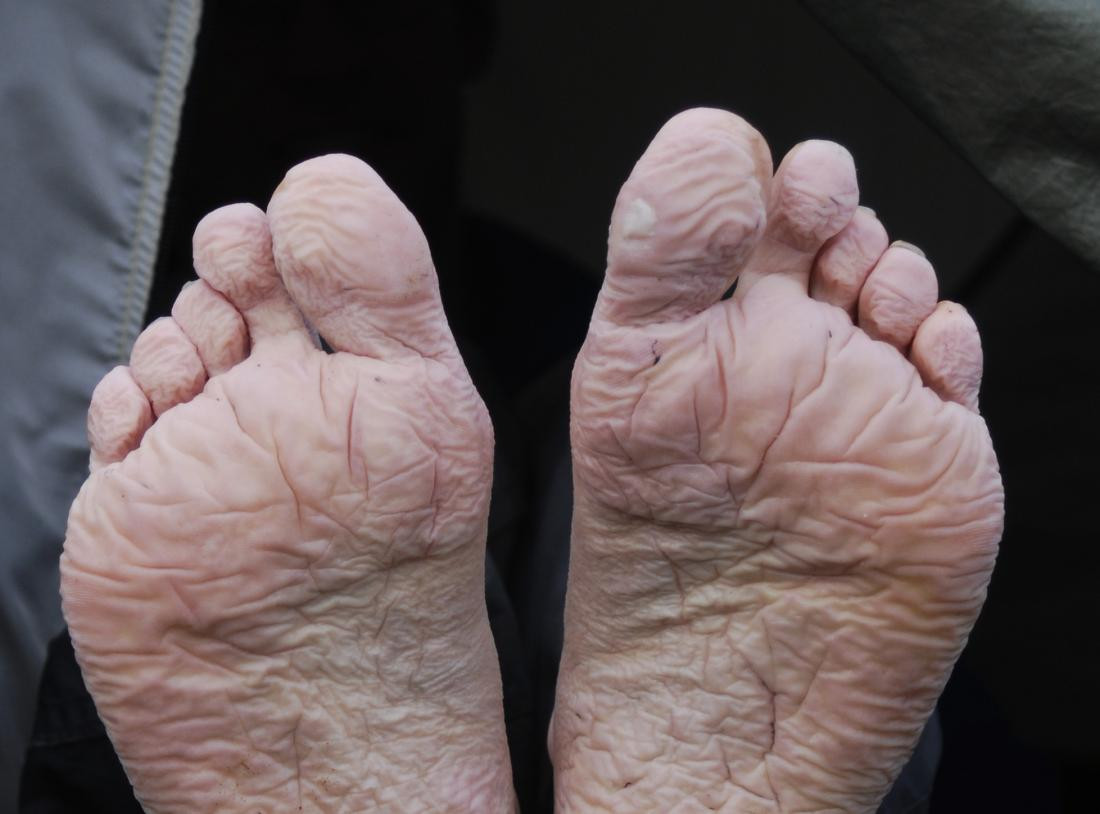
Non-freezing injury terjadi dikarenakan adanya kerusakan mikrovaskular endotelial, stasis dan okulsi vaskular. Pada kondisi awal, jaringan akan dingin dan tidak terasa lalu berlanjut ke hiperemia (kondisi dimana terjadi peningkatan jumlah darah atau darah yang menumpuk di jaringan tersebut) selama 24 sampai 48 jam. Hiperemia yang disertai dengan nyeri yang intens terasa seperti terbakar, luka, kemerahan dan kemungkinan adanya luka. Non-freezing injury juga dikenal sebagai immersion foot atau trench foot.
Penyebab
Non-freezing injury disebabkan pada kondisi yang dingin tetapi tidak sampai membeku. Pada kondisi trench foot, hal ini disebabkan oleh kondisi basah dan dingin selama waktu yang lama. Temperatur tidak perlu hingga membeku dan kondisi non-freezing injury atau trench foot dapat terjadi pada suhu 16oC.
Ketika suhu dingin dan lembap berkombinasi, pembuluh darah kecil (pembuluh darah kapiler) dapat mulai melemah. Hal ini yang menyebabkan kerusakan pada jaringan sekitar. Sebagai tambahan, aliran sel darah yang terhambat dapat memengaruhi sirkulasi dan fungsi saraf. Selain itu, kondisi keringat kaki berlebih dapat menyebabkan trench foot. Pada beberapa kasus, waktu yang diperlukan untuk mengalami non-freezing injury sekitar 10 sampai 14 jam.
Faktor Risiko
Faktor risiko utama dari non-freezing injury adalah paparan dari suhu yang dingin dan lembab. Selain itu, beberapa faktor risiko lingkungan yang dapat menyebabkan non-freezing injury, di antaranya:
- Profesi militer
- Orang dengan profesi militer memiliki risiko tinggi dan umumnya mengalami non-freezing injury terutama selama pelatihan dan tugas di lapangan
- Tunawisma
- Orang yang tidak memiliki tempat tinggal, dianggap juga tidak memiliki kaos kaki dan sepatu lebih dari 1. Selain itu, mereka kekurangan tempat tinggal dan menghadapi suhu yang dingin dan lembab dalam waktu yang lama
- Kondisi kegiatan di luar
- Kegiatan seperti musik festival dapat berpotensi mengalami non-freezing injury disebabkan berada dalam waktu lama pada suhu dingin, lembab dan kurang higienis selama beberapa hari dalam sekali waktu
- Mendaki dan berkunjung ke gunung juga berisiko mengalami non-freezing injury jika dibiarkan dan tidak mengganti kaos kaki dan sepatu
- Profesi yang berkaitan dengan air
- Pekerja di pelabuhan, pekerja penangkap ikan dan orang dengan profesi yang harus berdiri di dekat air dalam waktu yang lama berpotensi memiliki risiko tinggi mengalami non-freezing injury
Gejala
Gejala pertama dari non-freezing injury termasuk adanya rasa menggelitik atau kesemutan dan gatal yang dapat berkembang menjadi rasa kaku atau mati rasa. Kaki Anda dapat merasa seperti tertusuk atau berat mirip dengan adanya blok kayu sehingga menyebabkan Anda akan kesulitan dalam berjalan. Kaki Anda mungkin nampak merah cerah, tetapi akan segera berubah menjadi pucat dan putih seperti penyempitan pembuluh darah. Ketika Anda keluar dari suhu dingin, kaki Anda akan mulai berubah warna. Bila kulit Anda berwarna lebih muda, akan nampak kebiruan atau keunguan yang disebabkan oleh aliran darah yang kurang baik. Bila Anda berkulit kegelapan, perubahan warna ini mungkin tidak terlalu nampak. Kulit Anda mungkin akan dingin dan seperti tidak rata.
Sebagai tambahan, kaki Anda mungkin nampak membengkak. Pada beberapa kasus yang parah, ukuran kaki Anda dapat membesar hingga 2 kali lipat. Selagi kaki Anda dihangatkan, kaki Anda dapat kembali menjadi merah. Anda mungkin merasakan nyeri yang sangat atau senssi tidak normal ketika aliran darah kembali ke kaki Anda.
Jika Anda ingin mengetahui lebih lanjut mengenai kesemutan, Anda dapat membacanya di sini: Kesemutan - Definisi, Penyebab, Gejala dan Pengobatannya
Diagnosis
Dalam menegakkan diagnosis non-freezing injury, dokter akan melakukan pemeriksaan wawancara medis, pemeriksaan fisik dan pemeriksaan penunjang.
Wawancara Medis
Wawancara medis adalah wawancara antar dokter dan pasien. Dokter akan bertanya mengenai:
- Gejala yang dialami saat ini
- Riwayat penyakit terdahulu
- Riwayat pekerjaan
- Riwayat penyakit keluarga
Dokter juga akan menanyakan mengenai beberapa kegiatan Anda sebelumnya seperti apakah terpapar pada kondisi dingin, lingkungan yang lembab selama beberapa jam terakhir.
Pemeriksaan Fisik
Kemudian, dokter akan melakukan pemeriksaan fisik kepada Anda untuk melakukan diagnosis. Dokter akan melakukan pemeriksaan umum dan khusus. Pada pemeriksaan fisik umum, dokter akan mengukur tekanan darah, laju pernapasan, denyut nadi dan suhu tubuh. Selanjutnya dokter akan melakukan pemeriksaan fisik khusus pada kaki. Dokter juga akan memastikan gejala yang Anda alami bukan disebabkan oleh infeksi atau kondisi lain seperti frostbite.
Pemeriksaan Penunjang
- Pemeriksaan Laboratorium
- Darah Lengkap: untuk memeriksa apakah ada infeksi yang menyebabkan keluhan yang Anda alami
- Pemeriksaan Radiologi
- Rontgen X-ray: untuk memastikan kondisi tulang dan mempertimbangkan jika ditemukan infeksi tulang
Tata Laksana
Non freezing injury dapat disembukan bila diobati sejak dini. Pengobatan dari non-freezing injury termasuk termasuk menghangatkan kembali kaki Anda secara perlahan. Menghangatkan kaki Anda secara cepat dapat menyebabkan rasa nyeri yang parah dan pembengkakan. Hal pertama yang harus Anda lakukan adalah menghindari pasien dari kondisi dingin, lembab dan menghangatkan bagian yang terkena secara perlahan. Dokter Anda akan membersihkan kaki Anda dan menjaga agar tetap kering dan hangat.
Sebagai perawatan tambahan termasuk beristirahat dan mengangkat kaki diatas jantung. Dokter juga akan meresepkan antibiotik untuk mencegah adanya infeksi. Anda juga akan menerima booster injeksi tetanus. Untuk mengurangi rasa nyeri, Anda akan diberikan Nonsteroidal anti inflammatory drugs (NSAID) atau acetaminofen atau mungkin dokter akan meresepkan amitriptilin. Beberapa langkah untuk membantu perawatan kaki Anda seperti :
- Menggunakan kaos kaki yang bersih dan kering setiap harinya
- Menghindari pemakaian kaos kaki ketika tidur untuk memastikan kaki dalam kondisi kering
- Memeriksa kaki setiap hari untuk memastikan gejala yang dialami tidak memburuk atau tidak berkembang ke adanya kemungkinan infeksi
- Hindari merokok atau produk dengan mengandung nikotin, karena dapat mengganggu aliran darah ke kaki
- Konsumsi diet tinggi protein
Komplikasi
Komplikasi yang muncul dapat disebabkan oleh infeksi. Bila dibiarkan dan tidak diobati, selulitis atau gangren dapat muncul. Pada beberapa kasus yang parah, gangren dapat berakibat menjadi amputasi untuk menghindari perkembangan pemburukan. Komplikasi lain dapat termasuk sepsis dan kematian.
Baca selengkapnya mengenai selulitis, di sini: Selulitis - Definisi, Penyebab, Gejala dan Pengobatannya
Pencegahan
Non-freezing injury dapat dicegah. Beberapa langkah yang dapat Anda lakukan sebagai pencegahan :
- Mengganti kaos kaki basah dan sepatu atau boots Anda sesegera mungkin
- Memastikan kaki dalam kondisi kering
- Ganti kaos kaki Anda setidaknya sekali sehari
- Gunakan sepatu atau boots yang sesuai dengan kebutuhan Anda
- Tidak tidur dengan kondisi kaos kaki yang basah
- Gunakan kaos kaki yang tidak ketat bila Anda tidur dengan kaos kaki
Kapan Harus ke Dokter?
Bila Anda mengalami gejala non-freezing injury dan mengganggu aktivitas, segera hubungi dokter Anda. Diskusikan dengan dokter mengenai kondisi dan penanganan yang disarankan oleh dokter Anda.
Mau tahu informasi seputar penyakit lainnya? Cek di sini, ya!
- dr. Monica Salim

Nonfreezing Cold Injury. (2021). Retrieved 17 November 2022, from https://www.ncbi.nlm.nih.gov/pmc/articles/PMC8508462/
Trench Foot. (2022). Retrieved 17 November 2022, from https://my.clevelandclinic.org/health/diseases/24392-trench-foot
What you Should Know about Trench Foot. (2018). Retrieved 17 November 2022, from https://www.medicalnewstoday.com/articles/320780#prevention