Definisi
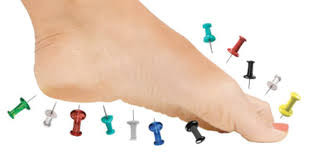
Kesemutan adalah sensasi tertusuk yang dapat terjadi pada bagian tubuh manapun. Umumnya, keluhan terjadi di tangan, lengan, dan kaki. Kesemutan sering ditemukan pada aktivitas sehari-hari dan umumnya bersifat ringan serta dapat pulih kembali. Namun, jika kesemutan berlanjut dan tidak ditemukan penyebab yang jelas, hal ini mungkin merupakan gejala dari penyakit atau cedera tertentu. Pengobatan kesemutan bergantung pada penyebabnya.
Penyebab
Banyak hal yang dapat menyebabkan kesemutan. Kegiatan yang kita lakukan sehari-hari terkadang dapat menimbulkan kesemutan, antara lain duduk atau berdiri satu posisi dalam waktu lama, duduk dengan menyilangkan kaki, atau tertidur di atas lengan. Kegiatan-kegiatan tersebut menimbulkan tekanan pada saraf tangan maupun kaki sehingga akan terasa kesemutan. Kesemutan yang disebabkan oleh aktivitas ini biasanya sembuh dalam beberapa menit. Setelah Anda bergerak, kesemutan akan berkurang perlahan.
Penekanan pada saraf adalah penyebab kesemutan yang paling umum. Sindrom terowongan karpal (terjepitnya saraf di pergelangan tangan), jaringan parut, pembesaran pembuluh darah, infeksi, atau tumor dapat memberi tekanan pada saraf. Demikian juga, peradangan atau pembengkakan sumsum tulang belakang dan otak dapat memberi tekanan pada satu atau beberapa saraf.
Kondisi lain yang dapat menyebabkan Anda merasa kesemutan adalah sebagai berikut:
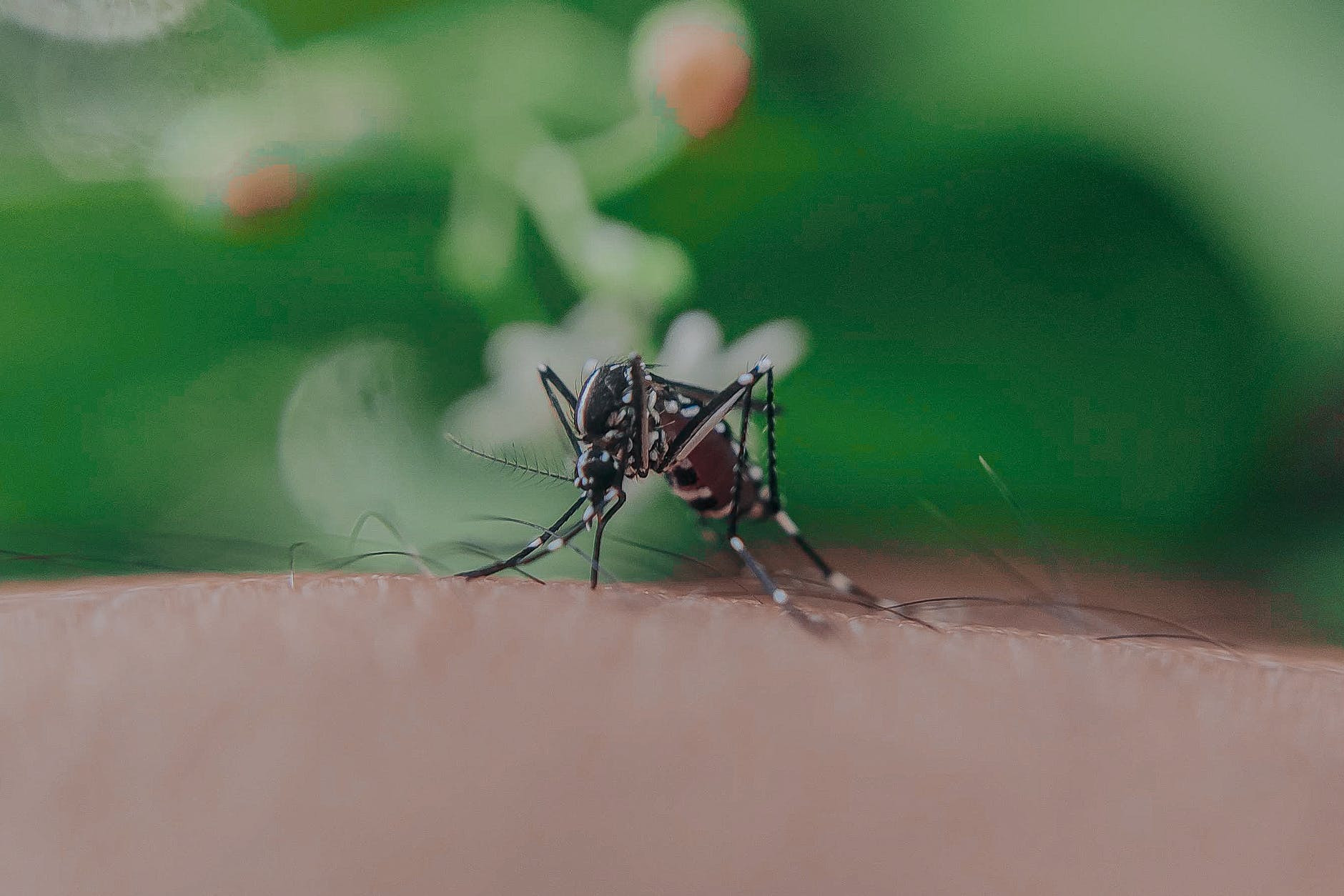
- Gigitan serangga.
- Kekurangan vitamin B1, B6, B12.
- Kekurangan kalium, sodium, kalsium.
- Terapi radiasi atau kemoterapi.
- Cedera tertentu seperti cedera saraf di leher atau herniasi diskus (bergesernya bantalan antartulang belakang).
Kerusakan kulit berupa ruam, peradangan, atau cedera merupakan penyebab lain dari kesemutan. Kondisi yang dapat menyebabkan kerusakan kulit ini antara lain frostbite atau radang dingin dan herpes zoster (ruam nyeri oleh virus Varicella zoster). Beberapa penyakit juga memiliki gejala kesemutan seperti neuropati diabetikum (komplikasi diabetes pada saraf), migrain, Fenomena Raynaud, sklerosis multipel, stroke, transient ischemic attack (TIA), kejang, maupun hipotiroidisme.
Diabetes menjadi salah satu penyebab gangguan saraf tepi yang paling sering ditemui, yaitu sekitar 30% dari kasus gangguan saraf tepi. Salah satu gejala dari gangguan saraf tepi ini adalah kesemutan. Pada neuropati diabetikum, gejala awalnya dirasakan pada jari dan telapak kaki lalu berangsur naik ke kaki bagian atas hingga tangan. Sekitar duapertiga pasien diabetes mengalami kerusakan saraf ringan hingga berat. Sering kali, kesemutan menjadi gejala awal yang dirasakan pasien diabetes. Padahal, hal tersebut justru sudah terlambat karena sudah terjadi komplikasi pada saraf.
Faktor Risiko
Siapapun dapat mengalami kesemutan, meskipun risiko akan meningkat seiring bertambahnya usia. Risiko juga dapat meningkat pada beberapa keadaan berikut:
- Melakukan gerakan tertentu berulang kali yang dapat menekan saraf. Contohnya mengetik, bermain musik, atau olahraga seperti tenis
- Konsumsi alkohol berat
- Diet tidak seimbang dan bergizi, sehingga mengalami kekurangan vitamin, terutama vitamin B
- Menderita diabetes, terutama jika kadar gula darah tidak terkontrol
- Memiliki penyakit autoimun seperti lupus atau rematik artritis
- Memiliki penyakit saraf seperti sklerosis multipel
- Mengalami infeksi seperti pada penyakit herpes zoster, atau karena infeksi virus Epstein-Barr
- Gangguan kelenjar tiroid
- Terpapar zat toksin/racun
- Terdapat riwayat keluarga
Pada orang dengan diabetes, kondisi berikut menjadi faktor risiko timbulnya kesemutan.
- Kadar gula darah tidak terkontrol, meningkatkan risiko komplikasi kerusakan saraf
- Memiliki komplikasi gangguan ginjal. Ginjal yang rusak akan mengeluarkan zat toksin ke darah yang dapat merusak saraf
- Berat badan berlebih, meningkatkan risiko komplikasi neuropati diabetikum
- Merokok. Merokok akan mempersempit dan memperkeras dinding pembuluh darah sehingga mengganggu aliran darah ke tangan dan kaki. Hal ini akan memperlama penyembuhan luka dan merusak saraf karena kurang mendapat nutrisi dari darah.
Gejala
Kesemutan dapat mengenai bagian tubuh manapun. Bagian yang paling sering mengalami kesemutan antara lain tangan, lengan, kaki, telapak kaki, dan jari-jari. Kesemutan dapat juga disertai gejala gangguan saraf lain seperti rasa baal (mati rasa), rasa terbakar, nyeri seperti ditusuk, atau bahkan kelemahan otot sekitar jika mengenai saraf motorik yang mengatur gerak otot. Bagian tubuh yang terkena akan kesulitan melakukan aktivitas, misalnya jadi sulit berjalan.
Kesemutan yang diikuti dengan gejala lain dapat membantu menunjukkan penyebab dari kesemutan tersebut.
- Kesemutan yang diikuti nyeri dan mati rasa pada tangan maupun kaki kemungkinan mengarah ke penyakit neuropati diabetikum.
- Kesemutan dan terdapat perubahan warna pada jari tangan maupun kaki mengarah ke sindrom Raynaud’s, yaitu berkurangnya aliran darah ke bagian tubuh tertentu terutama jari-jari.
- Kesemutan dan nyeri yang menjalar dari punggung hingga ke kaki mengarah ke skiatika, yaitu gangguan saraf skiatik akibat rusak atau terjepit di daerah punggung bawah.
- Kesemutan yang tersebar di beberapa bagian tubuh, kemungkinan mengarah ke sklerosis multipel.
Diagnosis
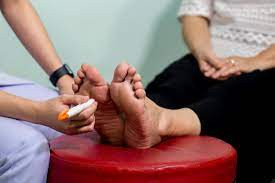
Dokter akan menanyakan riwayat medis Anda secara lengkap. Pastikan Anda melaporkan semua gejala yang Anda rasakan, meskipun nampaknya tidak berkaitan. Ceritakan juga penyakit apa saja yang pernah Anda alami, riwayat cedera, infeksi, atau vaksinasi dalam beberapa waktu belakangan. Dokter juga perlu mengetahui obat dan suplemen yang Anda konsumsi.
Bergantung pada temuan pemeriksaan fisik, dokter mungkin akan melakukan pemeriksaan tambahan untuk menegakkan diagnosis. Pemeriksaan tersebut antara lain tes darah, tes elektrolit, tes fungsi tiroid, skrining toksikologi, tes kadar vitamin, dan elektromiografi (tes aktivitas elektrik otot). Dokter juga dapat melakukan pungsi lumbal (memeriksa cairan tulang belakang). Pemeriksaan radiologi seperti rontgen, angiografi, CT scan, MRI, atau USG pada area yang terkena juga dapat membantu dokter dalam menemukan masalah Anda.
Tata Laksana
Karena terdapat banyak macam penyebab kesemutan, pengobatan Anda akan bergantung pada penyebab dari gejala yang Anda rasakan. Pengobatan akan fokus pada penyelesaian kondisi medis yang menjadi penyebab. Keberhasilan pengobatan bergantung pada ketepatan diagnosis dan terapi penyakit yang mendasarinya.
Jika Anda telah menderita diabetes, kontrol gula darah yang baik akan mencegah kerusakan saraf yang semakin berat. Bagi pasien yang kesemutan karena kekurangan vitamin, suplemen vitamin dapat membantu masalah kesemutan yang dialami.
Komplikasi
Orang dengan kesemutan dapat mengalami gangguan pada aktivitas kesehariannya. Jika Anda memiliki keluhan kesemutan, Anda mungkin juga mengalami penurunan rasa di area yang terkena. Anda akan cenderung tidak merasakan perubahan suhu atau rasa sakit. Hal ini mengakibatkan Anda dapat menyentuh sesuatu tanpa menyadari bahwa suhunya terlalu panas dan dapat melukai kulit Anda.
Selain itu, benda tajam juga dapat melukai Anda tanpa disadari, terutama di area kaki. Jika Anda juga menderita diabetes dengan luka pada kaki, luka tersebut dapat sembuh lebih lama bahkan meluas. Pastikan Anda melakukan tindakan pencegahan untuk melindungi diri dari luka bakar dan cedera lainnya.
Pencegahan
Langkah-langkah berikut dapat mencegah timbulnya rasa kesemutan:
- Hindari gerakan berulang atau lakukan istirahat di antaranya
- Jika Anda harus duduk dalam durasi yang lama, berdiri dan berjalan sebentar setiap 30-60 menit sekali
- Lakukan gerakan pelemasan secara teratur seperti memutar dan menggerakkan bahu, leher, dan pergelangan kaki agar aliran darah lancar
- Pijat oleh ahlinya dapat merelaksasi ketegangan otot dan melancarkan aliran darah. Beberapa pasien melaporkan perbaikan gejala kesemutan setelah dilakukan pemijatan
- Yoga atau meditasi dapat membuat Anda rileks dan tidak berfokus pada rasa sakit atau kesemutan. Latihan ini juga akan memperbaiki fleksibilitas tubuh sehingga mencegah kelelahan atau kesemutan saat beraktivitas
- Gunakan sepatu yang nyaman. Rasa kesemutan dapat timbul karena sepatu yang sempit atau tidak nyaman
- Gunakan perban elastis pada pergelangan tangan untuk mengurangi penekanan saraf
- Jika mengalami nyeri punggung, segera berobat
- Tidur yang cukup dan teratur. Kondisi kurang tidur dapat membuat Anda lebih sensitif terhadap rasa nyeri atau kesemutan
- Diet rendah lemak dan garam serta tinggi sayur dan buah
- Menjaga berat badan ideal
- Olahraga teratur 3-5x per minggu, 15-30 menit per hari
- Tidak minum alkohol dan tidak merokok
- Manajemen stres
Kapan Harus ke Dokter?
Pada beberapa kasus, rasa kesemutan atau terbakar dapat menandakan kondisi medis atau cedera serius. Oleh karena itu, segera berobat jika Anda tiba-tiba mengalami salah satu dari masalah berikut:
- Kehilangan kesadaran, meskipun hanya untuk waktu yang singkat
- Perasaan bingung atau kesulitan berpikir dengan jelas
- Bicara tidak jelas
- Masalah penglihatan
- Cedera punggung, leher, atau kepala
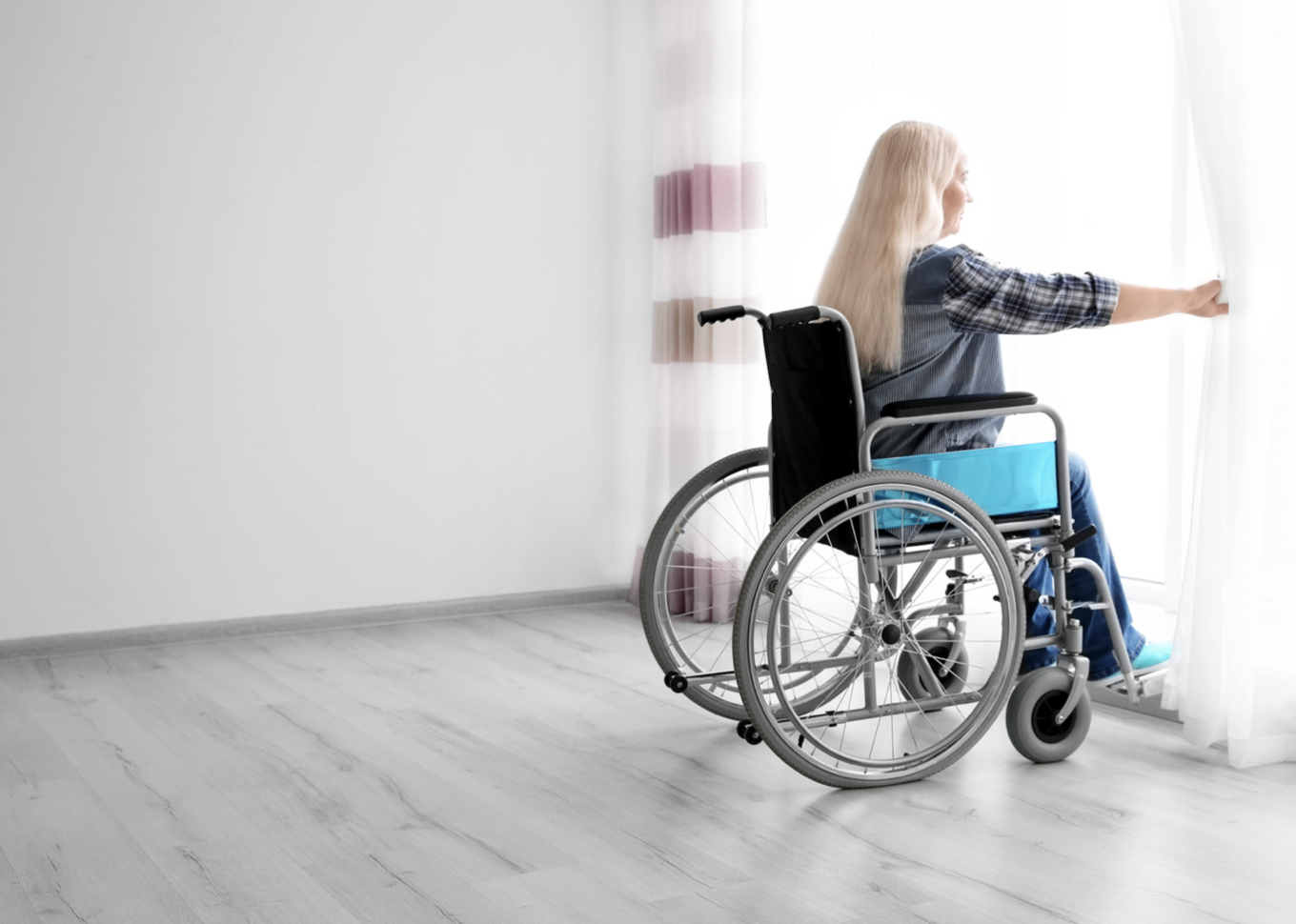
- Ketidakmampuan berjalan atau bergerak
- Perasaan lemah atau sakit parah
- Kehilangan kendali BAB atau BAK
- Tidak ditemukan penyebab yang jelas dari rasa kesemutan
- Kesemutan menetap dan mengganggu kualitas hidup
- Pusing, terdapat kaku otot yang tidak wajar, atau timbul ruam kulit
Diagnosis yang cepat dan terapi yang tepat akan memperbaiki keluhan Anda dan mencegah kerusakan saraf lebih lanjut.
Mau tahu informasi seputar penyakit lainnya? Cek di sini, ya!
- dr Ayu Munawaroh, MKK

Pin and needles. (2021). National Heath Service. Retrieved 28 November 2021, from https://www.nhs.uk/conditions/pins-and-needles/
Pietrangelo A. (2019). Why Am I Experiencing Numbness and Tingling?. Retrieved 28 November 2021, from https://www.healthline.com/health/numbness-and-tingling
Ansorge R. (2020). Tingling in hands and feet. Retrieved 28 November 2021, from https://www.webmd.com/diabetes/diabetes-neuropathy
Campellone JV. (2021). Numbness and tingling. Retrieved 28 November 2021, from https://medlineplus.gov/ency/article/003206.htm
Seladi J. (2019). 25 causes of tingling in hands and feet. Retrieved 28 November 2021, from https://www.healthline.com/health/tingling-in-hands-and-feet
Ratini M. (2019). Why are my hands and feet tingling?. Retrieved 28 November 2021, from https://www.webmd.com/a-to-z-guides/ss/slideshow-why-my-hands-feet-tingling
Peripheral neuropathy. (2021). Mayo Clinic. Retrieved 28 November 2021, from https://www.mayoclinic.org/diseases-conditions/peripheral-neuropathy/symptoms-causes/syc-20352061
Diabetic neuropathy. (2020). Mayo Clinic. Retrieved 28 November 2021, from https://www.mayoclinic.org/diseases-conditions/diabetic-neuropathy/symptoms-causes/syc-20371580
Neuropathy (Peripheral neuropathy). (2019). Cleveland Clinic. Retrieved 28 November 2021, from https://my.clevelandclinic.org/health/diseases/14737-neuropathy#symptoms-and-causes
Vandergriendt C. (2018). What is hereditary neuropathy?. Retrieved 28 November 2021, from https://www.healthline.com/health/hereditary-neuropathy
Pietrangelo A. (2017). What is paresthesia?. Retrieved 28 November 2021, from https://www.healthline.com/health/paresthesia
Marks J. (2020). 5 techniques for getting rid of pins and needles. Retrieved 29 November 2021, from https://www.healthline.com/health/how-to-get-rid-of-pins-and-needles#5-remedies
Huizen J. (2019). What causes numbness and tingling?. Retrieved 28 November 2021, from https://www.medicalnewstoday.com/articles/326062
Tingling. (2021). Healthgrades. Retrieved 29 November 2021, from https://www.healthgrades.com/right-care/symptoms-and-conditions/tingling
Binu S. (2020). Tingling sensation: 5 simple home remedies to ease nubmness in hands & feet. Retrieved 29 November 2021, from https://www.netmeds.com/health-library/post/tingling-sensation-5-simple-home-remedies-to-ease-numbness-in-hands-feet
Burgess L. (2020). What could cause tingling in the feet and hands. Retrieved 29 November 2021, from https://www.medicalnewstoday.com/articles/321423#_noHeaderPrefixedContent
Stoppler MC. (2019). Tingling in hands and feet: symptoms & signs. Retrieved 29 November 2021, from https://www.medicinenet.com/tingling_in_hands_and_feet/symptoms.htm