
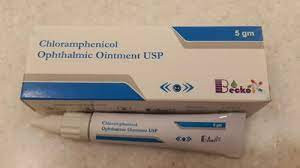

Other Brands/Names
| Chloramfecort | Cloramidina |
| Chloramfecort-H | Vanquin Plus |
| Bufacetine | Cendo Mycetine |
| Grafacetin | Trifamycetin |
| Erlamycetin | Armacort |
| Reco | Cendo Mycos |
| Kemiderm |
How It Works
Topical chloramphenicol is an antibiotic that stops bacteria from multiplying, thereby helping to control infection.
Indications
Topical chloramphenicol is used to treat:
-
Bacterial skin infections
-
Bacterial conjunctivitis (infection or inflammation of the conjunctiva of the eyeball and inner eyelid)
Contraindication
- History of allergy to chloramphenicol. In some products, topical chloramphenicol is combined with a corticosteroid (an anti-inflammatory).
- Do not use this product if you have a known allergy to the corticosteroid contained in the combination.
Side Effects
-
Temporary mild to moderate skin dryness, itching, irritation, and burning/stinging. If these effects persist or worsen, tell your doctor immediately.
-
For eye ointment products: blurred vision, eye irritation, dry eyes, swelling, pain, discomfort, and sensitivity to light.
Types
Chloramphenicol is available as cream and ointment formulations.
Dosage
Apply topical chloramphenicol to the affected skin or eyes 2–3 times daily, or as directed by your doctor. Complete the full course as prescribed to help prevent the infection from returning. Wash and dry your hands thoroughly before and after applying this medicine to your skin or eyes.
Safety
-
Chloramphenicol may cause temporary blurred vision; do not drive, operate machinery, or do tasks requiring clear vision until you can do so safely. Avoid drinking alcoholic beverages.
-
Do not wear contact lenses while you have an eye infection; do not use chloramphenicol eye ointment while you are wearing contact lenses.
-
Limit sun exposure if you have an eye infection while taking this medicine, and wear protective items such as sunglasses outdoors.
-
During pregnancy, use it only if it is clearly needed; discuss potential risks and benefits of chloramphenicol with your doctor.
-
It is unknown whether this medicine passes into breast milk; consult your doctor before breastfeeding.
Drug Interactions
Whether topical chloramphenicol interacts with other medicines is unknown. If you are using chloramphenicol eye ointment, inform your doctor if you are currently using any other eye drops or ointments.
Looking for more information about other drugs? Click here!
- dr Hanifa Rahma
BPOM RI. Chloramphenicol. cekbpom.pom.go.id. Retrieved 15 May 2022, from https://cekbpom.pom.go.id//home/produk/69bhknndt7v4km8sdutf8ashf5/all/row/10/page/1/order/4/DESC/search/5/Chloramphenicol
MIMS Indonesia. Chloramphenicol-Ophthalmic. Mims.com. Retrieved 15 May 2022, from https://www.mims.com/indonesia/drug/info/chloramphenicol/patientmedicine/chloramphenicol%2B-%2Bophthalmic
Practo. Chloramphenicol Eye Ointment (Indo French). Practo.com. Retrieved 15 May 2022, from https://www.practo.com/medicine-info/chloramphenicol-eye-ointment-indo-french-47331#usage





