
Other Names/Brands
Thidim, Biozim, Zibac, Extimon, Zaficefta, Ceftazidime Pentahydrate, Fortum, Ceftamax, Zidifec, Cetazum, Lacedim, Ceftum, Pharodime, Quazidim, Zitadim, Forta, Cefdim, Dimfec.
Mechanism of Action
Ceftazidime is a cephalosporin-class antibiotic that works by destroying bacteria responsible for infections.
Indications
Ceftazidime is used to treat specific bacterial infections, including:
-
Lower respiratory tract (lung) infections
-
Meningitis (infection of the membranes covering the brain and spinal cord)
-
Gastrointestinal tract infections
-
Skin infections
-
Bloodstream infections
-
Bone infections
-
Joint infections
-
Infections of the female reproductive tract
-
Urinary tract infections
Contraindications
This medication must not be given to patients with a known history of allergy to ceftazidime or to other cephalosporin antibiotics.
Side Effects
-
Swelling, redness, or pain at the injection site
-
Easy bruising or bleeding
-
Unusual fatigue
-
Tremors
-
Muscle spasms
-
Uncontrolled movements
-
Change of consciousness (such as confusion)
-
Seizures
-
Signs of kidney disorders (for example, changes in the amount of urine passed)
-
Signs of liver problems
This medication can cause a serious intestinal condition due to infection with a bacterium called difficile. This complication may arise during treatments or several weeks or months after therapy has ended. Contact your doctor immediately if you experience:
-
Persistent diarrhea
-
Abdominal pain or cramps
-
Blood or mucus in the stool
Long-term or repeated use of this drug may lead to yeast infections in the mouth or genital area, with symptoms such as:
-
White patches inside the mouth
-
Unusual vaginal discharge
-
Other symptoms suggestive of a yeast infection
Preparations
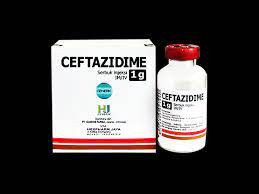
Ceftazidime is available as a 1 gram vial containing powder for injection.
Dosage
Bone, joint, digestive, and skin infections
-
Adults: 1-2 grams every 8 hours, administered by injection via:
-
Intramuscular route (into a muscle)
-
Intravenous route (into a vein) as a slow injection over 3-5 minutes
-
Intravenous infusion over 30 minutes
-
- Children weighing less than 40 kg:
-
100-150 mg/kg body weight per day, divided into 3 doses.
-
Maximum total dose: 6 grams per day.
-
- Older adults 80 years old and above:
-
Maximum total dose: 3 grams per day.
-
Safety of Drugs
This medication may reduce the effectiveness of live bacterial vaccines, such as the typhoid vaccine. Inform your healthcare provider that you are currently on this drug treatments before receiving any immunization or vaccination.
During pregnancy, ceftazidime should only be used if the potential benefit clearly outweighs the risk. This medication is excreted in small amounts into breast milk. Consult your doctor if you are pregnant or breastfeeding.
Drug Interactions
-
May increase the risk of kidney damage (nephrotoxic effects) when ceftazidime is used together with aminoglycoside antibiotics
-
May add the effects and side effects of blood-thinning agents (anticoagulants)
-
May reduce the effectiveness of live vaccines, such as the typhoid vaccine
-
May increase blood levels of ceftazidime when given together with probenecid (a medication used to lower uric acid levels)
Looking for more information about other drugs? Click here!
- dr Hanifa Rahma
BPOM RI. Ceftazidime. cekbpom.pom.go.id. Retrieved 8 May 2022, from https://cekbpom.pom.go.id//home/produk/69bhknndt7v4km8sdutf8ashf5/all/row/10/page/1/order/4/DESC/search/5/Ceftazidime
MIMS Indonesia. Ceftazidime. Mims.com. Retrieved 8 May 2022, from https://www.mims.com/indonesia/drug/info/ceftazidime?mtype=generic
Web MD. Ceftazidime Vial - Uses, Side Effects, and More. Webmd.com. Retrieved 8 May 2022, from https://www.webmd.com/drugs/2/drug-1769/ceftazidime-injection/details
Medlineplus. Ceftazidime Injection. Medlineplus.gov. Retrieved 8 May 2022, from https://medlineplus.gov/druginfo/meds/a686007.html