
Definition
Mesenchymal tumors, also known as soft tissue sarcomas, are a rare type of cancer that originates in the tissues that connect, support, and surround various parts of the body. These tissues include muscles, fat, blood vessels, nerves, tendons, soft cartilage, and areas around the joints.
There are over 50 known subtypes of mesenchymal tumors. They can develop in any part of the body, but about 60% start in the arms or legs, 30% in the pelvis or abdomen, and 10% in the head and neck. Some subtypes are more common in children, while others mainly affect adults.
Typically, mesenchymal tumors occur in patients between the ages of 50 and 70. They are difficult to diagnose and are often mistaken for other types of tumors.
Causes
The cause of mesenchymal tumors remains unknown. There is no definitive cause identified for the development of soft tissue sarcomas or mesenchymal tumors.
Risk Factor
Several factors may increase the risk of mesenchymal tumors, including:
- Age
- Mesenchymal tumors can occur at any age, including in children. However, they are most common in middle-aged or elderly people, and the risk increases with age.
- Certain genetic conditions
- Certain genetic disorders, such as neurofibromatosis type 1 and retinoblastoma, are associated with an increased risk of mesenchymal tumors.
- Previous radiation therapy
- People who have undergone radiation therapy for other cancers may have an increased risk of developing mesenchymal tumors later in life.
- Exposure to certain fluid
- Chemicals such as vinyl chloride, dioxin, and phenoxyacetic herbicides have been linked to an increased risk of mesenchymal tumors.
Symptoms
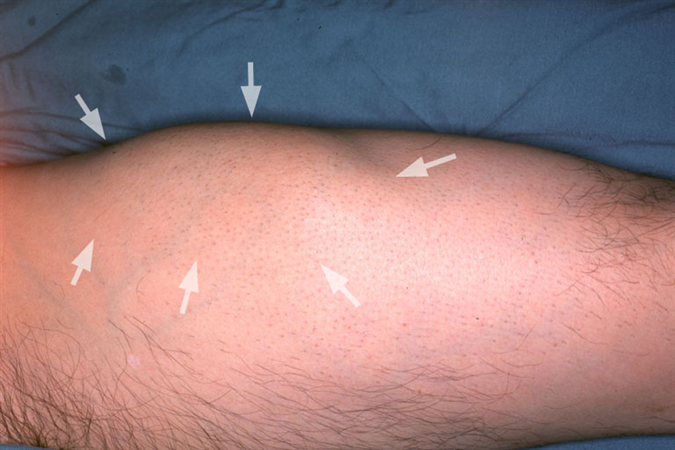
Early symptoms of mesenchymal tumors are often not apparent, but as the tumor grows or spreads, symptoms may develop. These depend on where the tumor is located. Tumors in the arms or legs may present as painless lumps that grow over time, eventually causing pain.
If a tumor develops in the abdomen, it may cause symptoms such as blockage of the stomach or intestines. Contact your doctor if you notice a large lump that continues to grow. While it could be non-cancerous, like a cyst (fluid-filled lump) or lipoma (fatty lump), it's best to consult a doctor for further evaluation.
Diagnosis
If a doctor suspects a mesenchymal tumor, they may recommend several diagnostic tests. Diagnosis is typically confirmed by a specialist and is based on symptoms, physical examination, and tests such as:
- X-rays: To detect abnormal growth.
- CT scans: Combining X-rays to produce detailed images of the body, often used to diagnose tumors in the chest, abdomen, or behind the abdomen.
- MRI: Using large magnets, sound waves, and a computer to create clear images of the body, this test may be suggested if an X-ray shows abnormalities.
- PET scans: This test uses a special sugar tracer that concentrates in cancer cells and highlights areas of rapid tumor growth in the body.
- Ultrasound: A quick and simple first-line test, often followed by MRI for further evaluation.
- Biopsy: A sample of suspected cancerous tissue is taken with a needle or during surgery for further analysis.
Management
The treatment of mesenchymal tumors depends on the findings from the diagnosis, including the type of tumor, its location, grade, and stage. Treatment options vary from medical therapies such as chemotherapy, radiation, or targeted drugs to surgery. In some cases, medical treatment is used in conjunction with surgery.
Medical treatment
- Chemotherapy
- Patients receive drugs either orally or intravenously. Chemotherapy may be used as a primary treatment before surgery to shrink the tumor or after surgery to eliminate any remaining cancer cells
- Radiation
- This may be used before surgery to shrink the tumor or after surgery to kill any remaining cancer cells
- Targeted therapy
- This treatment focuses on specific parts of cancer cells, such as genes and proteins, to alter how the cells grow and survive
Surgery
Surgery is a common treatment for mesenchymal tumors because it reduces the risk of the tumor recurring or spreading. The doctor will attempt to remove as much of the tumor as possible while avoiding any residual tissue that could interfere with other healthy cells.
Complications
Chemotherapy treatment may have side effects, which should be discussed with your doctor. Potential side effects include further cancer development during treatment (if treatment is unsuccessful), nausea, vomiting, hair loss, diarrhea, fever, infection, and the need for blood production.
Prevention
There is no known way to prevent mesenchymal tumors, but reducing risk factors may help.
When to See a Doctor?
Contact your doctor if you notice the following symptoms:
- A new lump or one that grows rapidly in any part of the body
- A lump larger than 5 centimeters (about the size of a golf ball)
- A lump that causes pain
- Worsening abdominal pain
- Blood in your stool or vomit, or black stools, which could indicate bleeding in the stomach or intestines
Looking for more information about other diseases? Check here!
- dr. Alvidiani Agustina Damanik
Benign and Malignant Soft-Tissue Tumors. (2022). Retrieved 20 December 2022, from https://emedicine.medscape.com/article/1253816-overview
Soft Tissue Sarcomas. (2022). Retrieved 20 December 2022, from https://www.nhs.uk/conditions/soft-tissue-sarcoma/
Soft Tissue Sarcoma. (2020). Retrieved 20 December 2022, from https://www.mayoclinic.org/diseases-conditions/soft-tissue-sarcoma/symptoms-causes/syc-20377725#
Malignant Soft Tissue Tumors. (2022). Retrieved 20 December 2022, from https://my.clevelandclinic.org/health/diseases/17203-malignant-soft-tissue-tumors