Definition
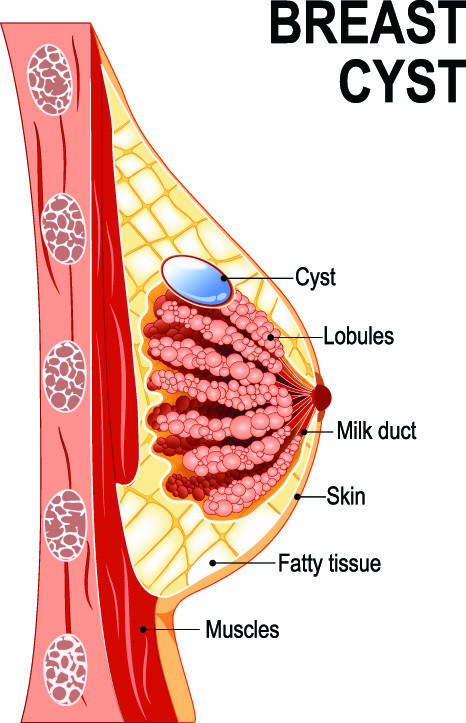
A breast cyst is a fluid-filled sac within the breast. Though it appears as a lump, this condition is usually benign or non-cancerous. It is common for someone to have one or more breast cysts.
Causes
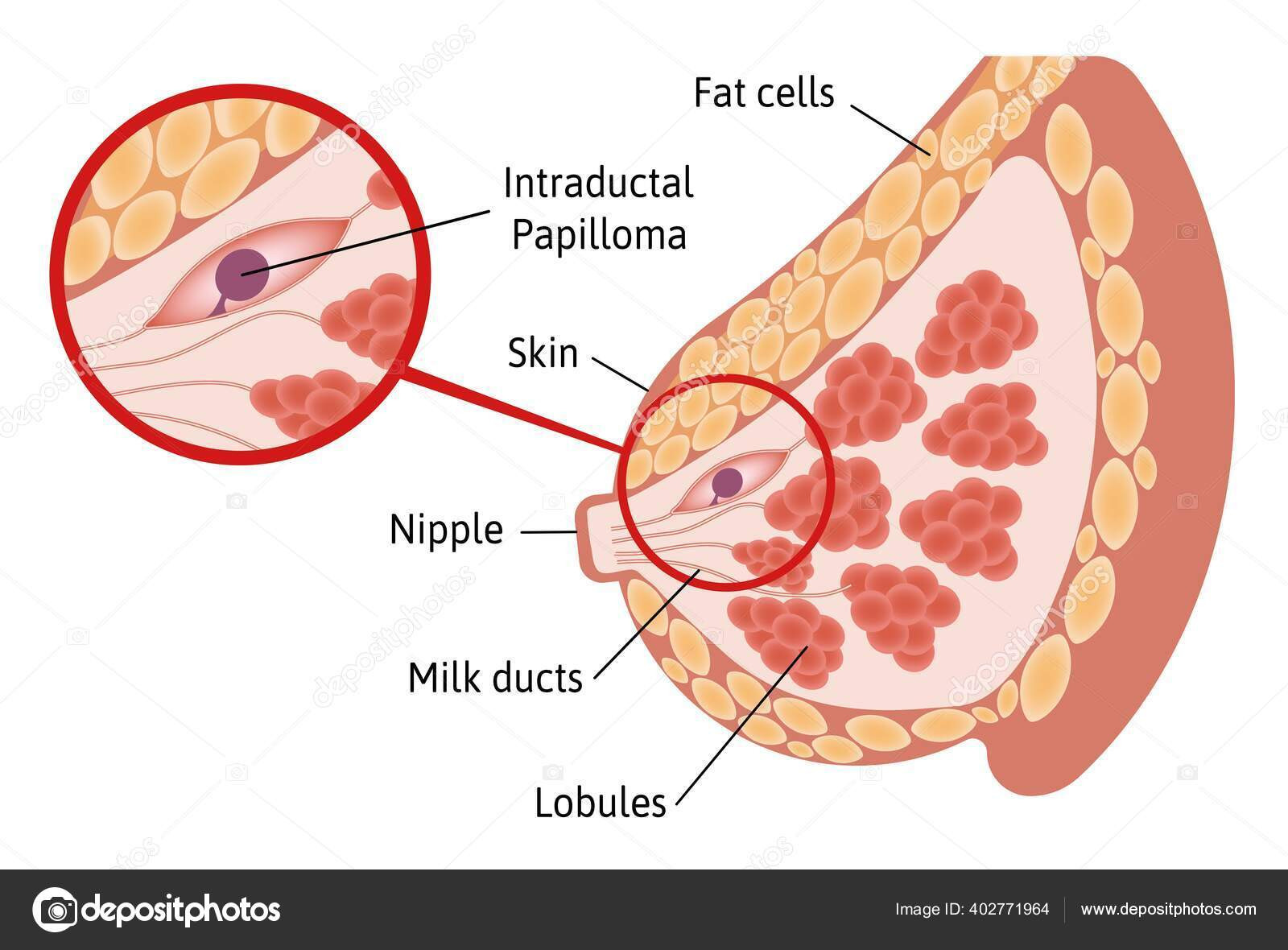
Each breast consists of groups (lobes) of glandular tissue arranged like the petals of a daisy. These lobes are divided into smaller sections (lobules) that produce milk during pregnancy and breastfeeding. The supporting tissue that gives the breast its shape is made up of fatty tissue and connective tissue. Breast cysts arise due to the accumulation of fluid within the breast glands.
Breast cysts can be categorized by size:
- Microcysts, which are too small to be felt but can be seen during radiological exams like mammography or ultrasonography.
- Macrocysts, which are large enough to be felt and can grow to a diameter of 2.5 to 5 centimeters.
Experts are not sure what causes breast cysts, but they may be related to hormonal changes associated with the menstrual cycle.
Risk Factor
Some women are more prone to developing breast cysts and lumps than others. There is not much information on the factors that increase the risk of breast cysts. However, benign breast tumors, including breast cysts, tend to run in families. If female family members have had tumors or lumps in the breast, you may be at higher risk for the same condition.
While breast cysts can be found in women of any age, they are more commonly found in women who are still menstruating, typically under the age of 50. Breast cysts can also occur in postmenopausal women undergoing hormone therapy.
Symptoms
Breast cysts can form in one or both breasts. Signs and symptoms of breast cysts include:
- A soft, easily movable, round, or oval lump with defined edges. These characteristics generally indicate something benign, though not always. Breast cysts often feel like grapes or small water-filled balloons but can sometimes feel firm.
- Nipple discharge may be clear, yellow, brown, or dark brown.
- Breast pain or tenderness, especially in the area of the lump.
- Increased size of the breast lump and breast pain before menstruation.
- Decreased size of the breast lump and other symptoms after menstruation.
Having breast cysts does not increase your risk of breast cancer. However, having breast cysts can make it more difficult to detect new breast lumps or notice other changes in the breast that require evaluation by a doctor. Your breasts may feel lumpy and painful during menstruation, so it is important to know the characteristics of your breasts throughout your menstrual cycle to notice any changes.
Diagnosis
To diagnose a breast cyst, a breast exam and possibly radiological examinations, fine-needle aspiration, with or without biopsy, are needed.
- Breast examination. After the doctor asks about your symptoms and medical history, they will physically examine the breast lump and check for other abnormalities. However, the doctor cannot distinguish the type of breast lump from a physical exam alone, so you may need additional tests such as radiological exams or fine-needle aspiration.
- Radiological examinations used to diagnose breast lumps include:
- Mammography. Large cysts and clusters of small cysts can usually be seen on mammograms, but microcysts may be too small to detect.
- Breast ultrasonography (USG). This test helps the doctor determine whether the breast lump is filled with fluid or is solid. Fluid-filled areas typically indicate a breast cyst, while solid lumps are likely benign, non-cancerous lumps like fibroadenomas. However, solid lumps can also be breast cancer.
The doctor may recommend a biopsy to evaluate a solid-looking lump further.
- Fine-needle aspiration biopsy (FNAB): During FNAB, the doctor inserts a fine needle into the breast lump to try to aspirate fluid from it. This procedure is often guided by USG to ensure an accurate needle placement. The doctor can diagnose a breast cyst if fluid is withdrawn and the breast lump disappears.
- If the fluid is not bloody and straw-colored and the lump disappears, you may not need further testing or treatment.
- If the fluid appears bloody or the lump does not disappear, the doctor will send the fluid sample to the laboratory.
- The doctor may recommend additional radiological tests like mammography or ultrasonography if no fluid is withdrawn. The absence of fluid or a lump that does not disappear after aspiration suggests a solid part in the lump. In this case, a tissue sample may be taken to check for cancer.
Management
Breast cysts do not require treatment unless they are large and cause pain or discomfort. If these symptoms occur, draining the fluid from the breast cyst can alleviate the symptoms.
- Hormonal therapy. Using birth control pills to regulate the menstrual cycle can help reduce the recurrence of breast cysts. However, due to significant side effects, birth control pills or other hormonal therapies like tamoxifen are usually recommended only for women with severe symptoms. Stopping hormone therapy after menopause can also help prevent breast cysts.
- Surgery. Surgery to remove a breast cyst is typically only considered in certain cases. Surgery may be considered if a breast cyst causing symptoms continues to recur or if a breast cyst contains bloody fluid or shows concerning features.
Complications
Ordinary cysts usually do not cause long-term problems and do not increase the risk of breast cancer. However, having multiple breast cysts can make detecting cancer during mammography more difficult.
Complex cysts can be more problematic. These cysts may contain cancer cells or increase the risk of developing cancer later. A biopsy will provide information about this risk.
Prevention
You cannot prevent breast cysts. However, regular breast self-examinations and routine mammography are good ways to monitor breast health.
When to See a Doctor?
Normal breast tissue often feels lumpy. However, if you notice a new breast lump that does not go away, grows, or persists after one or two menstrual cycles, consult a doctor. Additionally, consult a doctor if you experience skin changes on one or both breasts.
Looking for more information about other diseases? Click here!
- dr. Alvidiani Agustina Damanik
Breast cysts - Symptoms and causes. (2022). Retrieved 29 September 2022, from https://www.mayoclinic.org/diseases-conditions/breast-cysts/symptoms-causes/syc-20370284
Breast Cysts: What It Is, Breast Cysts Symptoms & Aspiration. (2022). Retrieved 29 September 2022, from https://my.clevelandclinic.org/health/diseases/15691-breast-cysts#outlook--prognosis
Learn all about breast cysts. (2022). Retrieved 29 September 2022, from https://breastcancernow.org/information-support/have-i-got-breast-cancer/breast-pain-other-benign-conditions/breast-cysts